

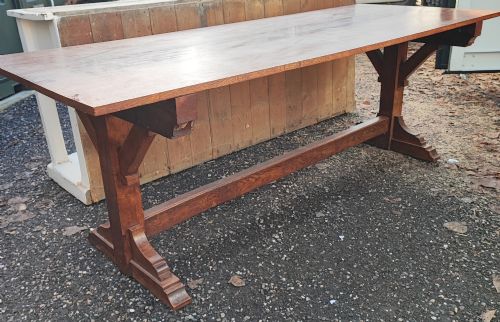
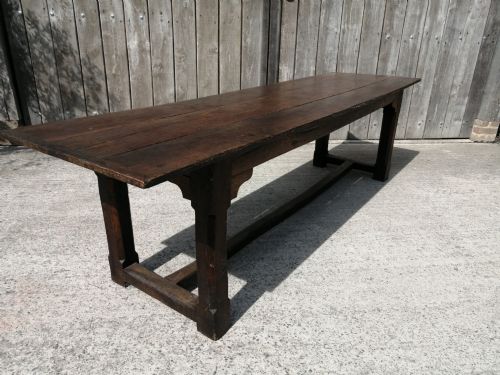
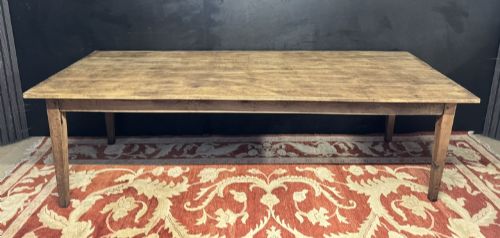
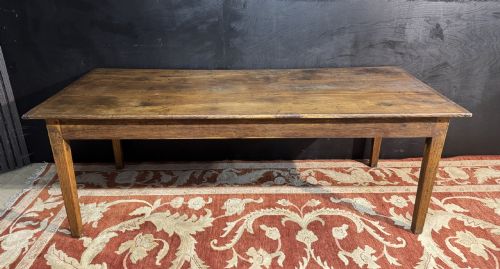
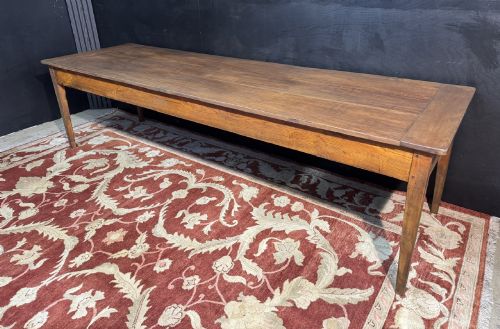
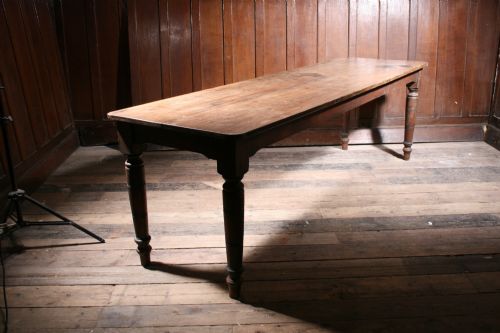
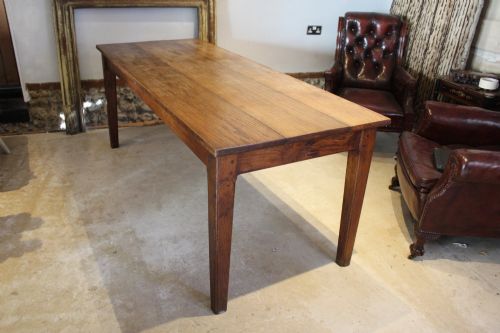
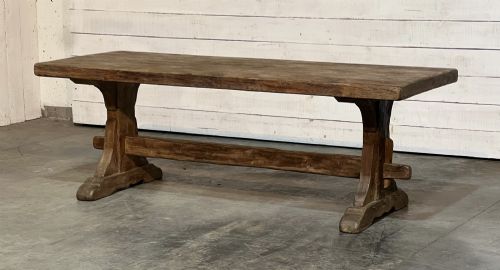
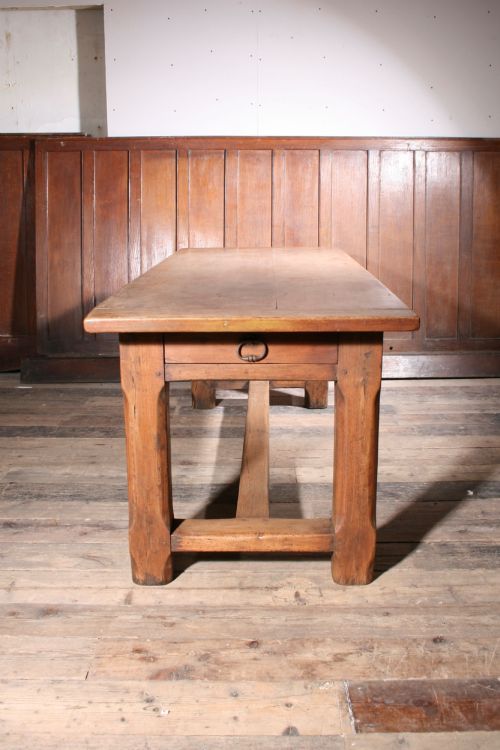
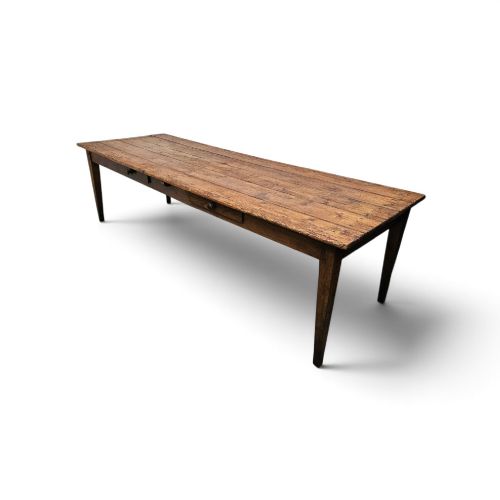
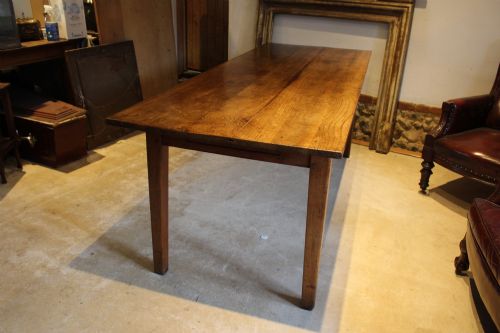
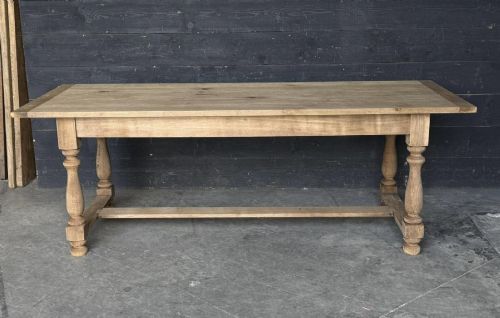
Large Country Refectory Table
A large country refectory table anchors a room with scale and history, providing generous seating for gatherings.
Large Country Refectory Table
A large country refectory table is an extended dining surface designed to accommodate numerous guests, drawing on historical dining halls and rural homestead traditions. When searching for a large country refectory table, buyers encounter substantial pieces originating from the eighteenth, nineteenth, and early twentieth centuries. These tables frequently appear in styles such as French Provincial, Rustic Farmhouse, and Edwardian, reflecting both continental and English vernacular design.
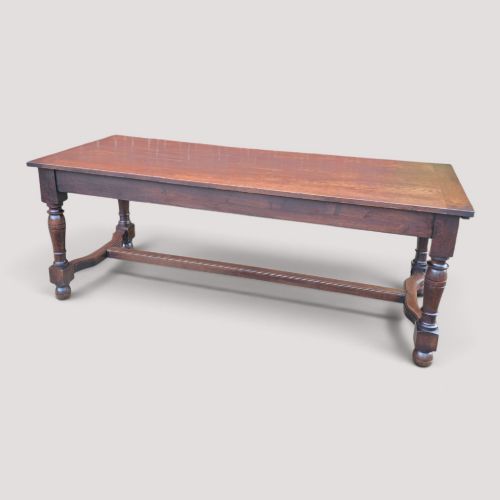
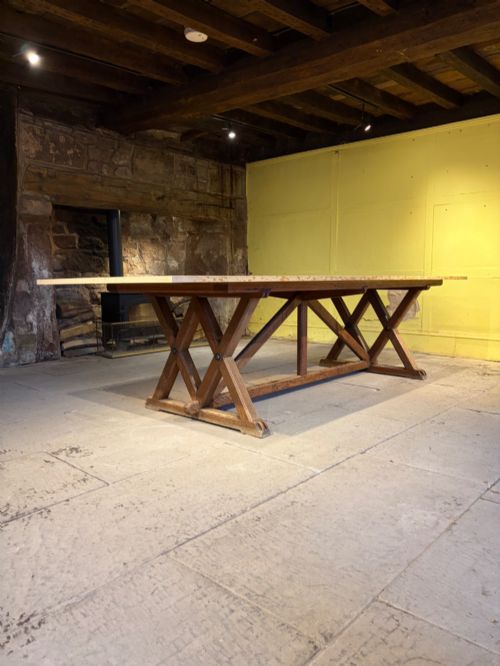
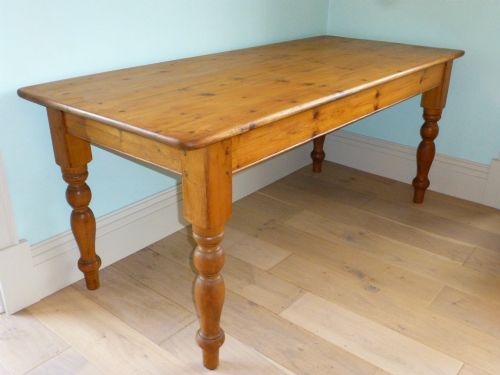
The dominant material on this page is solid timber, with oak and pine appearing most frequently alongside elm, chestnut, beech, walnut, poplar, and fruitwood. Many examples span significant lengths, measuring from two and a half metres to over three metres to seat eight, ten, or twelve people comfortably. Forms range from traditional four-legged frames and turned supports to trestle bases and harvest configurations.
How they were made
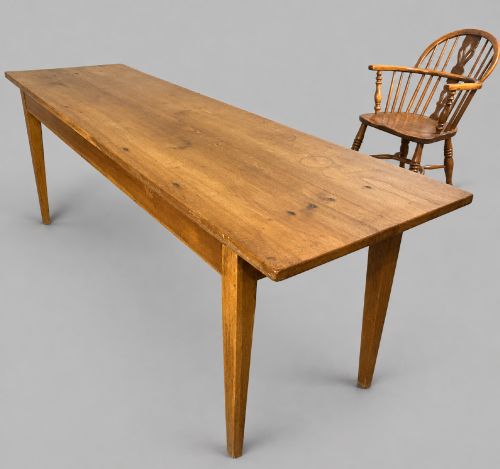
Carpenters constructed these tables using dense domestic hardwoods like oak, elm, and beech, alongside durable softwoods like pine, joined with traditional methods to withstand daily domestic or communal use. Tops were occasionally fashioned from a single wide timber board or scrubbed clean for practical kitchen use, while bases utilised sturdy turned legs, trestle supports, or X-frames.
Makers selected timber for grain character and structural strength, often combining woods such as chestnut and oak within a single piece. Surfaces received simple finishes that highlighted the natural texture of the wood rather than heavy varnishes, allowing the material to age through decades of household activity.
Large Country Refectory Table Retail Price Guide 2026
Typical asking prices for large country refectory table among the pieces listed under this phrase on Sellingantiques today, from the lower quarter to the upper quarter. They describe what is for sale here now, not the wider market.
Listings span the eighteenth, nineteenth, and early twentieth centuries, encompassing Georgian, Victorian, and Edwardian eras alongside regional French and English styles.
What varies in quality
Quality rests in the integrity of the timber selection and the proportional balance of the base to the top, distinguishing a sturdy, purposeful table from a merely utilitarian one. Tables featuring single-board tops or dense hardwoods like oak and walnut command attention for their durability and superior weight.
The articulation of the base construction, whether through hand-turned supports or substantial trestle ends, determines the visual weight and stability of the piece. Subtle details in timber figuring and the honest integration of historical repairs elevate certain examples above standard workshop output.
The Large Country Refectory Table Glossary
- Refectory table
- A long dining table traditionally used in monastic dining halls and later adopted in country homes. These tables are characterised by their elongated proportions and sturdy undercarriages.
- Trestle table
- A table consisting of two or more vertical supports connected by a horizontal beam. This design maximises legroom along the length of the table.
- Harvest table
- A narrow, long wooden table traditionally used for communal seasonal meals on farms. They often utilise pine or fruitwood construction.
- Scrubbed top
- A wooden tabletop that has been repeatedly scoured clean with water and abrasive agents. This process leaves the timber pale, smooth, and matte in appearance.
- Turned support
- A structural leg shaped on a lathe to create decorative cylindrical or bulbous profiles. These supports add formal weight to farmhouse and refectory designs.
Large Country Refectory Table: Frequently Asked Questions
How many people do these tables seat?
Most of these large tables measure between two and a half and three and a half metres in length, designed to seat eight to twelve people comfortably.
Their substantial length makes them practical for hosting large dining groups while serving as a visual centrepiece in spacious rooms.
What is the difference between refectory and farmhouse tables?
Refectory tables traditionally derive from monastic dining halls with long, narrow proportions and inset legs, whereas farmhouse tables often originate from rural domestic kitchens.
In practice, antique listings often blend these terms to describe large, sturdy wooden dining tables with similar vernacular origins.
Are pine tables durable enough for daily use?
Pine provides a sturdy surface that has survived decades or centuries of domestic and institutional use. While softer than oak or elm, pine acquires a rich patina from everyday wear.
Many period pine tables feature scrubbed tops intended precisely for active kitchen environments.
How do I accommodate a very long table in a modern home?
These tables require generous clearance around all sides to allow chairs to pull out and people to circulate freely. Placing them in large dining rooms, open-plan kitchens, or converted barns lets their scale work naturally.
Benches or mismatched chairs are often paired with these long formats to break up the visual weight.