

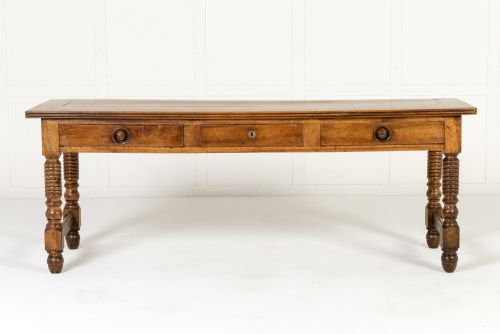
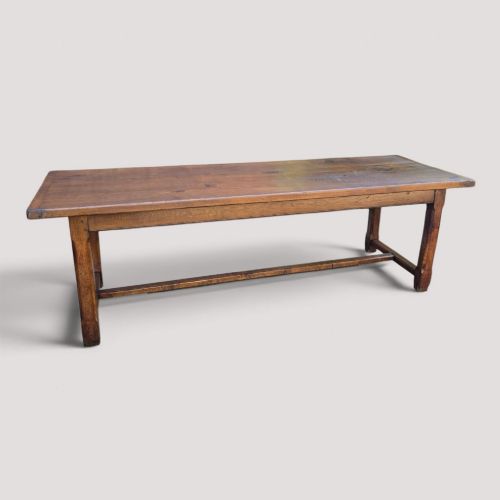
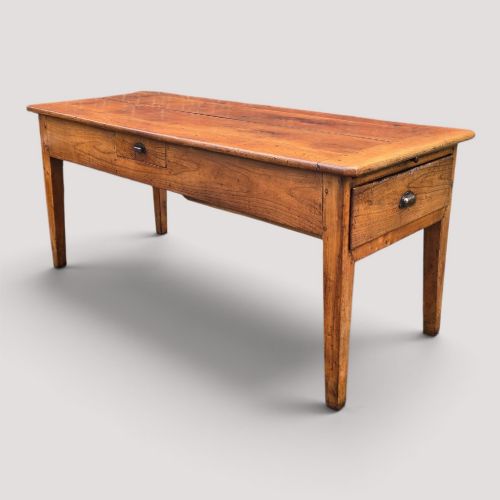
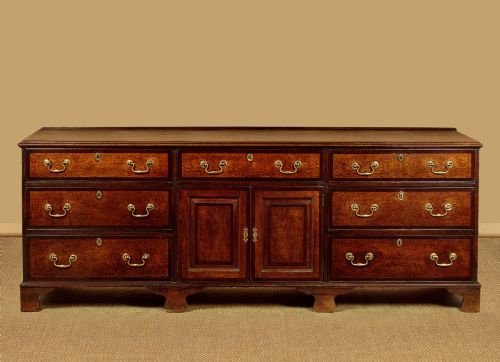
Long Kitchen Table
A long kitchen table provides a sturdy centre for daily meals and domestic work, drawing people together around substantial timber.
Long Kitchen Table
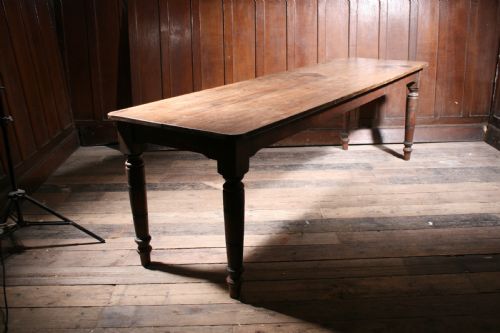
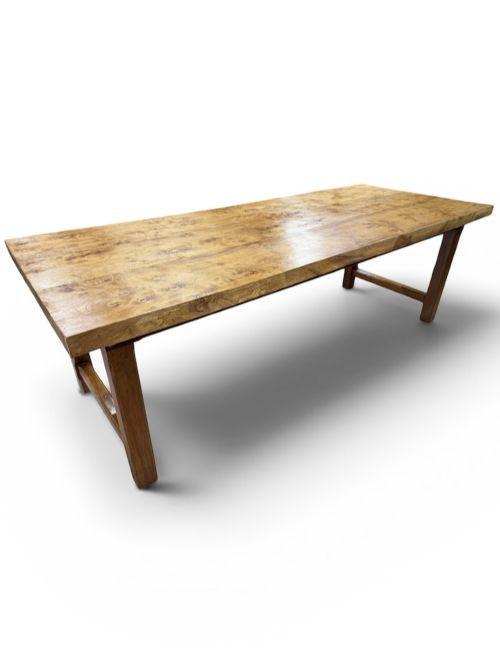
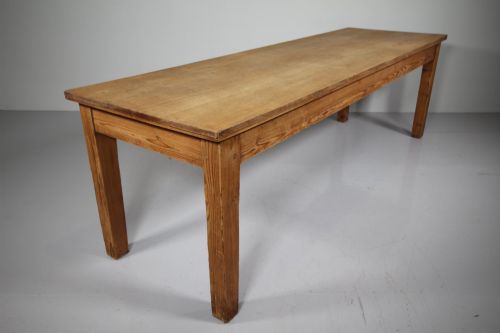
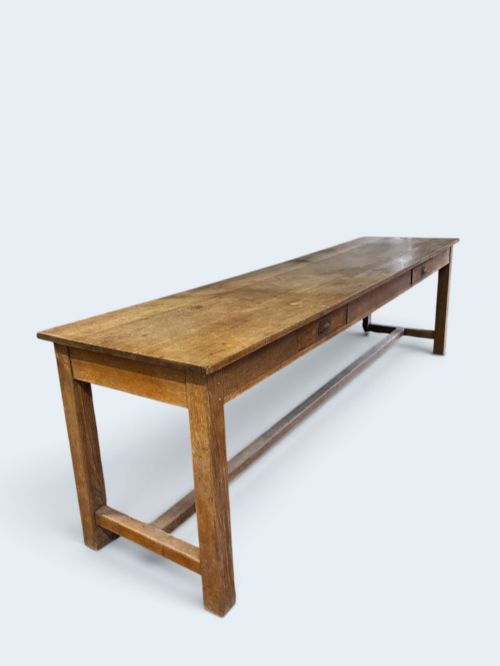
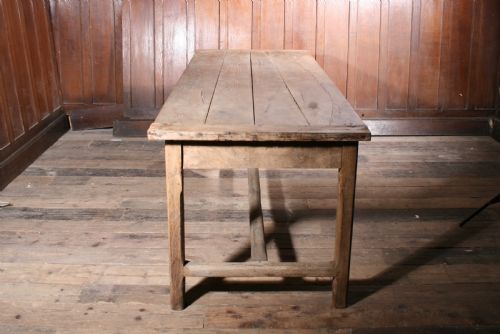
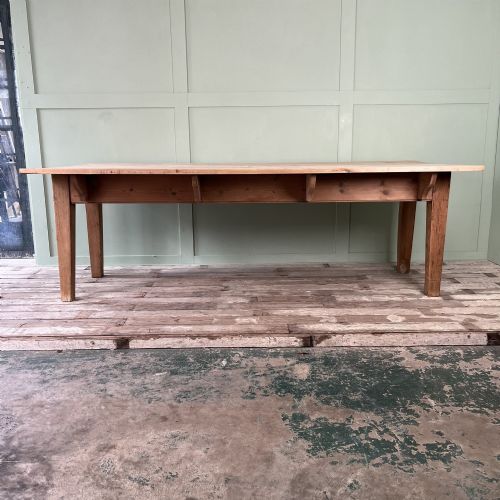
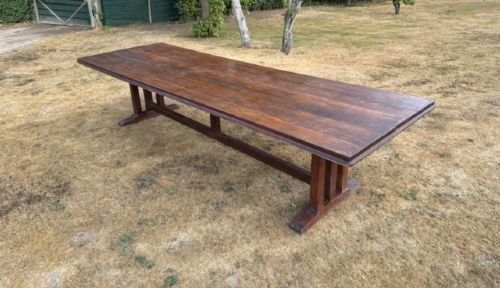
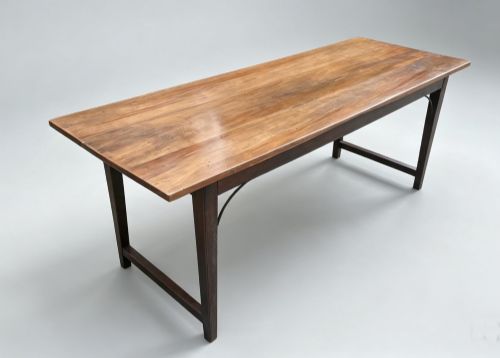
A long kitchen table is a substantial piece designed for heavy domestic use, often taking the form of a farmhouse refectory or worktable. These surfaces accommodate large gatherings and daily preparation tasks with equal ease.
The selections here span centuries of domestic life, featuring robust examples from the Georgian and Victorian eras alongside later twentieth-century interpretations. English and French country traditions dominate the forms, yielding generous lengths well suited to spacious rooms.
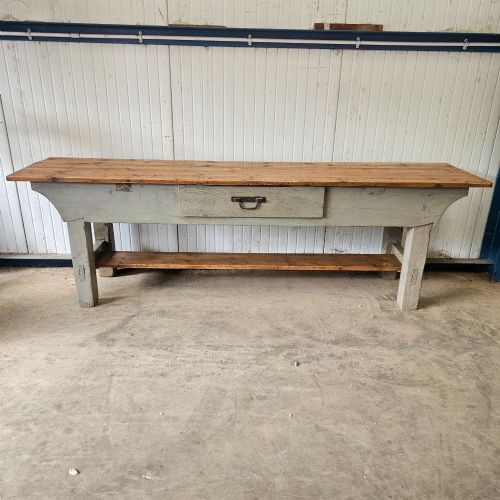
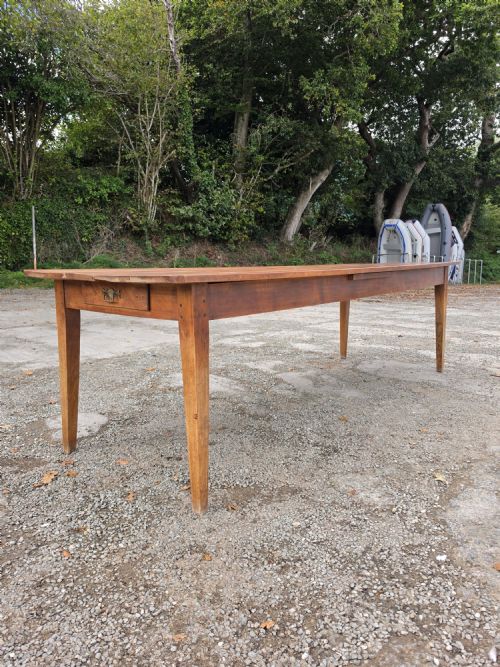
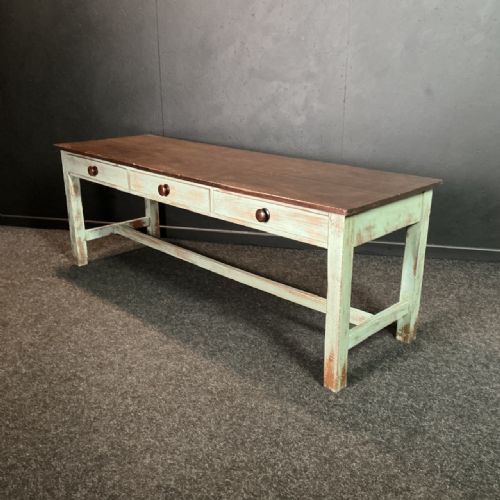
Makers utilised resilient timbers to withstand decades of heavy employment, resulting in practical furniture intended to last through generations. Buyers encounter twin plank designs, harvest tables with multiple drawers, and potboard serving tables.
How they were made
Construction relies heavily on durable hardwoods and softwoods such as oak, pine, fruitwood, and cherry. Carpenters joined thick planks using traditional methods to ensure stability across extended lengths.
Surface treatments vary from polished natural timber to layers of paint applied during regional vernacular production. Iron and brass hardware occasionally supplement wooden structures on tables featuring functional drawers.
Long Kitchen Table Retail Price Guide 2026
Typical asking prices for long kitchen table among the pieces listed under this phrase on Sellingantiques today, from the lower quarter to the upper quarter. They describe what is for sale here now, not the wider market.
Listings feature oak, pine, fruitwood, cherry, and beech across Georgian, Victorian, and Arts and Crafts periods.
What varies in quality
The integrity of the timber framing and the thickness of the top planks dictate the endurance of the piece. Tables constructed from dense fruitwood or quarter-sawn oak demonstrate superior resistance to warping over long spans.
Originality of surface and structural joinery separate standard utility items from finer workshop productions. The retention of unpainted patination and integrated storage drawers enhances the character of country furniture.
Heals of London
The Long Kitchen Table Glossary
- Refectory table
- A long narrow dining table traditionally used for communal meals. These forms provide ample legroom and seating capacity along their generous edges.
- Dresser base
- A low sideboard or table featuring surface boards and frequently drawers beneath. They offer storage and preparation space in traditional kitchens.
- Potboard
- A lower shelf fitted beneath a serving table or dresser base. This platform traditionally held pots and heavy kitchen utensils.
- Fruitwood
- Timber sourced from fruit-bearing trees such as cherry or apple. Makers utilised these dense woods for smooth finishes and durable tabletops.
- Twin plank
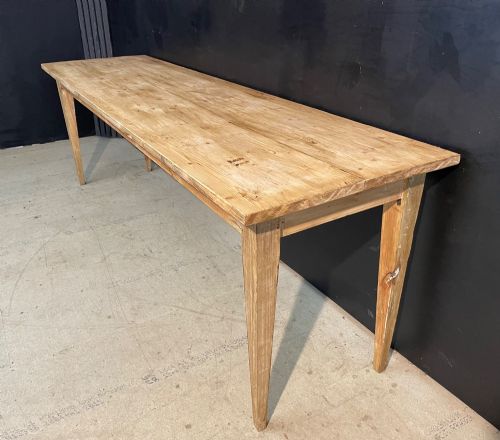
- A tabletop constructed from two wide boards joined side by side. This method displays the grain across a wide surface without excessive joins.
Long Kitchen Table: Frequently Asked Questions
How do I clean a wooden kitchen table?
Wipe surfaces regularly with a damp cloth and mild soap, avoiding harsh chemicals that strip natural oils. Dry the timber thoroughly after cleaning to prevent moisture damage.
Apply occasional coats of appropriate wax or oil to nourish older wood and maintain a protective barrier against spills.
Can I use an antique table daily?
These tables were built for heavy domestic labour and communal dining, making them well suited to modern daily use. Their robust timber construction absorbs the rigours of everyday family life.
Use protective mats for hot dishes and sharp utensils to preserve the historic finish while enjoying the piece.
What is a refectory table?
A refectory table is an elongated dining surface originally developed for communal dining halls. Their narrow proportions and sturdy stretchers allow for comfortable seating along both sides.
These forms appear frequently in country house and farmhouse styles designed for hosting numerous guests.
How do I identify pine versus oak?
Oak is a heavy hardwood displaying prominent grain patterns and medullary rays. It resists dents and maintains a deep brownish hue.
Pine is a lighter softwood with a softer texture, often showing knots and a paler tone unless painted or weathered over time.