
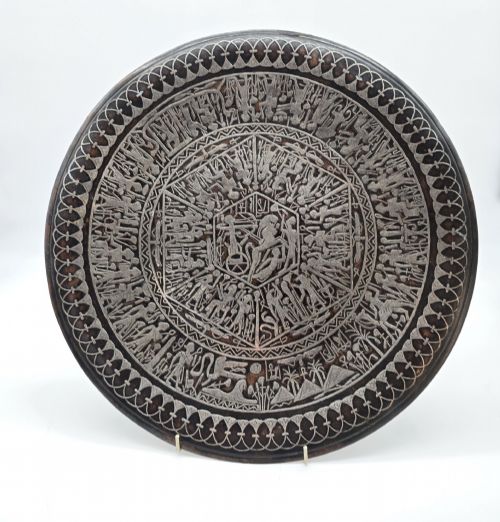


Large Copper Wall Plate
A large copper wall plate brings weight and deep metallic warmth to an interior, drawing the eye instantly through scale and craftsmanship.
Large Copper Wall Plate
When you search for a large copper wall plate, you encounter substantial decorative chargers and platters designed for display. These pieces span origins from Japanese Meiji workshops to Egyptian Cairo Ware and Indian Raj production.
The version you are most likely to meet on this page is the Japanese cloisonne enamel charger, typically dating from the nineteenth century. These plates range from dragon motifs to natural scenes featuring Mount Fuji.
Other forms include engraved Persian trays and inlaid bronze or brass vessels, reflecting diverse international metalwork traditions of the Victorian era. Each charger serves primarily as a wall hanging or centrepiece display object.
How they were made
The construction of these plates relies on heavy metal bases beaten, cast, or spun from copper, bronze, and brass. Artisans then applied intricate surface decoration through techniques such as repousse, engraving, and metal inlay.
Cloisonne pieces incorporate thin brass wire soldered to the copper body to create cellular compartments. These cells receive vitreous enamel pastes before firing in a kiln to produce durable coloured designs.
Certain Japanese chargers feature watchful owls staring down visitors from the wall.
What varies in quality
Quality rests in the precision of the metalwork and the complexity of the decorative scheme. Early pieces demonstrate tighter wirework control in cloisonne and deeper, crisper chiselling in repousse surfaces.
The ambition of the imagery also separates standard production from superior examples. Masterpieces display intricate multi-coloured enamelling or precise silver and copper inlay across expansive surfaces.
The Large Copper Wall Plate Glossary
- Charger
- A large ornamental plate or platter intended for display rather than dining. These substantial pieces anchor decorative wall arrangements.
- Cloisonne
- An enamel technique where metal wire forms small compartments on a copper body to hold coloured glass pastes. Firing vitrifies the paste into durable coloured fields.
- Repousse
- A metalworking method where the artisan hammers the sheet metal from the reverse side to form a raised design in relief. Details are then refined from the front with chisels.
- Cairo Ware
- Metalwork produced in Egypt, typically featuring heavy bronze or brass inlaid with silver and copper calligraphy or geometric patterns. These items gained popularity during the late nineteenth century.
Large Copper Wall Plate: Frequently Asked Questions
How do I hang a heavy copper plate safely?
Large metal chargers require secure wall fixings that distribute the weight evenly across the rim or base.
Use coated wire or adjustable spring hangers designed specifically for heavy ceramic or metal platters to prevent slipping.
Can I clean the tarnish off antique copper?
Light cleaning with a soft, dry cloth removes dust without disturbing the historic surface patina.
Avoid aggressive metal polishes that strip away the aged character and oxidation built up over centuries.
What is the difference between Japanese and Egyptian plates?
Japanese examples rely heavily on cloisonne enamel and detailed pictorial subjects like dragons and birds.
Egyptian Cairo Ware focuses on metal inlay work with contrasting silver and copper geometric motifs upon bronze bases.
Were these plates made for export?
Many nineteenth-century chargers and brassware pieces were produced specifically for the European and Western export markets.
International exhibitions fuelled a strong demand for exotic decorative metalwork during the Victorian period.