

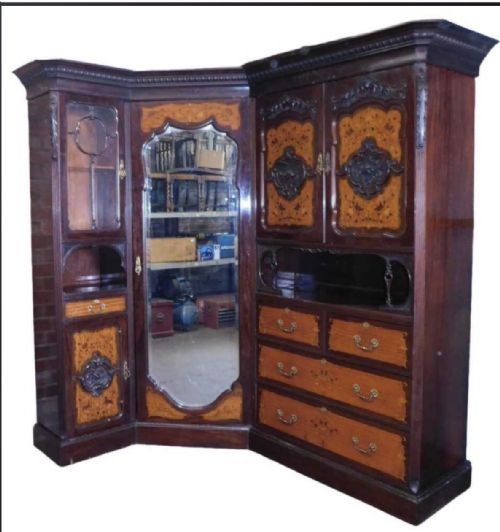


Large Clothes Cabinet
A large clothes cabinet solves the eternal problem of storage with presence, offering architectural weight and generous hanging space for a serious room.
Large Clothes Cabinet
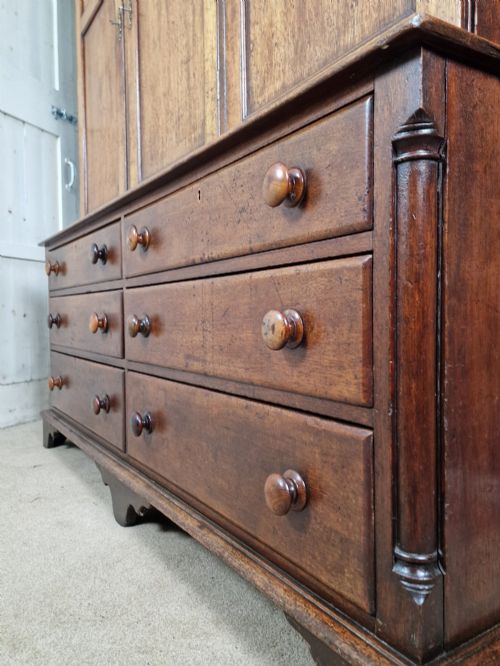
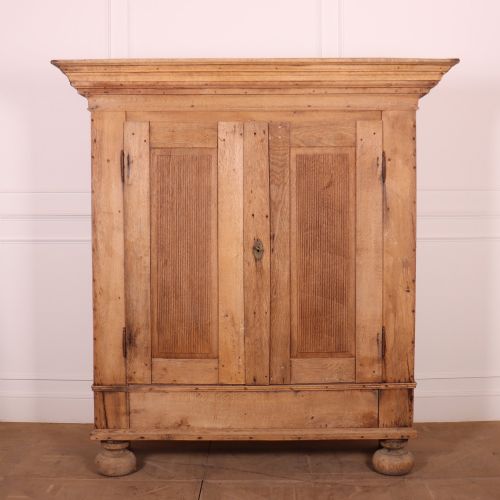
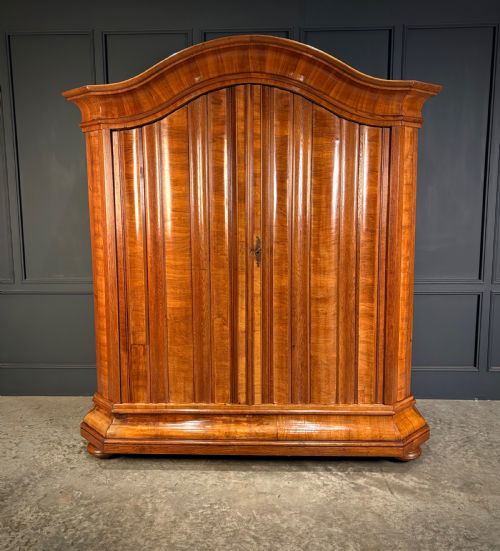
A large clothes cabinet spans tall wardrobes, breakfront linen presses and armoires built to hold substantial quantities of garments and linen. These pieces emerge from periods ranging across the eighteenth, nineteenth and early twentieth centuries, capturing shifts in domestic scale and storage requirements.
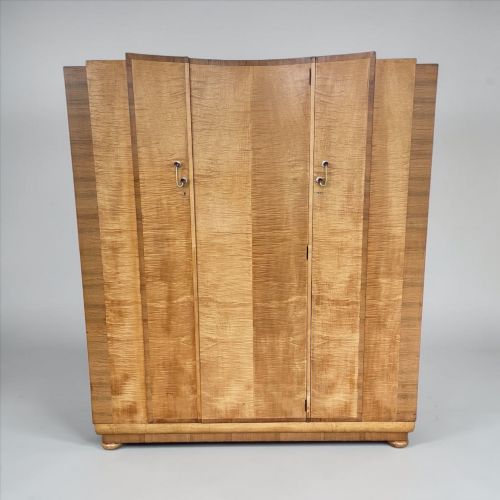
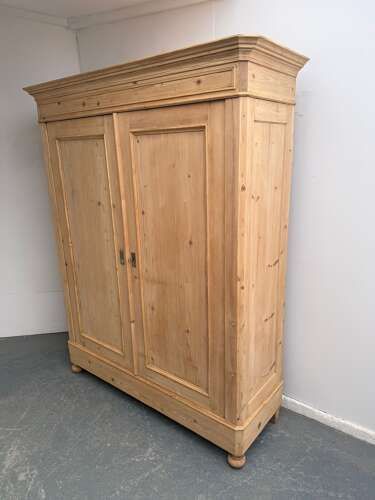
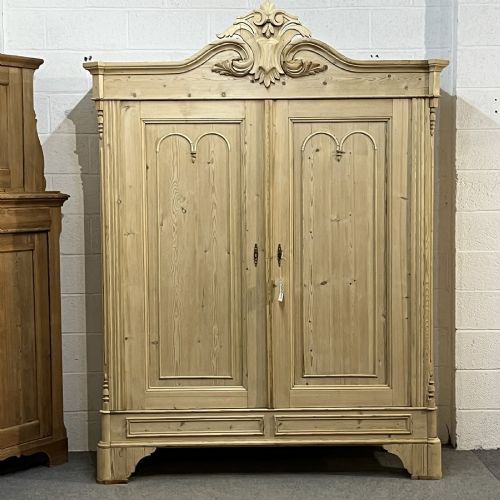
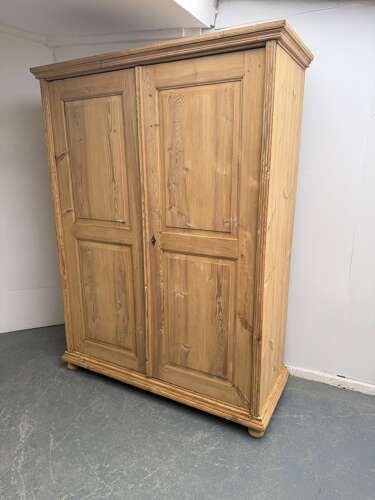
The most common iterations on this page are substantial Victorian and Edwardian pine and mahogany wardrobes, often featuring multiple doors and internal drawers. Buyers also encounter eighteenth-century oak and walnut press cupboards alongside continental armoires.
Proportions are invariably grand, designed for high-ceilinged bedrooms rather than modern alcoves. Many examples incorporate knockdown construction or dismantle into sections to facilitate transport and installation.
Materials and construction
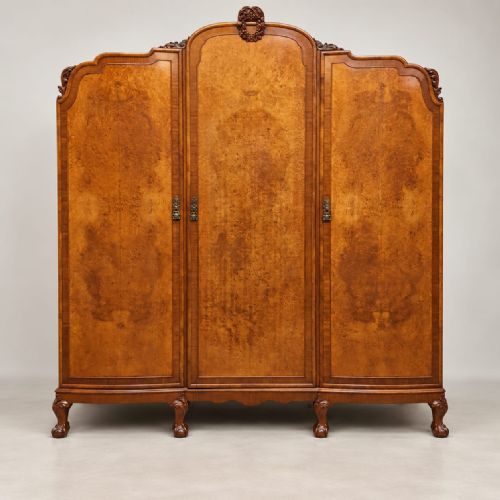
Timber selection defines these cabinets, with solid and veneered mahogany, oak, walnut and pine forming the structural carcasses. Cabinetmakers employed figured timbers such as burr walnut and satinwood for visible facade panels and decorative inlays.
Joinery relies on traditional techniques including panelled doors, dovetailed internal drawers and heavy brass hardware. Many large pieces are engineered to dismantle into manageable components using peg-and-slot or bolt-together systems.
Large Clothes Cabinet Retail Price Guide 2026
Typical asking prices for large clothes cabinet among the pieces listed under this phrase on Sellingantiques today, from the lower quarter to the upper quarter. They describe what is for sale here now, not the wider market.
One remarkably versatile offering doubles as a bronze display cabinet, proving that even heavy wardrobes occasionally suffer from an identity crisis.
Judging execution and finish
Quality reveals itself in the architectural coherence of the facade and the selection of timber veneers. Superior examples display carefully matched grain patterns across multiple doors and drawers, while simpler vernacular pieces rely on honest, solid construction.
The sophistication of the internal configuration separates standard storage from exceptional cabinetmaking. Fine pieces integrate sliding trays, partitioned drawers and clever compartment layouts behind substantial panelled or mirrored doors.
The Large Clothes Cabinet Glossary
- Compactum
- A large wardrobe designed with a combination of hanging space, shelves and internal drawers. These multi-functional units maximise storage within a single footprint.
- Linen press
- A cabinet comprising upper sliding trays or shelves enclosed by doors, positioned above a chest of base drawers. Originally intended for folded textiles rather than hanging garments.
- Breakfront
- A piece of furniture where the central section projects forward from the flanking wings. This architectural arrangement creates depth and visual rhythm on large facades.
- Knockdown
- Furniture constructed to be easily dismantled into separate panels and components for transport. This method was essential for moving large wardrobes up narrow staircases.
- Marquetry
- The art of applying decorative veneer pieces to a structure to form intricate patterns or pictures. Craftsmen used various coloured woods to create detailed pictorial panels.
Large Clothes Cabinet: Frequently Asked Questions
How do I dismantle a large wardrobe?
Most large Victorian and Edwardian wardrobes utilise internal bolts or pegged joints that secure the cornice, base, and sides to the back panel. Systematic removal of the doors and internal fittings allows the main structural sections to separate safely.
Having two people is essential for supporting the heavy timber panels during disassembly. Keeping track of original wedges and bolts ensures the cabinet reassembles squarely in its new room.
Will a large clothes cabinet fit my room?
These cabinets are built for traditional spaces with high ceilings and generous floor areas. Checking both the overall height and the clearance needed for doors to swing open is vital before purchase.
Considering the delivery route through hallways and stairwells is equally important. Many older pieces dismantle completely, but the cornice and central sections often remain bulky.
How do I care for antique wood finishes?
Maintaining wood surfaces requires avoiding direct sunlight and excessive temperature fluctuations that cause timber to split. Regular dusting with a soft, dry cloth preserves the patina without building up chemical residues.
Applying traditional beeswax periodically nourishes mahogany, walnut, and pine surfaces. Modern silicone polishes should be avoided as they penetrate the grain and alter the finish.