





Large Clay Pots
Large clay pots bring enduring utility and tactile warmth to gardens and interiors alike.
Large Clay Pots
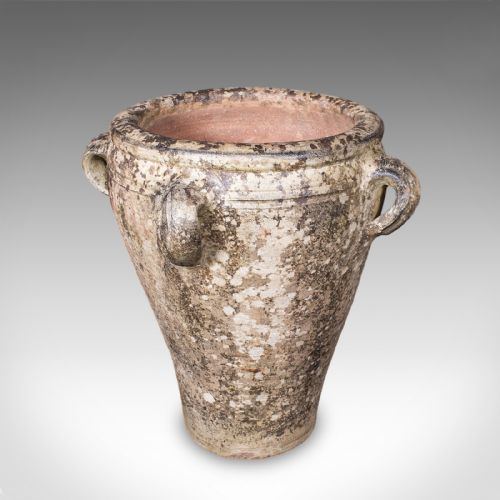
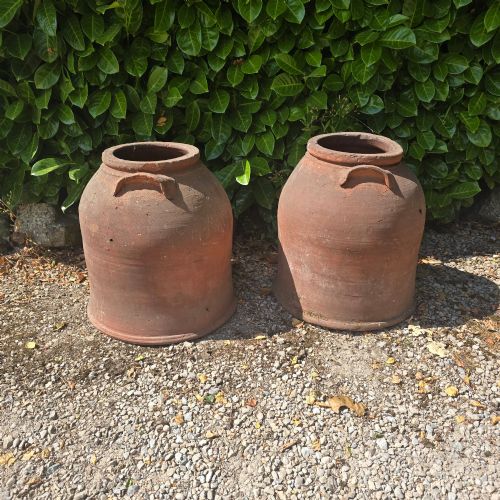
Large clay pots encompass substantial utilitarian vessels designed for horticulture, storage, and architectural accent, spanning periods from the Victorian era into the early twentieth century. These objects function as garden planters, olive jars, rhubarb forcers, and chimney pots, originating from Italy, France, Turkey, Portugal, and Britain.
A buyer examining this selection encounters heavy earthenware and terracotta forms shaped for rustic Mediterranean, Arts and Crafts, and Victorian Country House aesthetics. Olive jars and Tuscan planters dominate the current range, often weathered by decades of exposure.
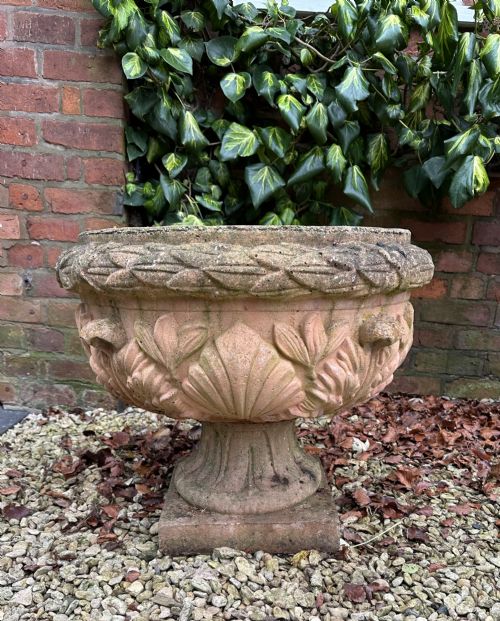
Many examples display functional heritage, from French terracotta pots and Turkish amphorae to buff terracotta poppy pots. These vessels range from simple garden pots to ornate garden urns and scroll pots.
How they were made
Makers shaped these large clay pots using earthenware clay and terracotta, frequently finished with paint, lime wash, or glaze. The porous nature of the material allowed moisture and air to reach plant roots, suiting their primary horticultural purpose.
Individual vessels reflect regional turning and moulding techniques, resulting in thick walls designed to withstand outdoor elements. Surface treatments range from natural weathered terracotta to surviving layers of historic paint and lime wash.
Large Clay Pots Retail Price Guide 2026
Typical asking prices for large clay pots among the pieces listed under this phrase on Sellingantiques today, from the lower quarter to the upper quarter. They describe what is for sale here now, not the wider market.
Listings feature 19th Century, Victorian, and early 20th Century periods alongside materials such as buff terracotta, lime wash, and glazed ceramic.
What varies in quality
Quality in large clay pots lies in the harmony of proportion, the character of the surface patina, and the integrity of the form. Vessels exhibiting authentic weathering, balanced dimensions, and clear regional characteristics command greater attention.
Distinction also arises from the specific decorative vocabulary, such as moulded scroll details or classical urn profiles, which elevate a purely functional agricultural vessel into a sculptural garden ornament.
The Large Clay Pots Glossary
- Terracotta
- Fired unglazed clay of a brownish-red colour. This material forms the primary body of most garden planters and oil jars.
- Olive Jar
- A large bulbous storage vessel historically utilised for transporting and storing oil. These jars frequently feature heavy rims and robust bodies.
- Rhubarb Forcer
- A specialised agricultural pot placed over rhubarb crowns to exclude light and encourage early, tender growth. These tall cylindrical vessels often include removable lids.
- Chimney Pot
- A vertical architectural ceramic pipe designed to improve draught, repurposed in gardens as an ornamental planter. They display distinct flared or moulded tops.
- Buff Terracotta
- A specific variety of fired clay yielding a pale yellowish or cream tone rather than traditional reddish hues. This lighter body appeared in Arts and Crafts pieces.
Large Clay Pots: Frequently Asked Questions
How do I care for large clay pots outdoors?
Terracotta and earthenware pots require protection from severe freezing temperatures when saturated with moisture, as expanding ice can crack the clay.
Elevating the pots on pot feet ensures proper drainage and prevents water from becoming trapped at the base during wet winter months.
Can these pots be used inside the home?
These vessels suit interior spaces when paired with a suitable saucer or inner liner to protect flooring from moisture.
Their substantial weight and weathered surfaces make them effective as decorative floor standing accents or umbrella stands.
What is the difference between an olive jar and an urn?
Olive jars were primarily utilitarian agricultural containers built with deep bodies and narrow necks for storing oil and provisions.
Urns generally follow classical decorative proportions intended for display, featuring pedestals or handles designed for visual impact.
How can I tell the age of a clay pot?
Age is indicated by surface weathering, tool marks from manufacture, and the natural accumulation of lichen, lime wash, or historic paint.
Stylistic markers such as Victorian neoclassical motifs or Arts and Crafts shapes also help place pieces within the nineteenth and early twentieth centuries.