





Large Blue Wool Carpet
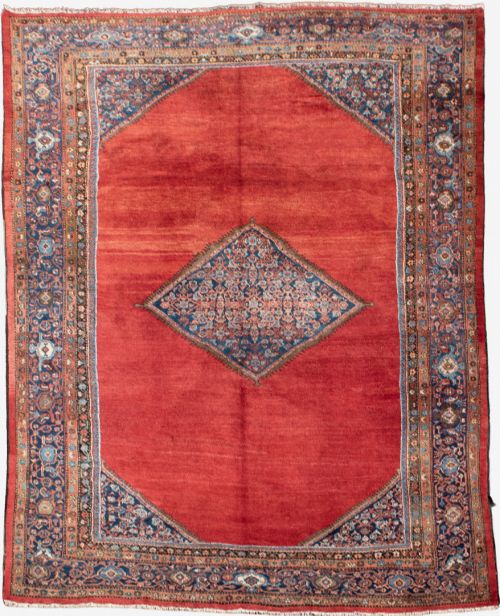
A large blue wool carpet anchors a room with saturated indigo and deep sapphire dyes woven across room-sized Persian and Anatolian formats.
Large Blue Wool Carpet
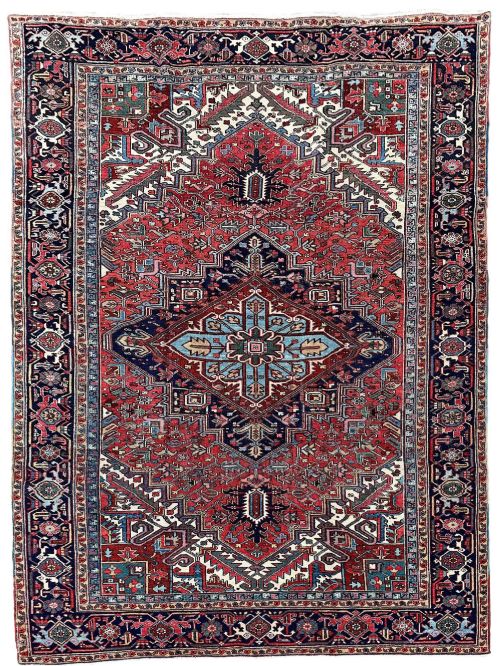
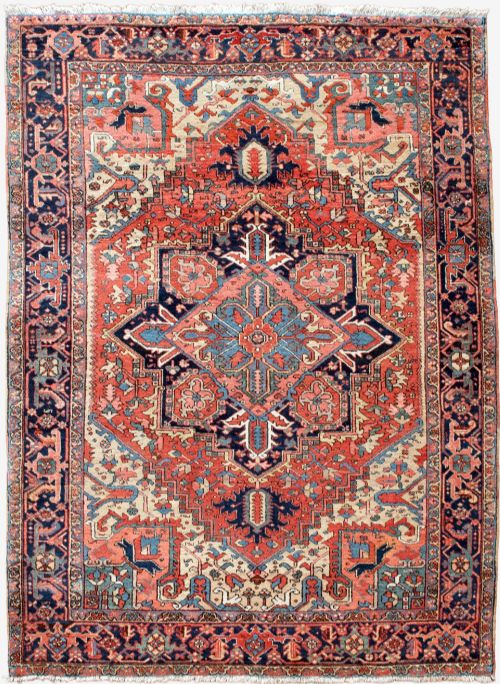
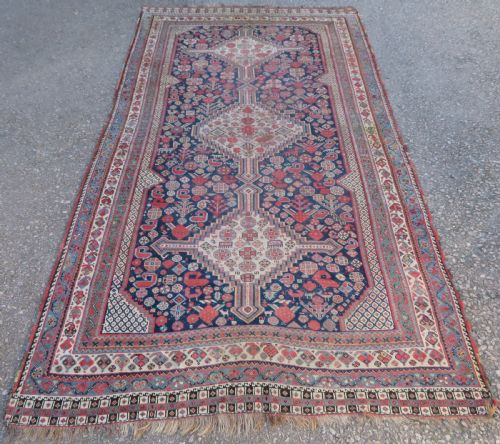
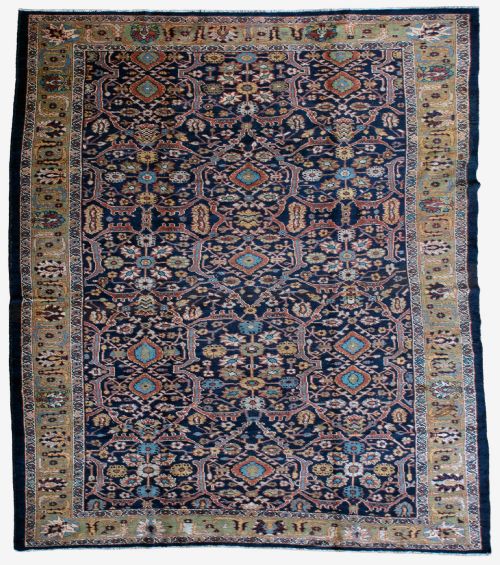
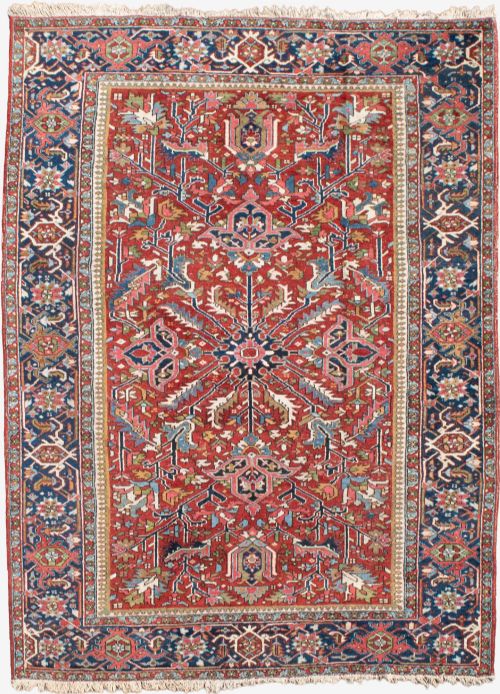
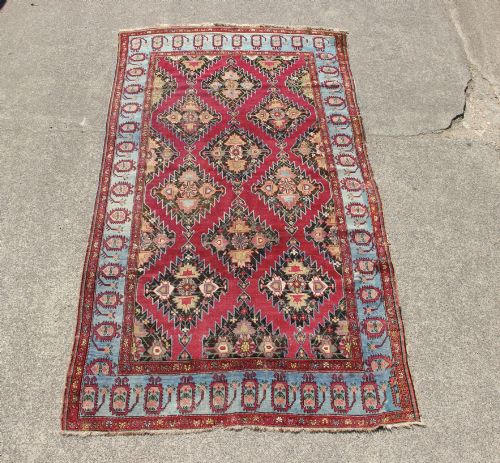
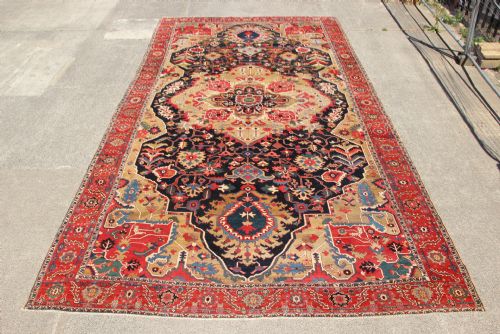
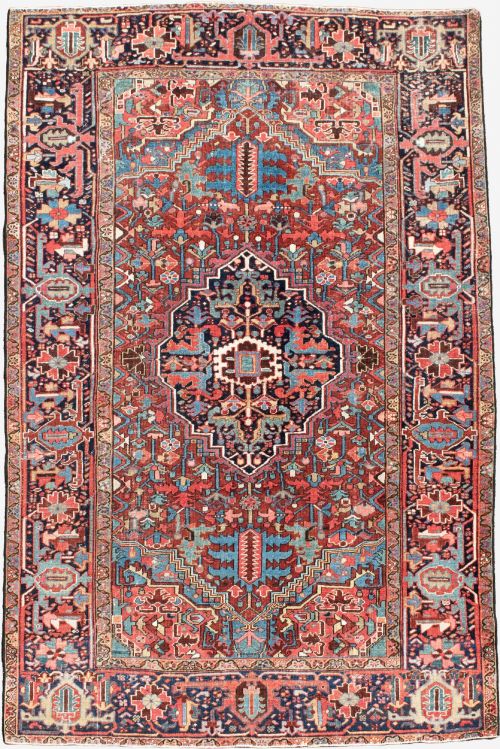
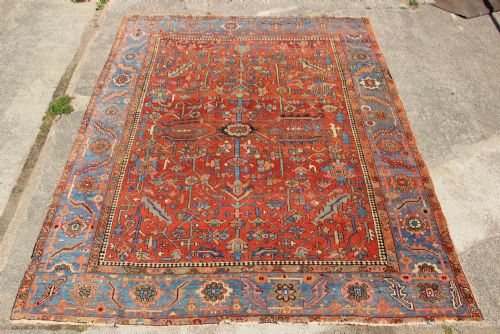
When searching for a large blue wool carpet, buyers encounter substantial room-size floor coverings originating from traditional weaving centres across Persia, Anatolia, and the Caucasus. These woven works span from the late nineteenth century into the mid-twentieth century, showcasing regional designs like Heriz, Oushak, and Tabriz.
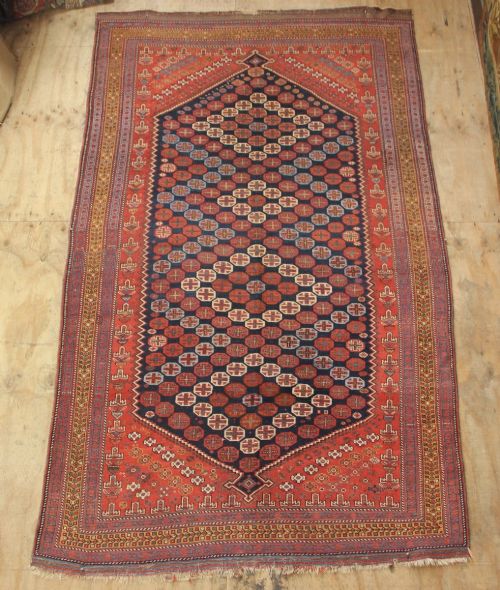
The dominant forms on this page are generous room-size formats and expansive area carpets built for formal reception spaces. They utilise rich blue fields often contrasted with terracotta, ivory, or madder red accents in the borders and medallions.
Weavers from tribal and village workshops produced these pieces using durable techniques suited for heavy daily use. Each region brought distinct geometric or curvilinear motifs to the blue wool foundation, creating considerable variety within the overarching palette.
Materials and construction
The foundation relies upon sturdy cotton warps and wefts that provide structural stability and tensile strength to the heavy textile. Hand-spun wool forms the dense pile, knotted meticulously to hold crisp lines and withstand generations of foot traffic.
Natural dyes derived from plants and minerals infuse the wool with deep indigo tones, soft pale blues, and warm contrasting hues. These traditional dyeing methods allow the colour to age gracefully, developing rich patinas over decades of light exposure.
Judgments of quality
Quality rests upon the fineness of the knot density and the precision of the curvilinear or geometric drawing. Tightly packed knots allow intricate medallion work and floral sprays to remain sharp and legible across the expanse of the blue field.
The integrity of the wool pile and the uniform saturation of the natural dyes dictate the overall visual weight of the textile. Master weavers achieved harmonious colour transitions and balanced proportions that elevate certain regional works above standard utilitarian floor coverings.
Haji Jalili
The Large Blue Wool Carpet Glossary
- Heriz
- A region in north-west Persia known for durable carpets featuring bold geometric medallions and substantial corner spandrels. These pieces typically display robust wool piles suited for heavy domestic rooms.
- Oushak
- An Anatolian weaving centre recognised for large-scale floral designs rendered in muted, harmonious colour palettes. Their carpets often utilise relaxed knotting and fine wool foundations.
- Warps
- The vertical threads stretched tightly on the loom that form the skeletal foundation of the rug. The exposed fringe at either end of the carpet consists of these finished warp threads.
- Natural Dyes
- Organic colourants extracted from plants, insects, and minerals before the advent of synthetic alternatives. Indigo from plants provided the foundational blues seen in these antique floor coverings.
- Ferahan
- A Persian district celebrated for finely knotted room-size carpets with intricate all-over floral patterns. They are distinguished by balanced compositions and exceptionally soft wool.
Large Blue Wool Carpet: Frequently Asked Questions
How do I clean a wool carpet?
Gentle vacuuming without a rotating power brush removes surface dirt safely without pulling the wool pile. Professional rug cleaning is recommended periodically to preserve the natural dyes.
Avoid harsh chemical spot treatments or excessive moisture, which can weaken the cotton foundation and alter the antique indigo shades.
Are these carpets suitable for heavy traffic?
Traditional hand-knotted wool construction provides exceptional durability, allowing these textiles to endure everyday movement in busy living areas and hallways.
Utilising a quality underlay prevents slipping and cushions the foundation fibres against premature wear on hard flooring surfaces.
How can I tell different regional styles apart?
Heriz carpets generally display bold geometric centre medallions and sturdy corner designs woven in robust wool. Oushak and Tabriz pieces tend to feature softer, more curvilinear floral arrangements with looser knot counts.
Examining the weave density and back knot configuration often reveals whether a piece originated from a Persian workshop or an Anatolian loom.
How do natural dyes age over time?
Natural indigo and plant-based colours develop a subtle variation known as abrash, where tones shift gently across the wool surface. This patination enhances the visual depth and character of the textile without compromising the structural integrity of the pile.
Sunlight exposure can gradually soften the initial saturation, transforming deep sapphire fields into muted slate and sky blue hues.