

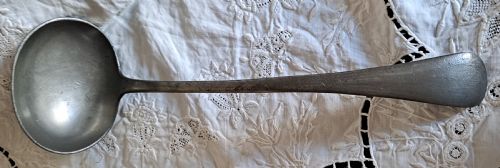
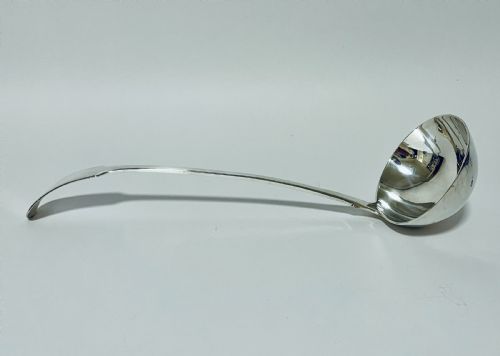


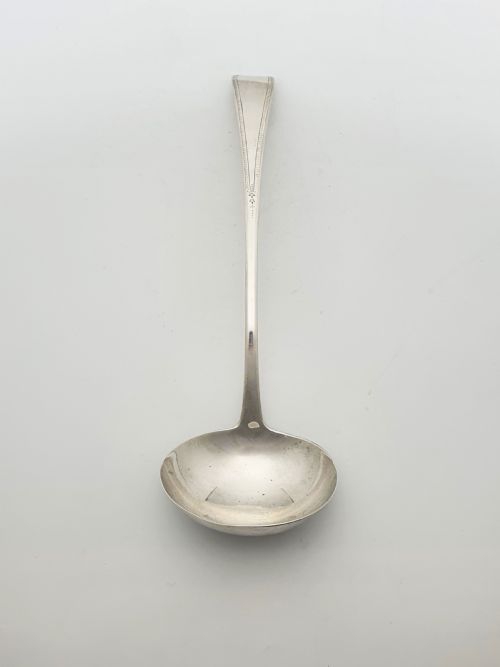


Large Silver Ladle
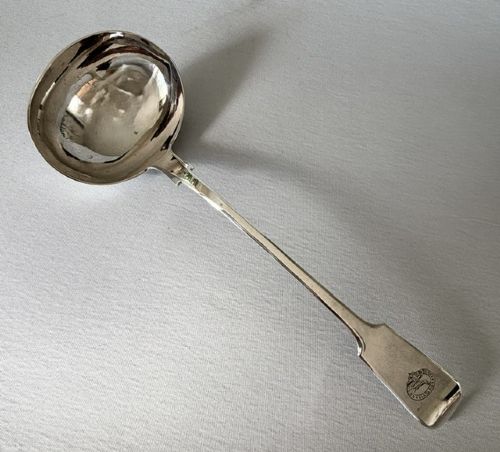
A large antique silver ladle brings weight and presence to the table, serving soup, punch, or sugar with centuries of craftsmanship behind it.
Large Silver Ladle
When you search for a large antique silver ladle, you are looking for substantial serving implements designed for soup, punch, or sugar. The pieces available range from Georgian and Victorian English examples to Scandinavian and Indian work.
You are most likely to meet sterling silver soup ladles from the nineteenth century alongside serving spoons and specialised sifters. These items combine utility with decorative regional styles spanning the Georgian era through to the early twentieth century.
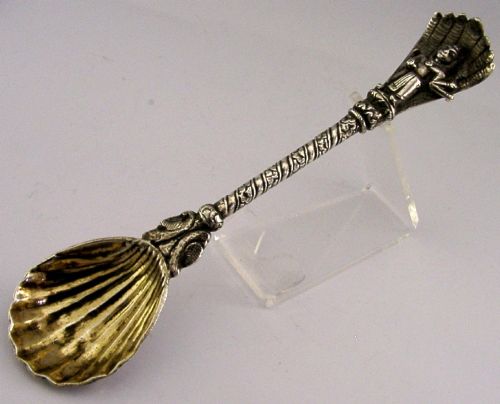
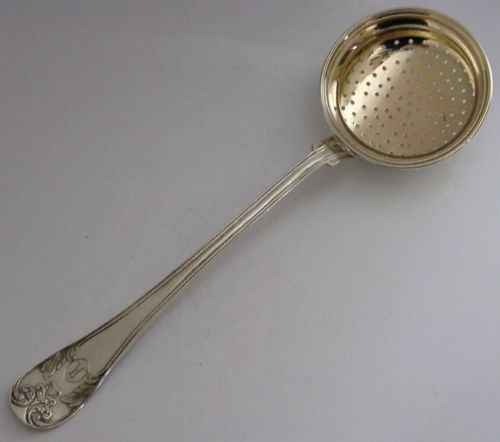
Forms vary from deep bowls on long handles to pierced strainer spoons and heavy deity offering spoons. Each version reflects the specific dining and serving customs of its period and origin.
Materials and construction methods
These pieces are constructed primarily from solid silver, sterling silver, and silver gilt, with occasional examples in silver plate, pewter, and wood. Metals are shaped, hammered, and cast to create durable bowls and reinforced handles.
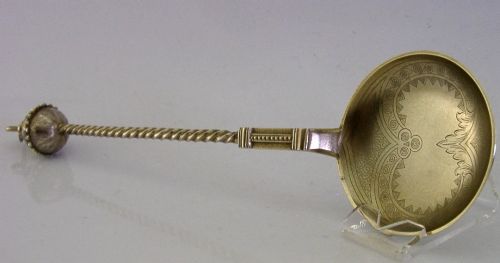
Design details such as threaded borders, Queen's pattern handles, and intricate surface motifs like snakes or figural work are applied through hand-chasing, piercing, and engraving. Silver gilt adds a rich gold wash over the solid silver surface, particularly seen on ceremonial or baptism pieces.
Large Silver Ladle Retail Price Guide 2026
Typical asking prices for large silver ladle among the pieces listed under this phrase on Sellingantiques today, from the lower quarter to the upper quarter. They describe what is for sale here now, not the wider market.
Listings feature sterling silver, silver plate, and pewter materials across Victorian, Georgian, and early twentieth-century Scandinavian styles.
Judging quality in large antique silver ladles
Quality rests in the gauge of the metal and the crispness of the handler's craftsmanship. Heavier grams per piece indicate durable construction meant for serious kitchen or table use rather than light decorative display.
The distinction between standard production and superior work lies in the depth of the chasing, the balance of the handle, and the clarity of any provincial or maker marks. Well-preserved bowls retain their original thickness and structural integrity despite decades of service.
John Yates·Jamieson and Naughton·Mary Chawner
The Large Silver Ladle Glossary
- Sterling Silver
- An alloy consisting of 92.5 percent silver by mass, standard for high-quality British and international silver items. It provides the necessary durability for large serving utensils.
- Silver Gilt
- Solid silver that has been coated with a thin layer of gold on its surface. This technique protects the underlying metal and offers a decorative two-tone finish.
- Basting Ladle
- A large spoon used in food preparation to scoop and pour juices over roasting meat. These pieces possess long handles to keep hands away from heat.
- Sugar Sifter
- A specialised ladle or spoon with a pierced bowl designed for sprinkling loose sugar over food or drink. They often feature decorative strainer patterns.
- Punch Ladle
- A deep-bowled utensil with an extended length, frequently paired with punch bowls for large gatherings. Handles occasionally incorporate wood to insulate against warm liquids.
Large Silver Ladle: Frequently Asked Questions
What were large silver ladles used for?
These utensils served specific culinary and social functions at the dining table, ranging from portioning soups to scooping festive punch into cups.
Heavier specialised versions also handled sugar sifting or ceremonial duties like baptisms and deity offerings.
How do I date an antique silver ladle?
Dating relies heavily on hallmarks, assay office stamps, and maker's marks struck directly into the metal. Stylistic clues such as handle patterns and bowl shapes also point toward specific eras like the Georgian or Victorian periods.
How should I clean antique silver?
Gentle washing with warm water and mild soap removes daily grime without harming the historic surface. Avoid harsh abrasive dips that strip away natural patinas accumulated over the centuries.