
Large Pedestal
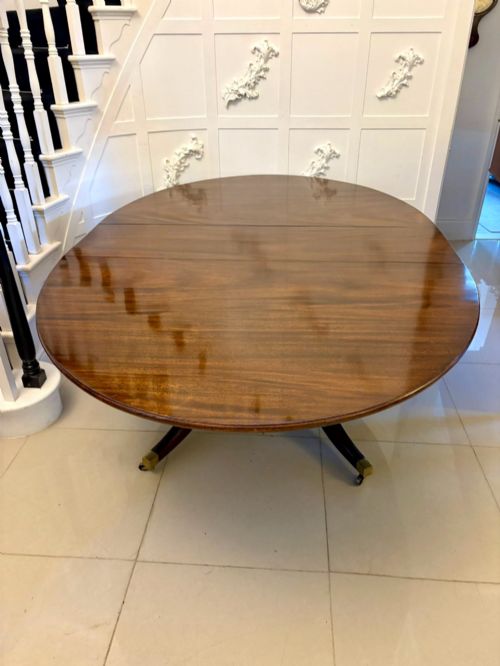
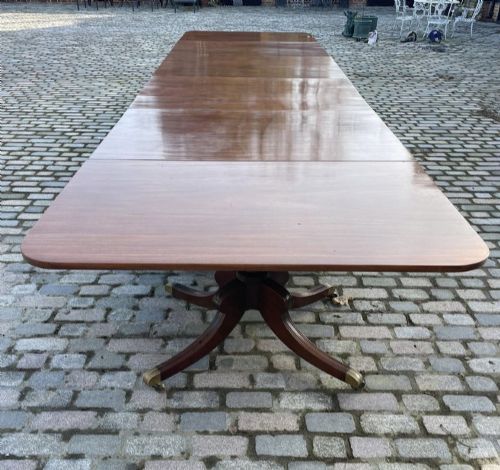
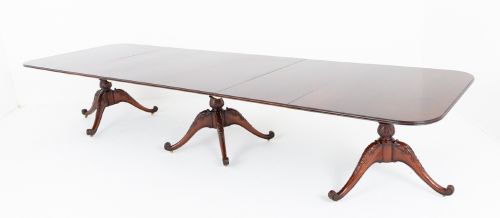
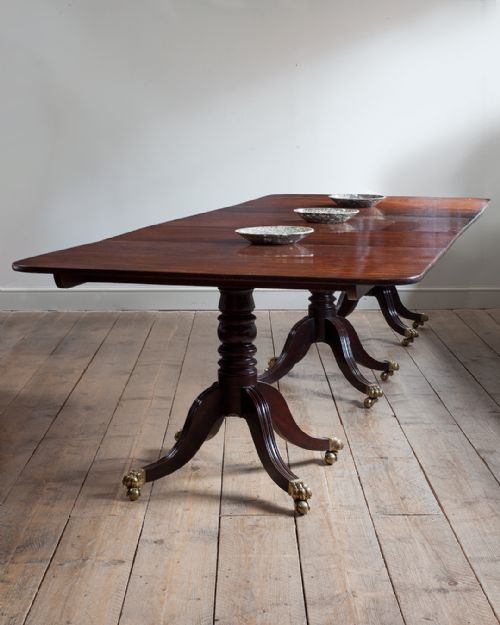
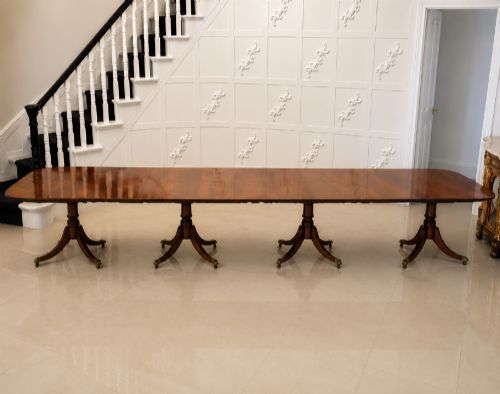
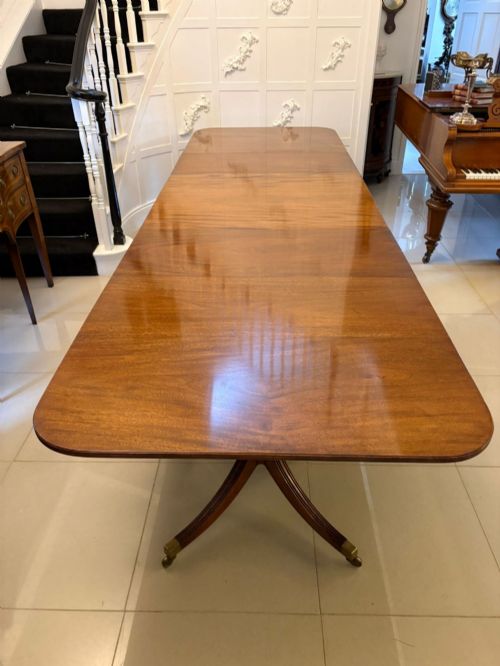
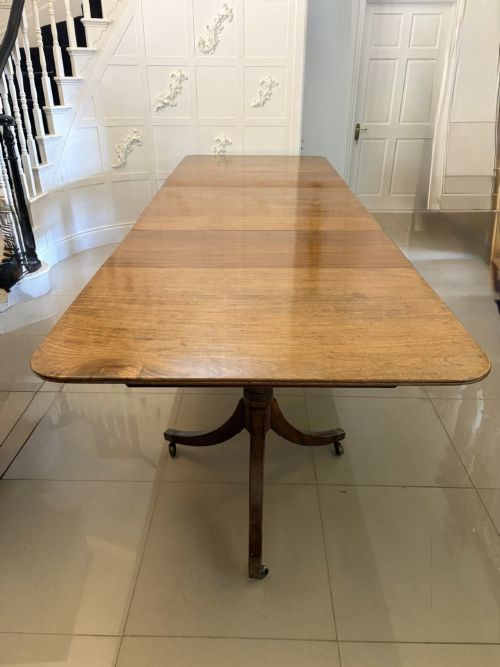
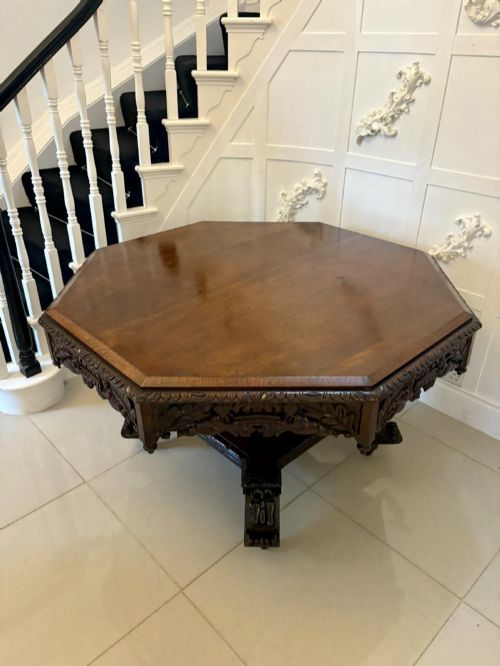
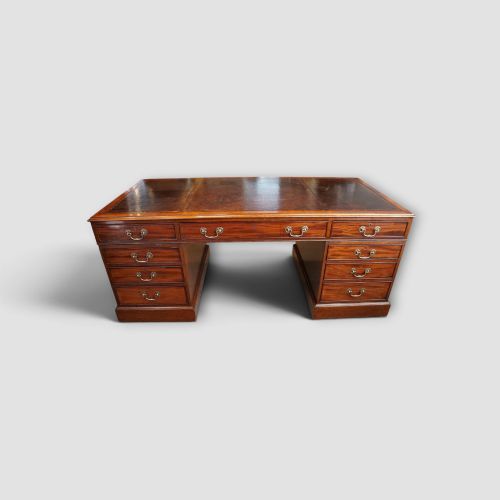
A large antique pedestal typically manifests as a sturdy dining table supported by solid mahogany pillars or an ample partner's desk designed for administrative utility.
Large Pedestal
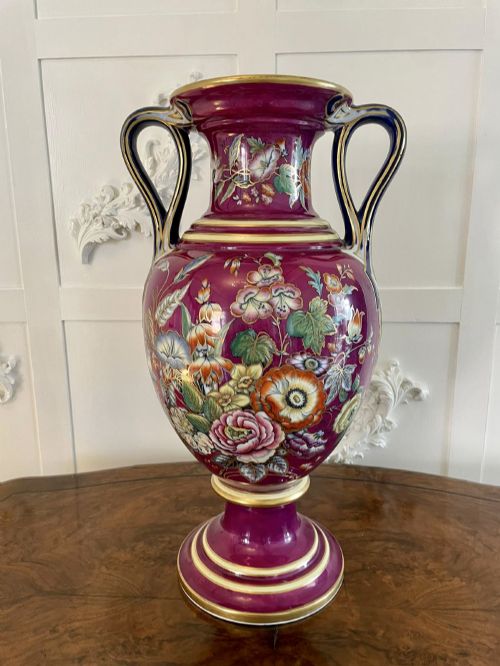
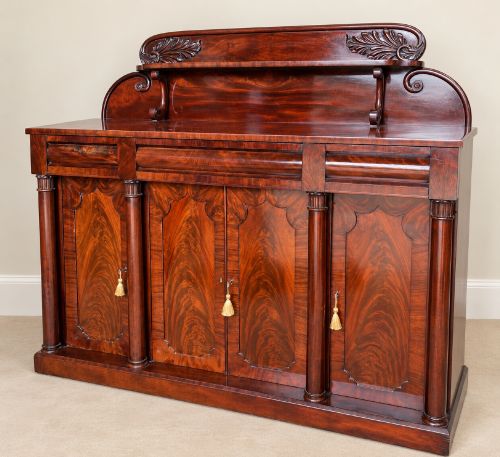
Beyond tables and desks, the category includes occasional furniture like centre tables, sideboards, and occasional display stands. These objects originate from British workshops spanning the nineteenth and early twentieth centuries, reflecting changing domestic requirements for dining and study spaces.
Materials and Construction
Makers relied heavily on solid mahogany, oak, and walnut, often applying flame mahogany veneer to tabletops and drawer fronts for visual depth. Brass castors, leather writing surfaces, and occasional gold leaf details complete the primary hardware and finish work.
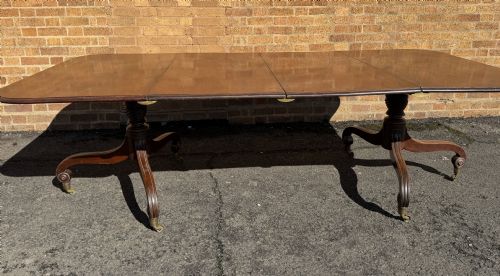
Tables and desks utilise substantial central columns or twin pedestals to distribute weight, frequently incorporating removable leaves for extension mechanisms. Cabinetmakers joined panels using traditional dovetail and mortise techniques to ensure stability across large surface areas.
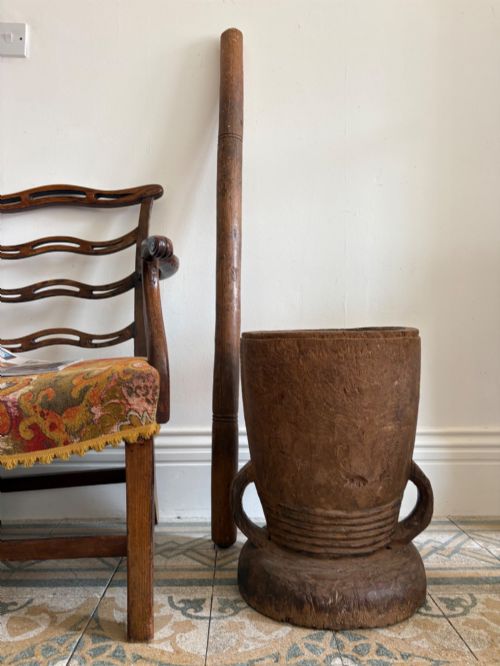
An African primitive grain mortar and pestle carved from a single tree trunk sits among the formal mahogany dining tables.
Judging the Standard
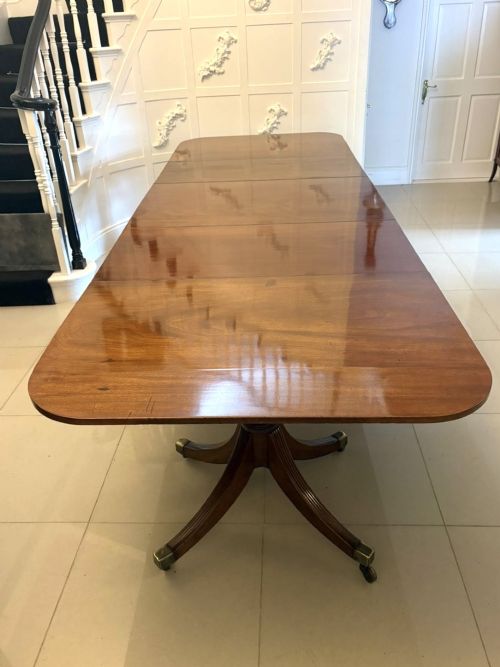
Quality rests upon the selection of timber grain, particularly the choice of figured mahogany or burr walnut for prominent surfaces. Superior examples demonstrate meticulous timber matching across table leaves and drawer banks.
The integrity of the structural joinery within the pillar supports and the crispness of any hand-carved ornamentation dictate the standing of a piece. Finer items retain original brass hardware, stable extension mechanisms, and uncompromised secondary timbers in drawer linings.
Gillows·Wylie and Lochead·Charles Andrea Nosotti·Maple and Co·JAS Shoolbred
The Large Pedestal Glossary
- Pedestal
- A structural support column or pillar holding up a table top, desk, or jardiniere. These columns often feature carved detailing or plain turned designs.
- Partners desk
- A large double-sided desk configured with drawers and cupboards facing both directions. This form allowed two people to work opposite one another.
- Extending dining table
- A table equipped with a central mechanism and removable leaves to lengthen the top. These pieces adapt easily for large gatherings.
- Flame mahogany
- Timber cut to expose a flickering, wavy grain pattern used on high-status veneered surfaces. Cabinetmakers prized this figure for visual impact.
- Marquetry
- Decorative inlay work using various woods to create pictorial or geometric patterns on furniture tops. Artisans fitted thin veneer pieces precisely into a base panel.
Large Pedestal: Frequently Asked Questions
How do I seat guests around a pedestal table?
Multi-pillar dining tables distribute weight across central columns rather than corner legs, leaving maximum knee room for diners seated along the sides.
Adding or removing internal leaves lets you adjust the length of the table to accommodate varying numbers of guests.
Which woods are most common?
Mahogany is the dominant timber across nineteenth-century dining tables and desks, often selected for its strength and rich reddish-brown colour.
Oak and walnut also appear frequently, especially in Victorian and Edwardian office furniture and centre tables.
How are extending tables supported?
Extending dining tables rely on two, three, or four separate wooden pedestals that sit beneath the main top to bear the weight.
Extra leaves drop into the centre section and lock into place using internal brass pins or alignment grooves.