




Large Amethyst Jewellery
Large amethyst jewellery brings substantial purple stones into focus across Victorian, Edwardian, and mid-century designs.
Large Amethyst Jewellery
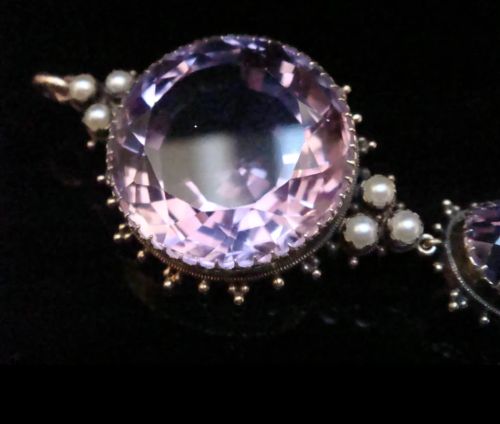
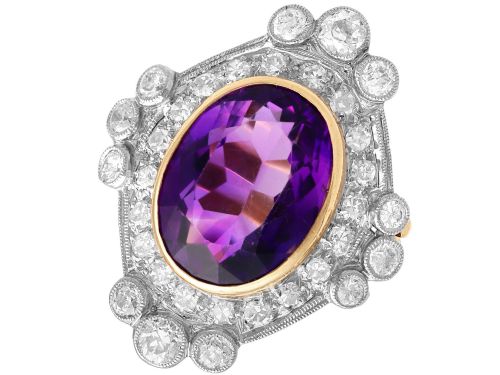
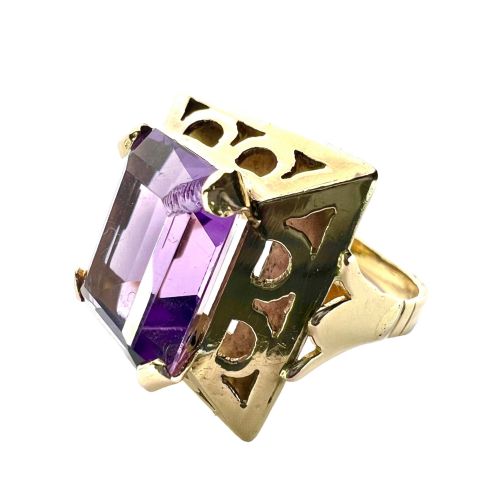
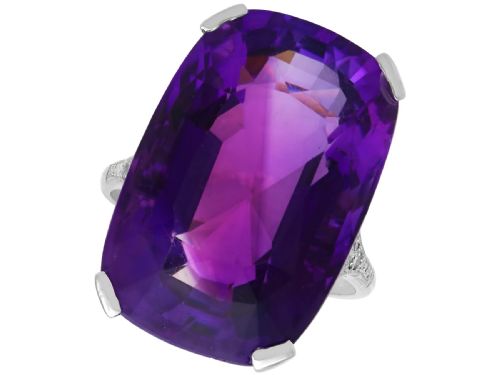
Large amethyst jewellery encompasses substantial gemstone rings, brooches, pendants, and earrings spanning the Georgian, Victorian, Edwardian, Art Deco, and mid-century periods. These pieces showcase deep purple quartz in notable carats, often accented with diamonds, seed pearls, or tourmalines.
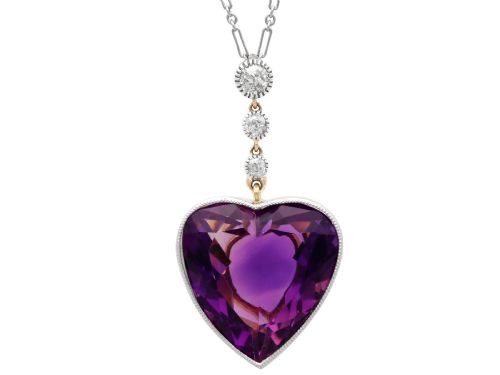
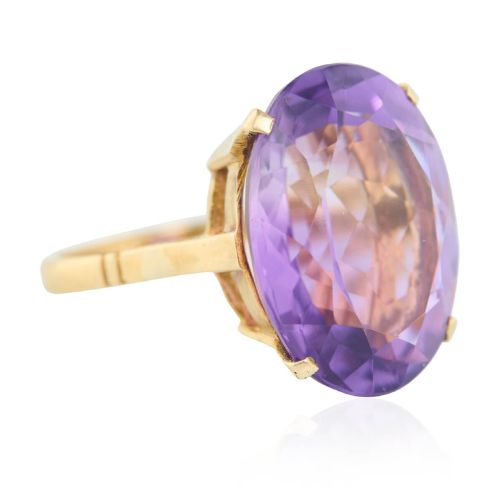
The selection on this page centres on rings, brooches, and pendants featuring prominent amethysts. Buyers frequently encounter Edwardian heart pendants and substantial solitaire or cluster rings from the nineteenth and twentieth centuries.
Materials and construction
Goldsmiths set large amethysts into mounts fashioned from 9ct yellow gold, 14ct yellow gold, silver, and platinum. Early and mid-century pieces frequently combine these precious metals with seed pearls, paste, and diamonds.
Cutter workshops shaped the quartz into cushion, step, cabochon, and square cuts to maximise light return within heavy claw or closed-back settings.
Large Amethyst Jewellery Retail Price Guide 2026
Typical asking prices for large amethyst jewellery among the pieces listed under this phrase on Sellingantiques today, from the lower quarter to the upper quarter. They describe what is for sale here now, not the wider market.
Georgian makers occasionally lined stone settings with coloured foil to trick the eye, giving pale amethysts the fiery glow of royalty.
Assessing quality
Quality rests upon the saturation and clarity of the central amethyst, alongside the integrity of the metalwork. Stones possessing deep, even colour without heavy inclusions command greater attention.
The refinement of surrounding elements, such as matched diamond accents or delicate seed pearl work, distinguishes standard production from finer examples.
The Large Amethyst Jewellery Glossary
- Cabochon
- A gemstone shaped with a smooth, rounded surface rather than faceted edges. This style highlights the natural depth of translucent quartz.
- Paste
- Hand-cut glass used historically as a gemstone substitute. Georgian and Victorian makers utilised paste alongside silver for bright, uniform sparkle.
- Cushion cut
- A rectangular or square stone shape with rounded corners and larger facets. This cut enhances the soft brilliance of vintage coloured gems.
- Solitaire
- A single principal gemstone mounted alone in a ring or pendant. This setting places full visual emphasis on the central stone.
Large Amethyst Jewellery: Frequently Asked Questions
How do I care for large amethyst jewellery?
Amethyst is a durable quartz but benefits from gentle cleaning with warm soapy water and a soft brush. Avoid harsh chemicals and ultrasonic cleaners to protect the metal settings and softer accent stones.
Store pieces individually in padded boxes to prevent scratching against other items in your collection.
What periods do these pieces represent?
The selection spans multiple eras, beginning with Georgian foiled pieces and moving through Victorian, Edwardian, Art Deco, and mid-century designs. Each period brings distinct metal choices and mounting styles.
Victorian and Edwardian items often feature yellow gold heart motifs, while Art Deco examples lean towards geometric platinum and high-carat gold settings.
Can I wear these rings daily?
Substantial rings suit regular wear provided you remove them during heavy manual tasks or contact sports. The size of the stone means settings experience more leverage against daily knocks.
Checking the claws periodically with a jeweller ensures the large central quartz remains secure in its mount.
How can I tell a Victorian amethyst from a mid-century one?
Victorian pieces often utilise lower-carat yellow gold or silver, sometimes incorporating foiled backs or closed settings to enhance the colour. Edwardian and Victorian examples frequently pair amethysts with seed pearls.
Mid-century rings tend to feature heavier independent gold mounts, cleaner prongs, and very large step-cut stones without historical foil backing.