

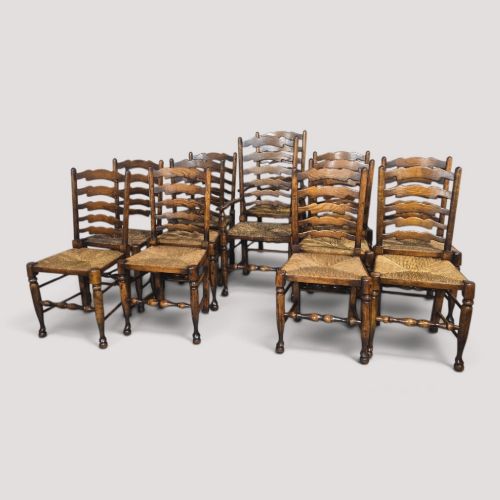
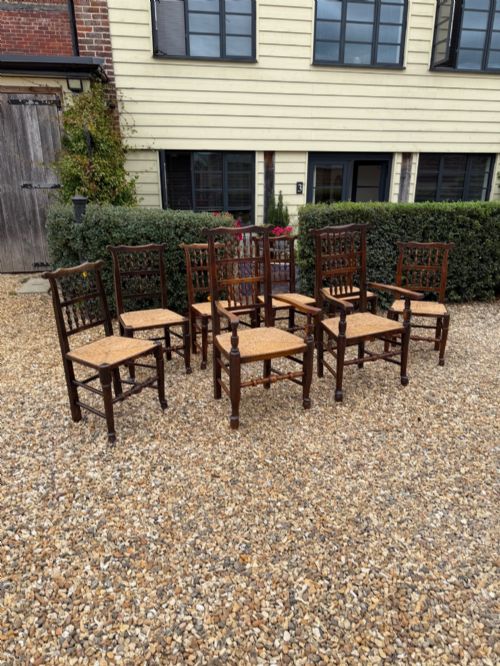
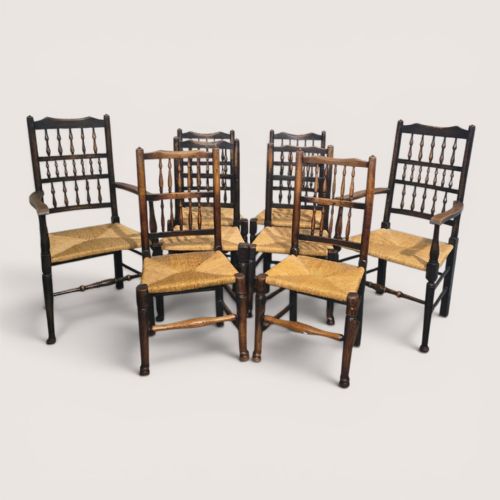
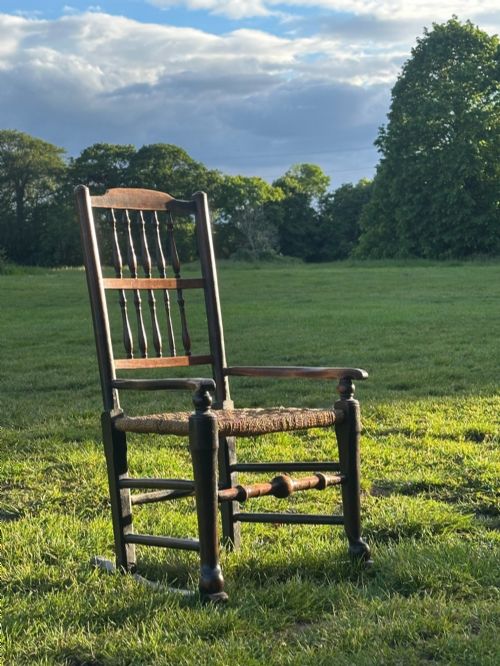
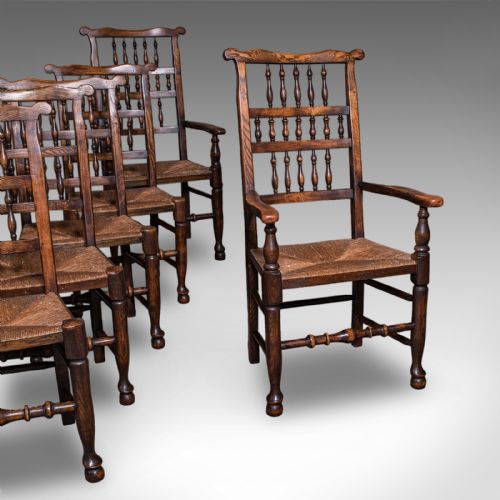
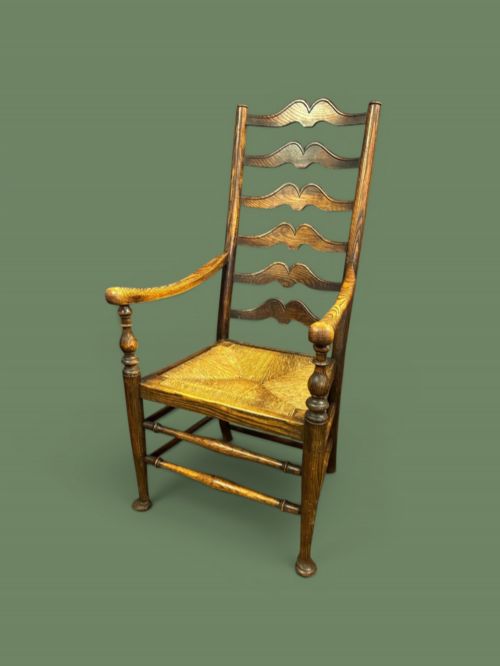


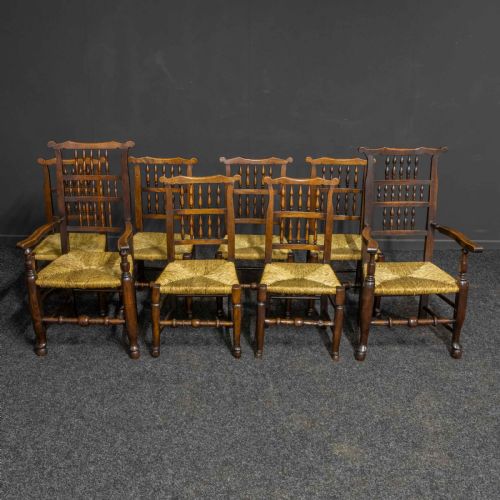


Lancashire Rush Seat Chairs
These robust lancashire rush seat chairs bring honest country character to a room, built by regional makers to last for generations.
Lancashire Rush Seat Chairs
When you search for lancashire rush seat chairs, you enter a traditional world of English country seating built for daily use. The pieces found here range from robust eighteenth century examples to later country vernacular revivals from the nineteenth and early twentieth centuries.
You will encounter various formats, including sets of dining chairs, individual carvers, armchairs, and rocking chairs. Elm and ash appear frequently alongside oak, beech, and alder, forming sturdy frames designed to support woven rush seating.
The regional design traditions of Lancashire and Cheshire shape these forms, yielding ladder backs and spindle backs that suit farmhouse kitchens and rustic dining spaces. Most pieces on this page reflect vernacular craft traditions rather than formal court furniture.
Materials and construction
Local timber selection defined regional chair making, with turners and joiners utilising native hardwoods for maximum strength. Elm provided tough seats, while ash, oak, and beech formed resilient spindles, legs, and frames.
Rush was harvested from local waterways and meticulously twisted into long cords before being hand-woven tightly across the seat frames. Turned components were shaped on pole lathes or foot-powered lathes, creating the characteristic spindles and uprights seen on ladder backs and spindle backs.
Lancashire Rush Seat Chairs Retail Price Guide 2026
Typical asking prices for lancashire rush seat chairs among the pieces listed under this phrase on Sellingantiques today, from the lower quarter to the upper quarter. They describe what is for sale here now, not the wider market.
Some chairs spent centuries close to the hearth, absorbing peat smoke and tea spills until their timber turned deep walnut brown.
Judging quality and proportion
The integrity of the frame and the tightness of the rush weaving determine the standing of an individual chair. Better examples maintain their original timber patina, minimal structural alteration, and well-balanced proportions across arms, legs, and back posts.
Subtle differences in turning crispness and the choice of primary woods separate standard utility seating from finer vernacular work. Matching sets demonstrate greater consistency in spindle placement and rush density than harlequin gatherings assembled later.
The Lancashire Rush Seat Chairs Glossary
- Rush
- Dried marsh grass woven tightly to form a durable, flexible seating surface. It provides a comfortable texture that breathes with environmental humidity.
- Spindleback
- A chair design featuring multiple thin turned wooden uprights in the backrest. This construction offers light strength and structural support.
- Ladderback
- A chair back formed of horizontal slats set between two main upright posts. It represents a traditional regional layout common in English country workshops.
- Vernacular
- Everyday objects built by local craftspeople using regional materials and traditional methods rather than following strict high-style architectural rules.
Lancashire Rush Seat Chairs: Frequently Asked Questions
How do I care for rush seats?
Keep rush seating away from damp environments and direct heat sources to prevent the natural fibres from becoming brittle.
Clean gently with a dry brush and avoid saturating the woven surface with water during routine maintenance.
Can I mix these with modern tables?
The organic timber tones and simple lines of country chairs blend effectively with contemporary or rustic dining tables.
Harlequin sets introduce varied wood grains and turning details that soften clean architectural interiors.
Are spindle backs comfortable for dining?
The angled uprights and supportive rush pads provide sensible ergonomics for extended sitting during meals.
Armchair versions offer additional support through integrated wooden armrests.
How do I spot an older frame?
Examine the joinery for hand-turned peg construction, tool marks from pole lathes, and natural timber wear around the footings.
Eighteenth century examples show softer edges and deeper patination compared to later nineteenth century and Edwardian interpretations.