




Lambeth Stoneware Vase
A lambeth stoneware vase brings heavy Victorian and Edwardian weight, rich glaze, and intricate incised ornament directly to a mantelpiece.
Lambeth Stoneware Vase
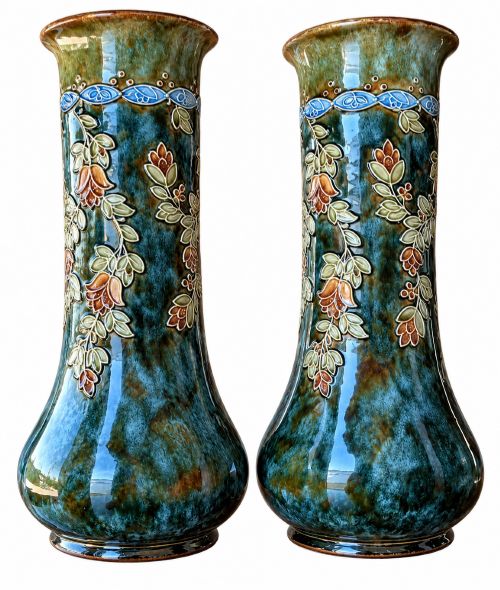
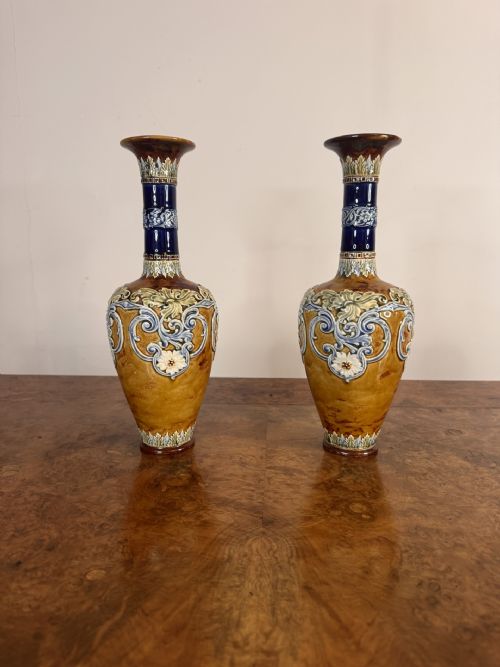
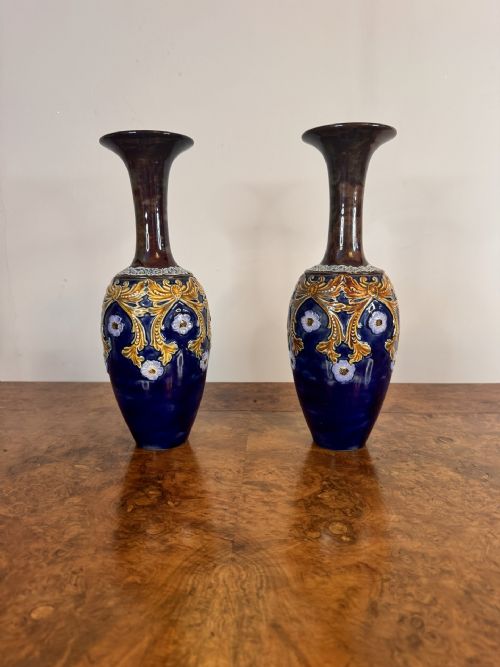
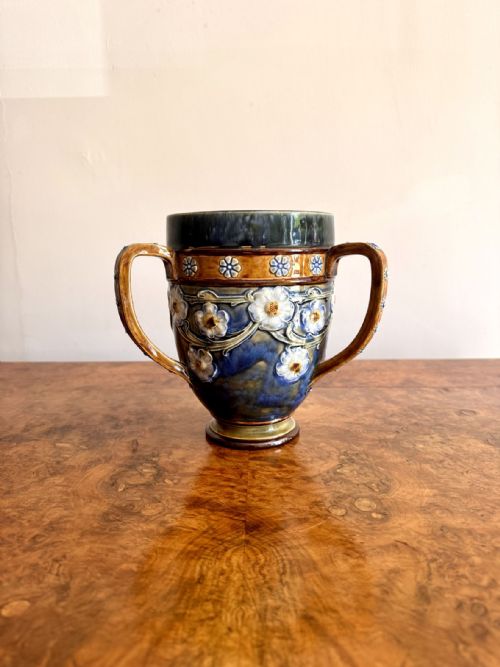
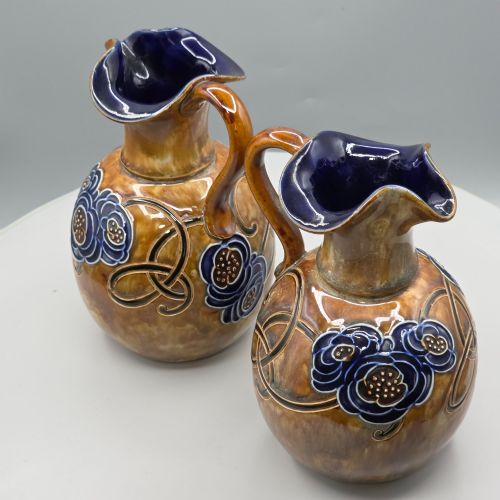
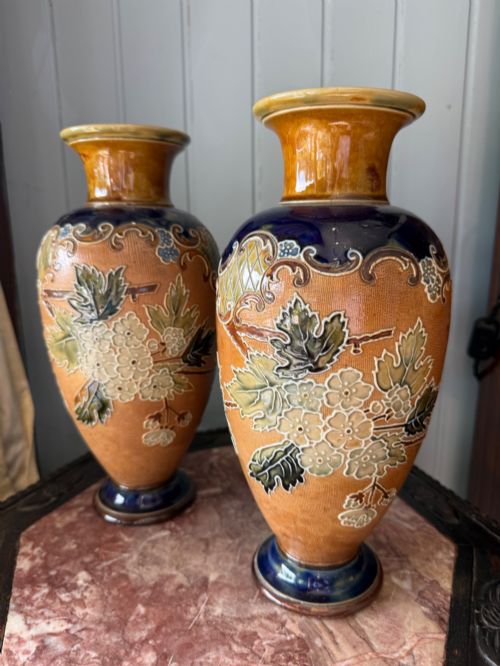
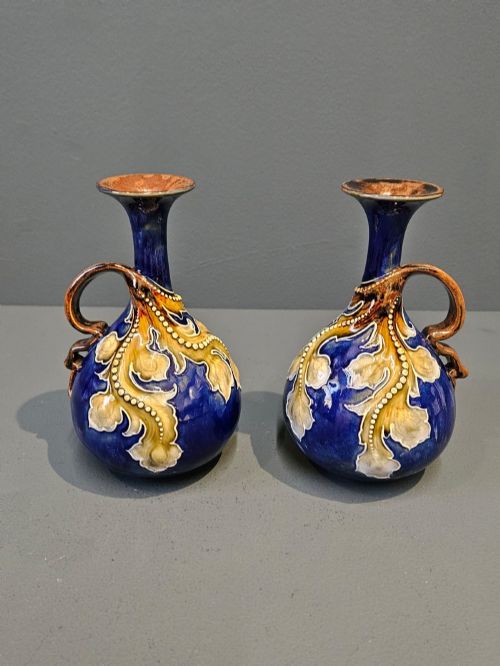
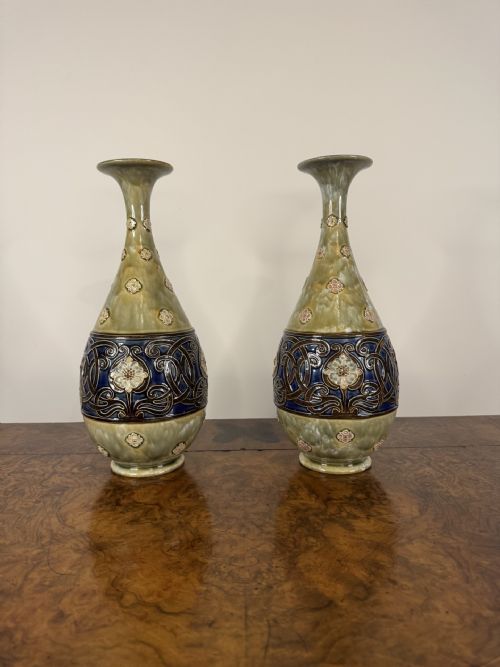
A lambeth stoneware vase combines dense, vitrified ceramic bodies with elaborate surface decoration drawn from the Victorian and Edwardian eras. These vessels range from stout baluster forms and ewers to tall decorative jugs produced predominantly around the late nineteenth and early twentieth centuries.
Buyers will most frequently encounter pieces associated with the Art Nouveau, Arts and Crafts, and Aesthetic movements. These designs often feature naturalistic leaf patterns, enamel floral decor, and specialised textural treatments across the ceramic surface.
Origins trace directly to the south London potteries operating through the Victorian period and into the 1920s. The selection spans straightforward utility forms alongside ambitious exhibition pieces shaped by notable studio artists.
Materials and technique
Makers utilised dense stoneware and ceramic bodies capable of holding salt-glaze and coloured enamel finishes. These hard-fired bases provided a stable ground for intricate hand-tooling and applied ornament.
Techniques relied heavily on incised carving, pate-sur-pate detailing, and specialised surface treatments like Slater's Patent texturing. Artisans pressed lace or fabric into the damp clay before applying rich glazes to catch the kiln heat.
Lambeth Stoneware Vase Retail Price Guide 2026
Typical asking prices for lambeth stoneware vase among the pieces listed under this phrase on Sellingantiques today, from the lower quarter to the upper quarter. They describe what is for sale here now, not the wider market.
Materials recorded across the current inventory include heavy stoneware, applied enamel, ceramic glaze, and occasional touches of gilt ornamentation.
Quality factors
Differentiation across the range depends largely on the ambition of the hand-executed decoration and the presence of named artist signatures. Pieces bearing the distinct cipher of accomplished studio hands display sharper incisions and more controlled glaze reactions.
Form and balance dictate the hierarchy of these vessels, separating standard production wares from individually modelled exhibition items. Stronger proportions and complex silhouette-shaping elevate a piece far above simple utilitarian shapes.
Royal Doulton·Louisa Wakely·Eliza Simmance·Emma Shute·Emily Edwards·Emily Stormer·Ethel Beard·Florence Barlow
The Lambeth Stoneware Vase Glossary
- Stoneware
- A robust, heavy ceramic fired at high temperatures until vitrified and rendered impermeable to liquids. This dense body forms the essential foundation for salt-glazed and enamelled studio pottery.
- Baluster
- A candlestick or vase shape characterised by a rounded lower body tapering to a narrow neck. This classic silhouette provides generous surface area for intricate incised decoration.
- Ewer
- A large jug featuring an ornamental spout and a scrolled handle designed for pouring. Victorian examples often function primarily as decorative cabinet or mantelpieces.
- Enamel
- Opaque vitreous paint applied over the fired ceramic body to add vibrant colour. Artisans utilise enamel highlights to emphasise floral motifs and geometric borders.
- Slaters Patent
- A proprietary manufacturing technique involving textured lace or fabric pressed directly into damp clay. This method creates distinctive patterned backgrounds reminiscent of woven textiles.
Lambeth Stoneware Vase: Frequently Asked Questions
How do I identify a lambeth stoneware vase?
Look for heavy, vitrified ceramic bodies featuring incised foliate patterns, coloured glazes, and impressed factory stamps on the underside.
Many examples also bear the incised monograms of individual studio artists alongside the main pottery marks.
What styles are common on these vases?
The dominant aesthetics reflect Victorian, Arts and Crafts, and Art Nouveau movements. Surface designs favour stylised leaves, naturalistic flowers, and textured geometric backgrounds.
Later Edwardian iterations lean into brighter enamel floral decoration while retaining traditional pottery forms.
How should I display a lambeth stoneware vase?
Place these heavy ceramic pieces on sturdy surfaces where their dense glazes and detailed carving can catch natural light. Avoid cramped shelving to let the baluster and ewer silhouettes stand clear.
Keep them away from damp areas, treating the finished stoneware and enamel surfaces with standard gentle dusting.
What periods do these pieces date from?
The current selection spans the late nineteenth century through to the early decades of the twentieth century. Victorian and 1880s examples sit alongside 1900 and 1910 Arts and Crafts productions.
Occasional sixteenth-century influences appear purely as stylistic nods within later Victorian manufacturing contexts.