




Lalique Opalescent Bowl
A lalique opalescent bowl captures the shifting play of milky blue and amber light through moulded relief, bringing French decorative glass to a table or cabinet.
Lalique Opalescent Bowl
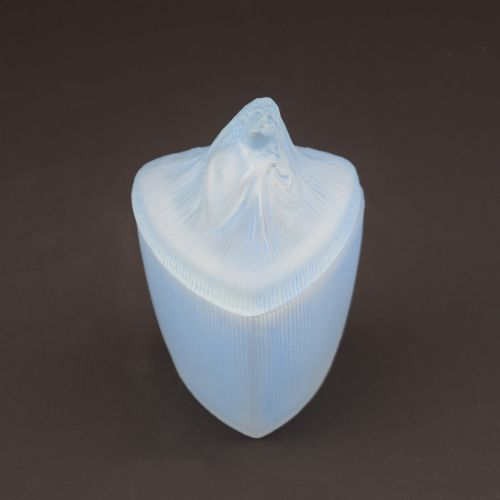
A lalique opalescent bowl is a heavy pressed or moulded glass vessel designed in decorative forms ranging from shallow dishes to footed coupes. Collectors encounter these pieces spanning the Edwardian era through the nineteen-thirties, with production drawing heavily upon Art Nouveau and Art Deco vocabularies.
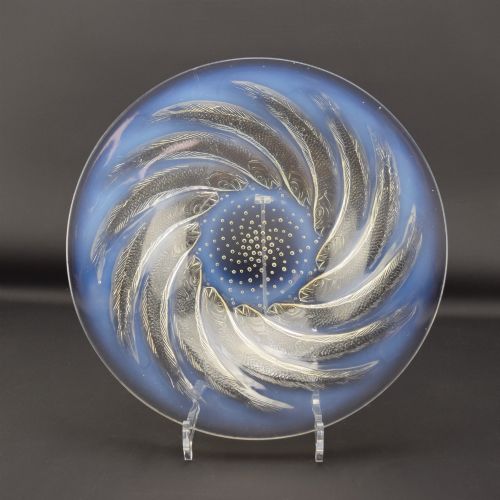
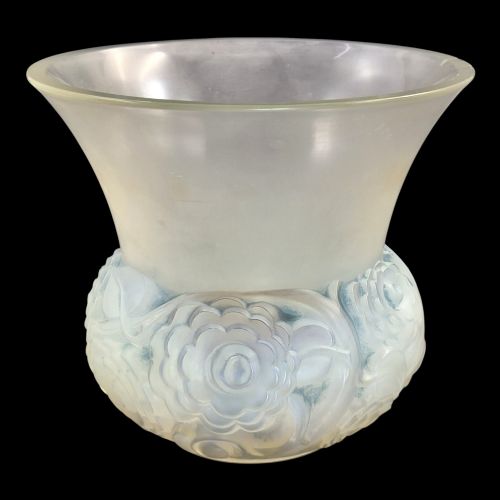
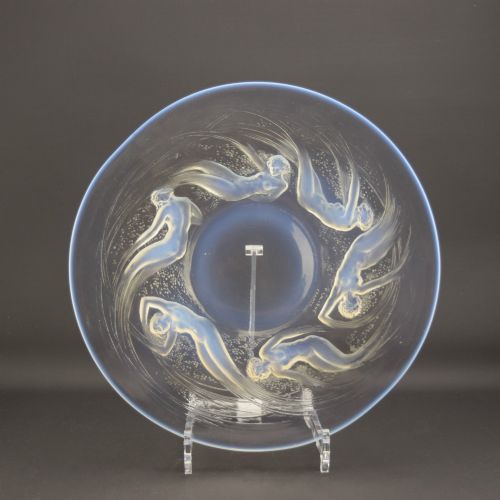
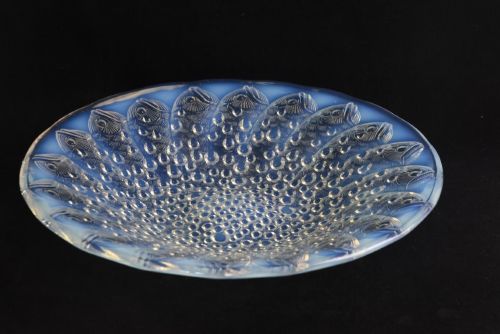
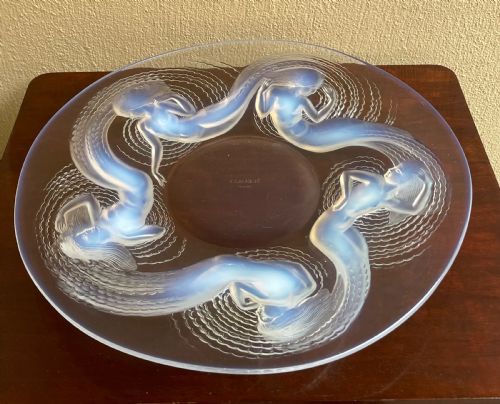
The decorative schemes on these bowls rely on natural motifs such as fish, flora, and avian forms rendered in high relief. Pieces like the Poissons and Coquilles designs demonstrate how the maker integrated botanical and aquatic subjects into functional glassware.
Vessels on this page extend across various forms including coupe ouvertes, chargers, and shallow bowls intended for display or domestic use. The common thread among them is the characteristic use of optical effects within the glass body.
Materials and Technique
These pieces are manufactured from heavy crystal, frosted glass, and moulded glass that undergo specific cooling processes to achieve their trademark optical transformation. The addition of bone ash or specific minerals to the molten batch causes the glass to scatter light, appearing blue against transmitted light and warm amber or white against reflected light.
Moulding and pressing techniques allowed workshops to produce complex, deep-relief patterns depicting flowers, leaves, and geometric arrangements. Artisans frequently applied coloured stains or enamels to the recesses of the moulded glass to accentuate the depth and contour of the design.
Fish, beetles, and parakeets populate the glass walls, turning an ordinary table bowl into a menagerie.
Judging Quality and Finish
Quality in these glass pieces rests upon the crispness of the moulded detail and the vitality of the opalescent effect within the material. Superior examples display sharp definition in the relief work, where feathers, petals, and scales remain distinct without softening from worn moulds.
The intensity and uniformity of the opalescence across the body of the glass dictate the visual success of the piece. Subtle variations in the depth of the milky blue glow and the successful retention of original staining in the recessed details separate standard production from more striking works.
Rene Lalique
The Lalique Opalescent Bowl Glossary
- Opalescent Glass
- Glass that diffuses light to display a milky blue or white appearance when viewed by reflected light, turning amber when viewed against transmitted light. This optical property defines the visual character of the bowls.
- Coupe Ouverte
- An open bowl or shallow vessel form frequently utilised for decorative tableware and centrepieces. These wide formats provide an expansive surface for moulded floral or aquatic motifs.
- Frosted Glass
- Glass treated by acid-etching or sandblasting to create a matte, textured surface that scatters light. This technique provides contrast against polished highlights on relief designs.
- Charger
- A large decorative plate or shallow basin used for display rather than service. These substantial pieces often feature elaborate border decoration.
- Moulded Glass
- Glass shaped by pressing molten material into a metal or wooden matrix to create three-dimensional relief patterns. This method enabled the consistent production of intricate floral and animal motifs.
Lalique Opalescent Bowl: Frequently Asked Questions
What are these bowls made of?
These vessels are formed from heavy moulded glass, crystal, and frosted glass engineered to produce specific optical qualities.
The inclusion of specific mineral agents in the glass batch creates the characteristic milky opalescence that shifts between blue and amber tones.
How were these bowls used originally?
Domestic interiors utilised these vessels as decorative centerpieces, fruit bowls, or shallow dishes for display on tables and sideboards.
Larger chargers and plates served primarily as ornamental items rather than functional tableware.
How do I care for an opalescent glass bowl?
Cleaning requires gentle washing in lukewarm water with mild soap, avoiding abrasive cloths or harsh chemical detergents that might harm the surface.
Careful handling is essential due to the weight of the dense crystal and moulded glass structure.
How do I identify the period of a piece?
Dating relies upon stylistic markers that transition from organic Art Nouveau botanical themes toward geometric Art Deco designs during the nineteen-twenties and nineteen-thirties.
Cataloguing records and design registration numbers associated with specific patterns assist in establishing approximate production dates.