


Lakai Tribal Wall Hanging
These vibrant Central Asian textiles bring remarkable pattern and history to interiors as a lakai tribal wall hanging.
Lakai Tribal Wall Hanging
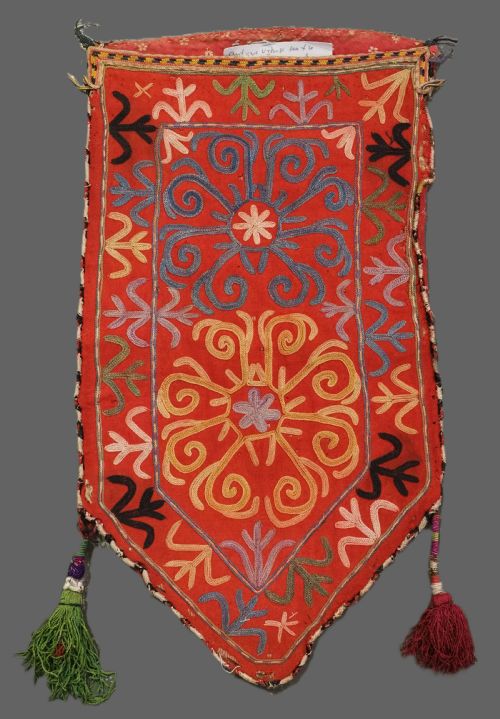
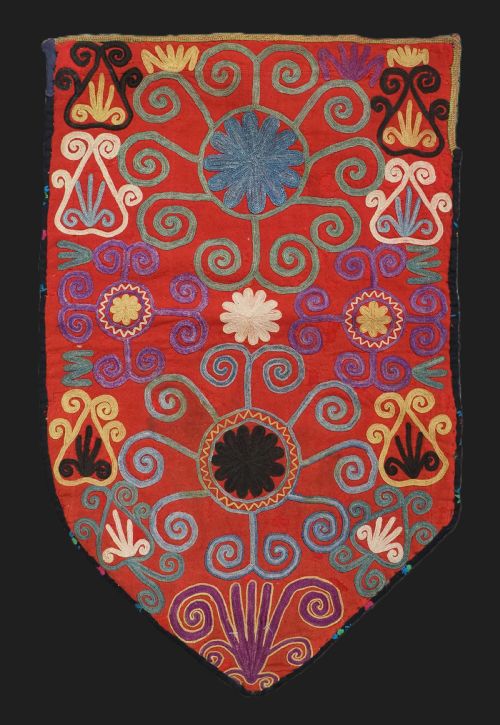
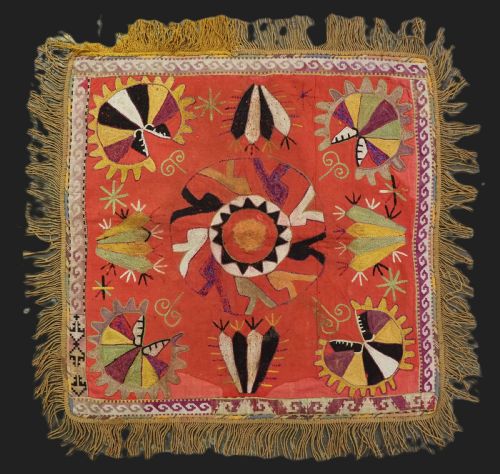
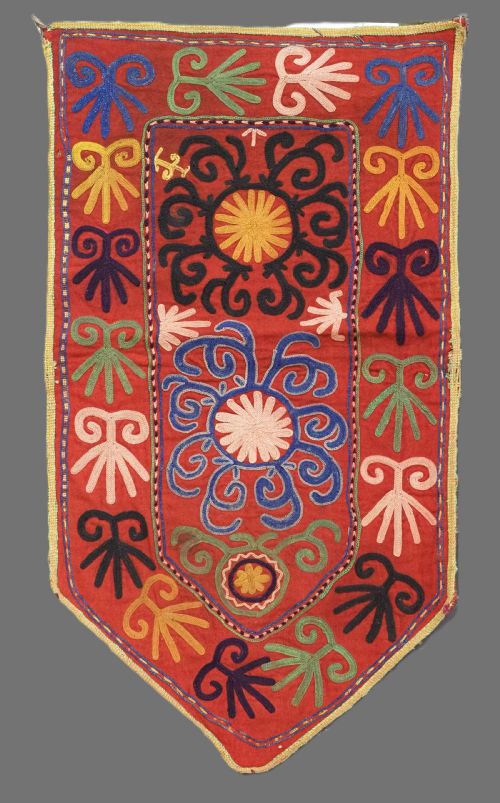
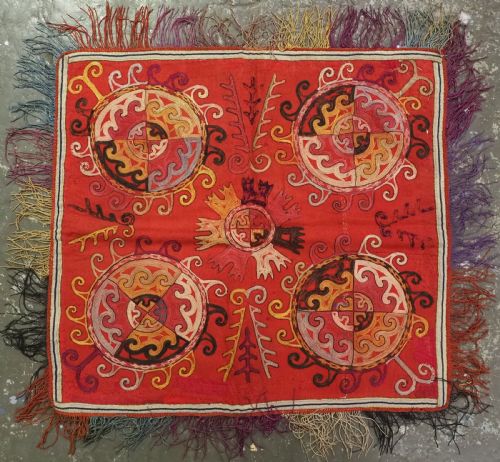
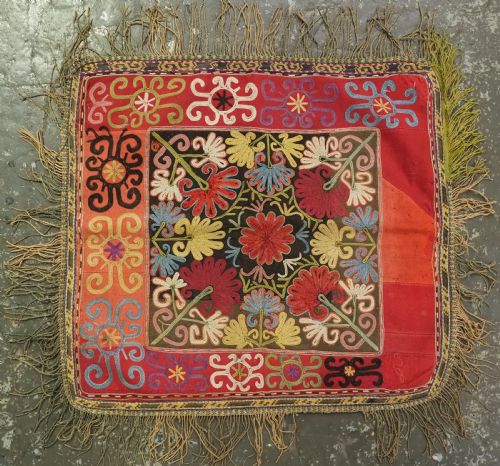
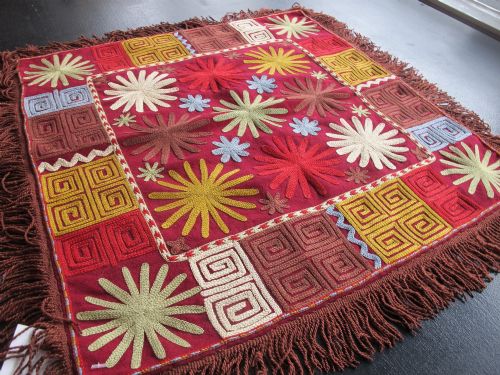
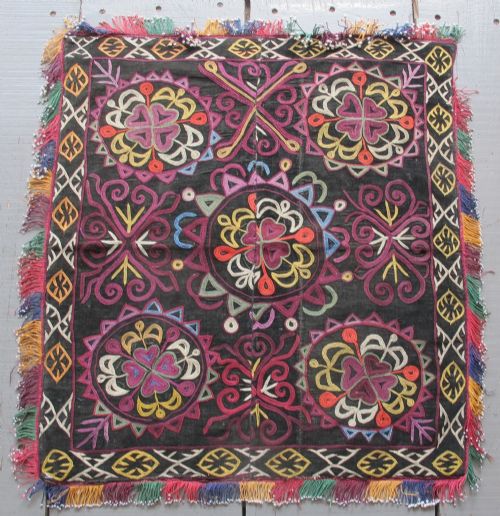
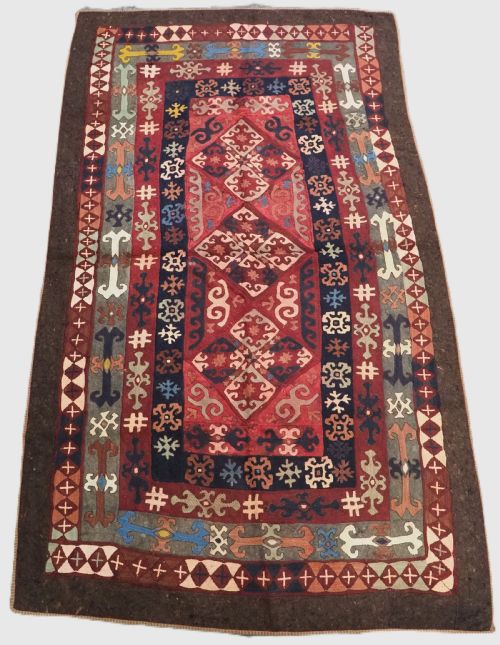
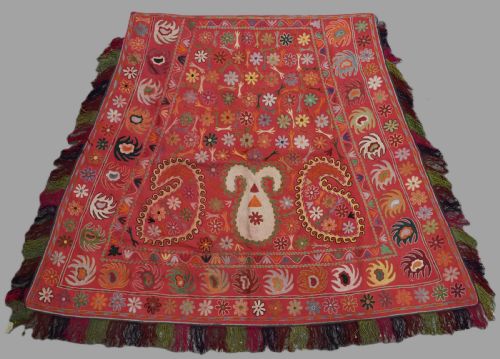
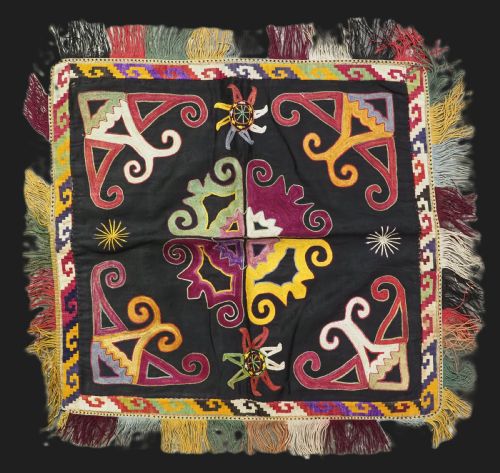
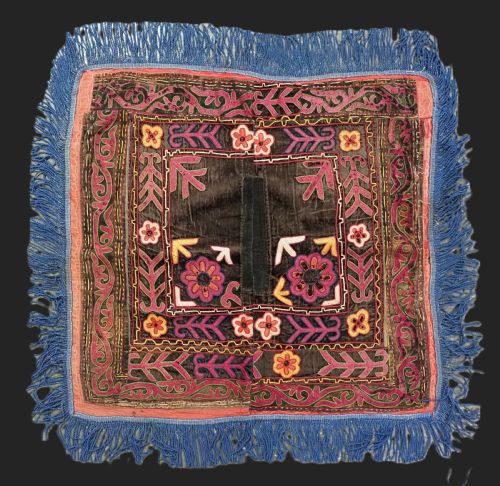
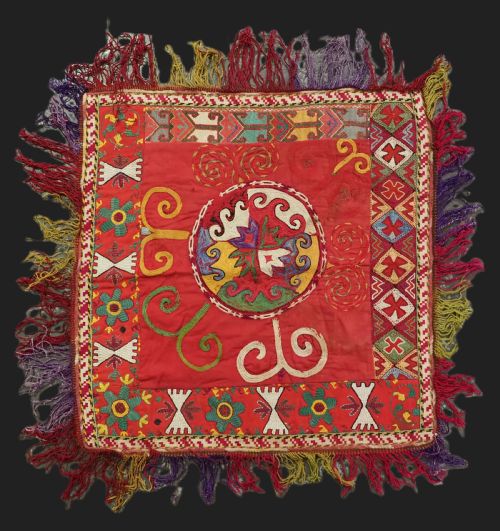
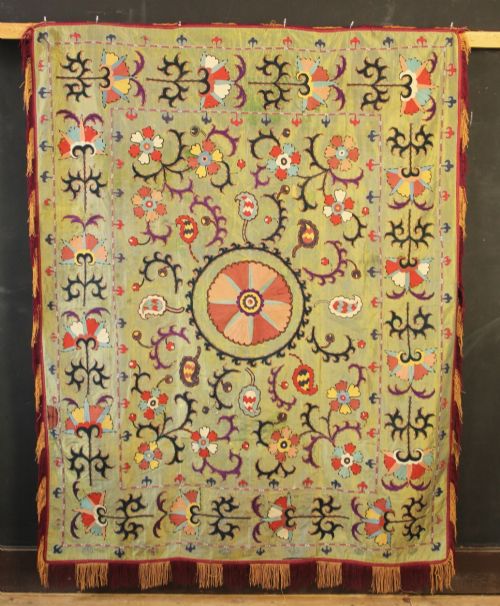
A lakai tribal wall hanging originates from the Uzbek Lakai tribes of Central Asia, dating from periods around 1880, 1890, 1900, and 1920. Buyers searching this phrase encounter domestic and ceremonial items repurposed for display, including dowry embroideries, wedding hangings, and horse covers.
The most common forms on this page include the ilgich, uut kap, nim suzani, and ceremonial horse covers or saddle rugs. These pieces reflect nomadic folk art traditions with bold geometric motifs and distinct local origins such as Shakrisabz in Uzbekistan.
Many examples began life as functional items for domestic interiors or horse trappings before collectors mounted them as textile art. The variety encompasses small amulet covers alongside large wall panels measuring over a metre across.
Materials and Construction
Makers utilised silk thread and wool embroidery applied to foundations of cotton, felt, wool, or velvet grounds. Silk on red wool grounds and green silk nim suzani panels demonstrate the prevalent textile choices.
Surface ornamentation frequently incorporates glass beads alongside dense needlework in varied stitches. Artisans constructed double faced panels and embroidered felt rugs designed for hard wear and ceremonial display.
Listings feature periods spanning from 1880 to 1920 alongside materials including silk, cotton, wool, felt, velvet, and glass beads.
Assessing Quality and Execution
The density and precision of the silk embroidery separate standard items from finer works. Tightly executed needlework with complex geometric arrangements shows greater skill among nomadic artisans.
Material preservation and the richness of the natural and synthetic dyes affect overall visual impact. Intact wool fringe, secure glass beads, and stable felt or cotton grounds preserve the integrity of each piece.
The Lakai Tribal Wall Hanging Glossary
- Ilgich
- A Central Asian hanging or wall embroidery. These pieces formed part of traditional dowry furnishings.
- Uut kap
- A storage bag face or tent hanging from nomadic households. They often feature bold tribal motifs.
- Nim suzani
- A half-size embroidered wall hanging or cover. These smaller formats were utilised in domestic spaces.
- Suzani
- An embroidered tribal textile panel from Central Asia. They are worked in silk or wool on textile grounds.
- At torba
- A horse cover or saddle bag associated with nomadic tribes. These ceremonial trappings double as decorative wall panels.
Lakai Tribal Wall Hanging: Frequently Asked Questions
How were these textiles used originally?
Nomadic communities utilised these embroideries to decorate tent interiors, store household goods, and adorn horses during ceremonies. Many functioned as dowry pieces made by brides and family members.
Over time, collectors adapted them for wall display to showcase the intricate needlework and pattern.
How do I hang a textile safely?
Mounting requires weight distribution across the entire top edge using conservation-grade velcro or a fabric sleeve sewn to the back. This prevents stress on the historic cotton, wool, or silk grounds.
Keep pieces away from direct sunlight to protect the dyed threads and glass beads from fading.
How do I date an antique embroidery?
Dating relies on material analysis, dye types, and stylistic comparison with documented tribal pieces from periods around 1880 to 1920. Hand-spun yarns and natural dye palettes typically point to earlier nineteenth-century origins.
Structural wear and the specific configuration of geometric motifs provide further clues to age.