



Lakai Tribal Hanging
Lakai tribal hanging pieces bring vibrant Central Asian folk art and dowry embroidery into a room.
Lakai Tribal Hanging
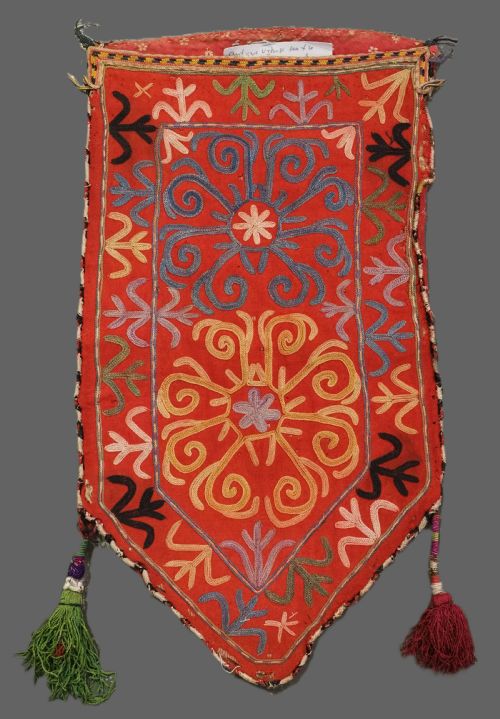
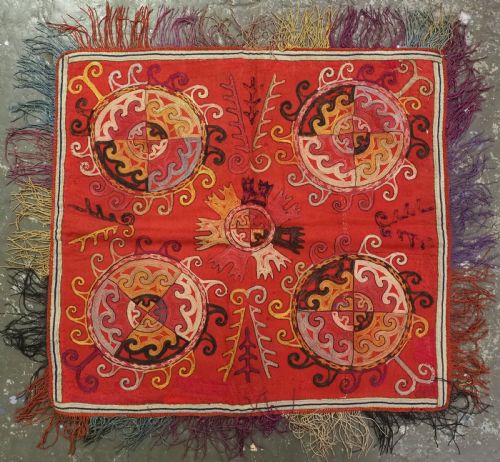
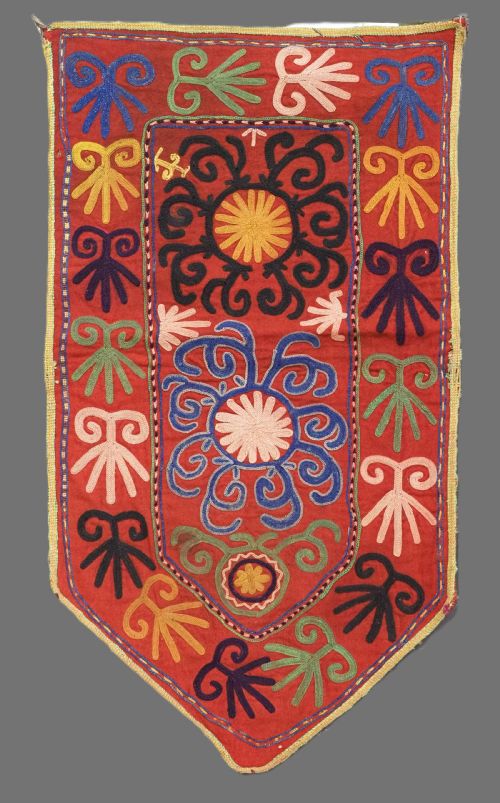
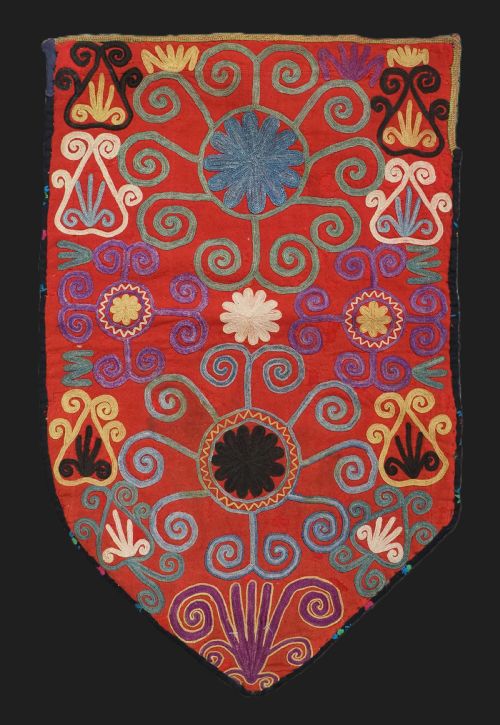
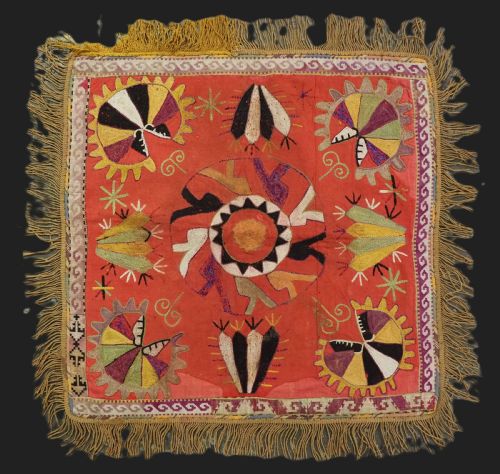
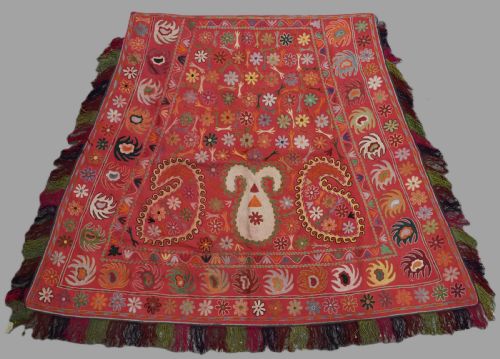
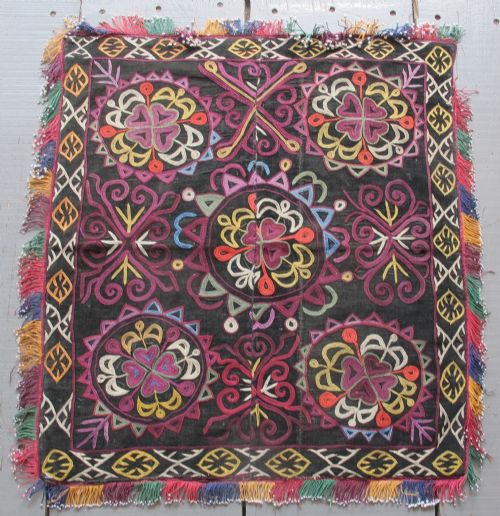
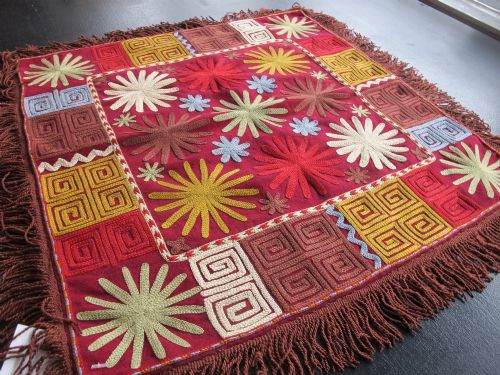
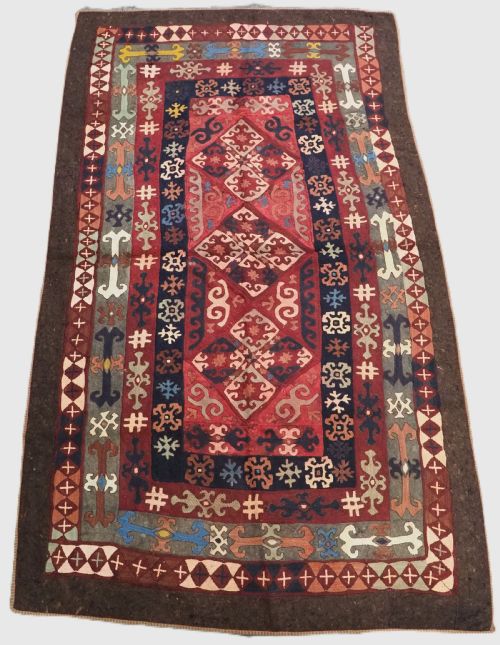
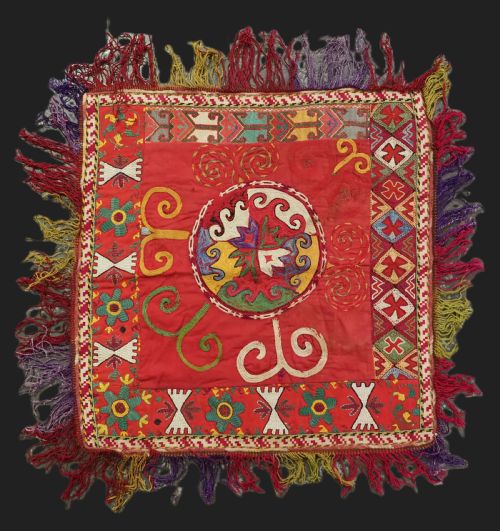
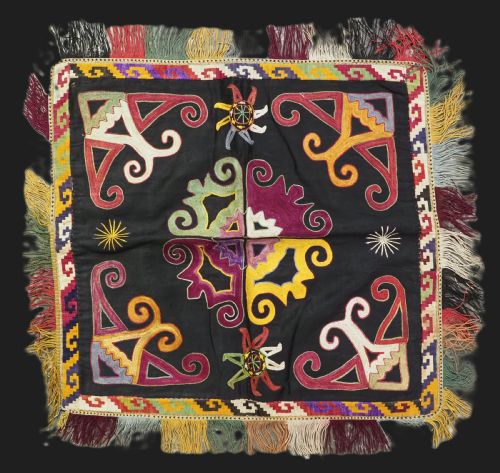
A lakai tribal hanging represents Central Asian folk art and traditional dowry embroidery originating from Uzbekistan. The most common forms seen here include ilgich wall hangings, ceremonial horse covers, saddle rugs, and nim suzani covers dating from the late nineteenth century to the early twentieth century. These textiles served various domestic and ceremonial functions within nomadic and settled tribal communities.
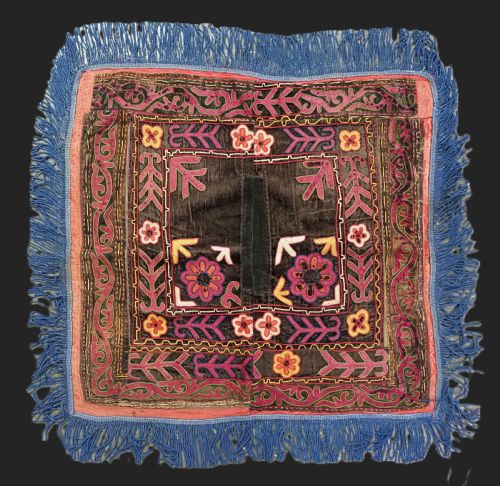
The aesthetic of a lakai tribal hanging relies on bold geometric compositions and expressive needlework. Makers produced these pieces using materials like silk thread, cotton, wool, felt, and velvet, often incorporating glass beads for added texture. Objects range from small amulet covers and mirror covers to larger wall panels and bed decorations.
Materials and construction
Makers constructed a lakai tribal hanging by working fine silk thread onto ground fabrics such as cotton, wool, or felt. Many examples feature detailed embroidery techniques applied to a sturdy backing of wool or velvet to create tactile depth and rigidity.
Additional decorative elements like glass beads and wool fringe appear across various panels and horse covers. The combination of silk embroidery on contrasting wool or cotton grounds defines the visual texture of these Central Asian textiles.
Lakai Tribal Hanging Retail Price Guide 2026
Typical asking prices for lakai tribal hanging among the pieces listed under this phrase on Sellingantiques today, from the lower quarter to the upper quarter. They describe what is for sale here now, not the wider market.
Listings span the period from eighteen eighty to nineteen twenty, featuring silk, cotton, wool, felt, and velvet.
Evaluating quality and execution
The quality of a lakai tribal hanging depends on the precision and density of the silk threadwork. Finer execution shows intricate detail in the geometric motifs and secure attachment of elements like glass beads and felt appliques.
Condition and completeness also determine the standing of a piece. Intact fringe, stable ground fabrics in wool, cotton, or velvet, and well-preserved silk embroidery distinguish the better examples from heavily worn or fragmented ones.
The Lakai Tribal Hanging Glossary
- Ilgich
- A type of Central Asian dowry embroidery or wall hanging created by the Lakai tribe. These pieces often feature bold geometric designs.
- Suzani
- An embroidered textile panel from Central Asia, typically worked in silk on a cotton or wool ground. Nim suzani refers to a half-size version of these covers.
- Uut Kap
- A storage bag or hanging used inside a yurt, frequently associated with tribal embroidery from Uzbekistan. They display characteristic folk art patterns.
- At Torba
- A ceremonial horse cover or bag used by Central Asian tribes during festivals and weddings. These textile panels are heavily embroidered.
Lakai Tribal Hanging: Frequently Asked Questions
What is a lakai tribal hanging used for?
These textiles served as dowry items, wall decorations, or ceremonial horse covers within tribal households in Central Asia. They brought colour and decorative display to domestic spaces and nomadic gatherings.
Today, collectors mount these pieces on walls as textile art or display them as decorative panels. Their varied formats allow them to integrate into diverse interior settings.
How old are these textile hangings?
The pieces available date from the late nineteenth century up to the early decades of the twentieth century. Specific dates generally span from around eighteen eighty to nineteen twenty.
Craftsmen produced these works using traditional methods before industrial changes altered local textile production. Each piece reflects the aesthetic standards of its specific period.
What materials are used in lakai embroidery?
Makers relied primarily on silk thread for the detailed surface embroidery. This was stitched onto ground fabrics made from cotton, wool, felt, or velvet.
Additional elements such as glass beads and wool fringe appear on selected horse covers and wall panels. These materials contributed to the tactile and durable nature of the objects.
How do you care for an antique textile?
Protect the fabric by keeping it away from direct sunlight, which can fade the silk threads and wool grounds. Gentle vacuuming through a mesh screen helps remove dust without damaging the embroidery.
Avoid hanging these textiles in humid environments or areas with fluctuating temperatures. Proper mounting distributes the weight evenly across the support structure.