

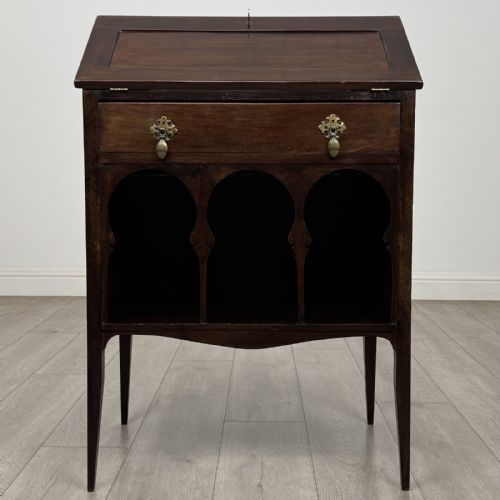
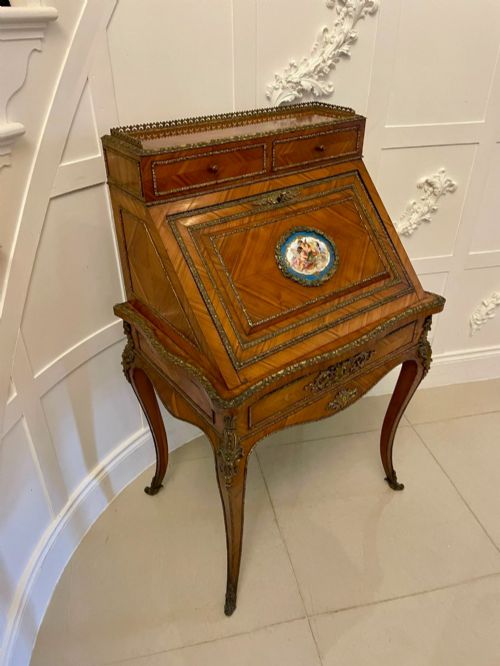
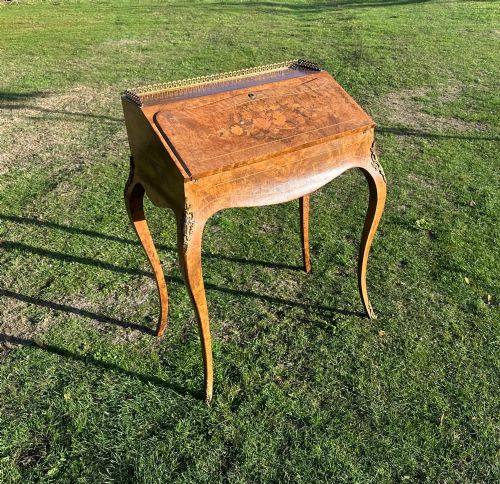
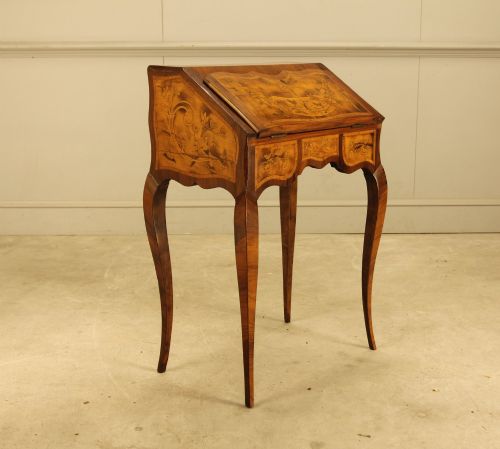

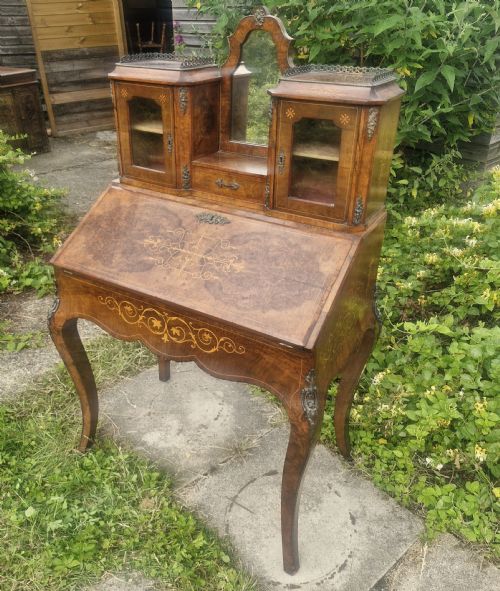


Ladies Slant Front Bureau
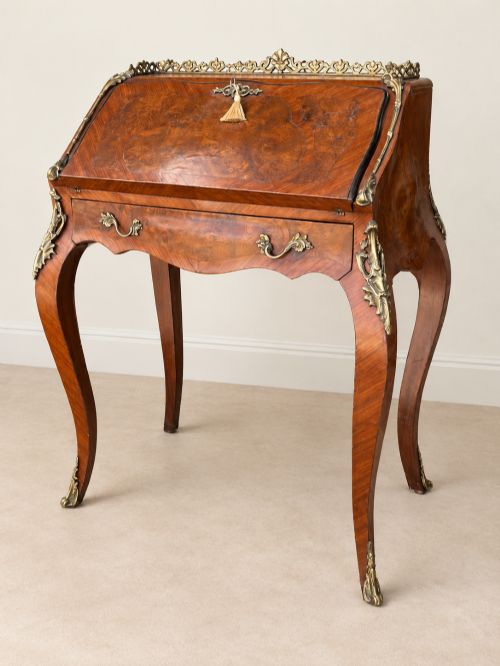
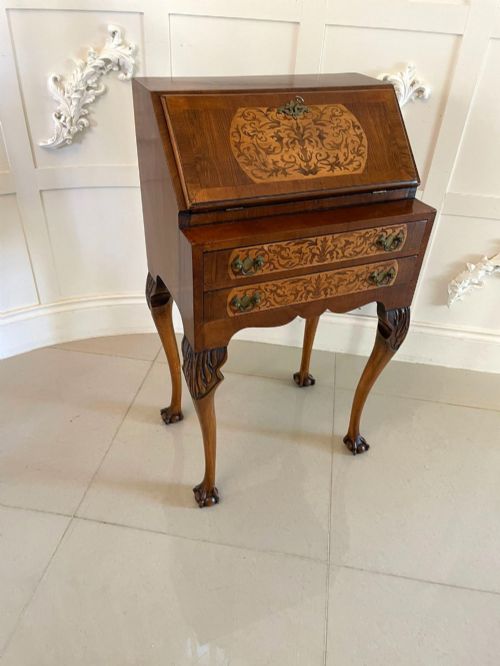
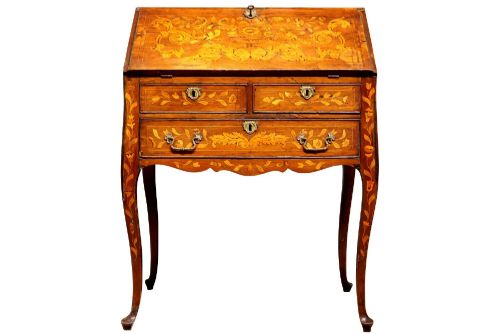
These ladies slant front bureau pieces offer compact writing surfaces paired with compartmented storage, prized for refined French styling and intricate inlaid timbers.
Ladies Slant Front Bureau
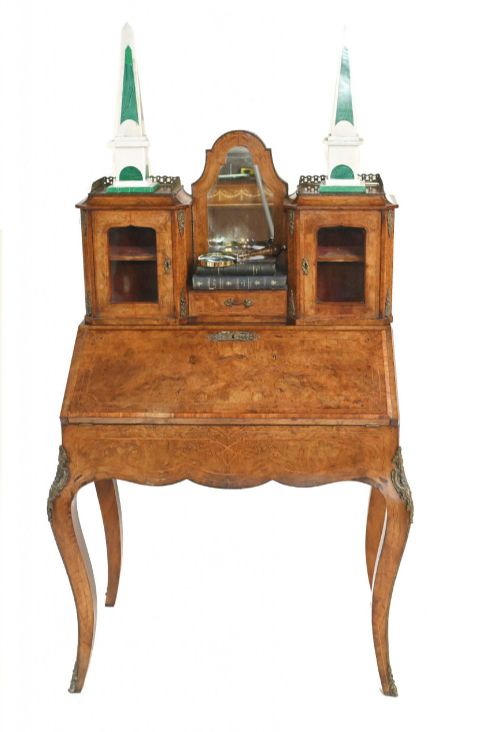
A ladies slant front bureau combines a sloping writing flap with internal pigeonholes and drawers, designed for correspondence and private papers in smaller domestic spaces. When exploring ladies slant front bureau selections, expect to encounter compact writing desks and bonheur du jour forms.
The pieces originating from nineteenth century and Victorian periods frequently display French styling, including Louis XV revival aesthetics and delicate cabriole supports. Walnut, rosewood, and kingwood bodies appear alongside specialised writing tables constructed for domestic chambers.
How they were made
Cabinetmakers built these small desks using solid and veneered timbers such as walnut, rosewood, kingwood, and burr walnut over sturdy secondary woods. Marquetry and floral inlay decorate the sloping falls and cabinet fronts.
Metal enrichment plays a prominent role in construction, utilising cast ormolu, gilt metal mounts, and brass stringing to accent curves and borders. Glass panels and inset leather writing surfaces complete the detailed assembly.
Ladies Slant Front Bureau Retail Price Guide 2026
Typical asking prices for ladies slant front bureau among the pieces listed under this phrase on Sellingantiques today, from the lower quarter to the upper quarter. They describe what is for sale here now, not the wider market.
Some models hide tiny secret drawers behind pigeonholes, designed for letters best kept away from prying eyes.
What varies in quality
The refinement of the marquetry and the crispness of the timber figuring separate standard examples from superior pieces. Hand-cut floral patterns and matched veneer grains demonstrate superior workshop execution.
The weight and detail of the cast ormolu mounts indicate the standard of production. Substantial, finely chased gilt metal mounts reflect greater investment than thin, pressed alternatives.
Paul Sormani
The Ladies Slant Front Bureau Glossary
- Bureau de Dame
- A ladies writing desk, often featuring a sloping writing flap and delicate proportions suited for a boudoir. These desks frequently incorporate small drawers and compartments.
- Bonheur-du-Jour
- A light ladies writing desk featuring a small cabinet or superstructure with shelves above the writing surface. This French form became popular during the nineteenth century.
- Marquetry
- The art of forming decorative patterns by fitting together small pieces of wood veneer of different colours and grains. Cabinetmakers used floral and geometric motifs.
- Ormolu
- Gilt bronze mounted as an ornamental feature on furniture. The technique involves applying finely ground gold to a bronze base.
- Kingwood
- A dense, richly figured tropical timber prized by cabinetmakers for decorative veneers. It often shows dark violet and brown tones.
Ladies Slant Front Bureau: Frequently Asked Questions
How were these small desks used?
These pieces served private correspondence, housing stationery, inkwells, and letters within compact internal compartments.
The sloping fall front provided a convenient writing surface that concealed the clutter of daily notes when closed.
Where should a bureau be placed?
Because many examples feature finished backs and delicate proportions, they sit comfortably within reception rooms or studies as freestanding focal points.
Sized for smaller spaces, they fit neatly against walls or beside seating arrangements without dominating the room.
How do I identify French revival styles?
French revival pieces exhibit characteristic curved cabriole legs, serpentine outlines, and elaborate floral marquetry patterns inspired by earlier court furniture.
Ormolu mounts and gilt bronze details further distinguish these continental designs from plainer domestic furniture.
What is the difference from a standard bureau?
Ladies versions feature reduced dimensions and lighter construction, prioritising elegance and portability over heavy storage capacity.
They frequently incorporate superstructures, bonheur du jour elements, and intricate brass or veneer inlays designed for ornamental appeal.