

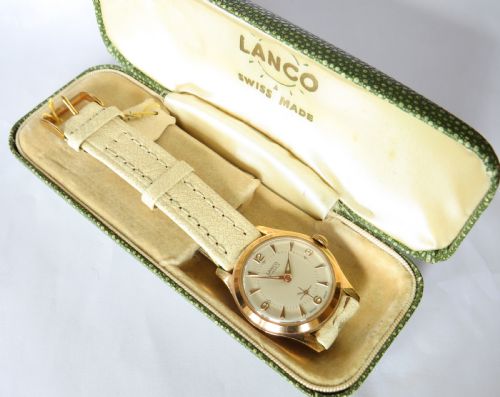

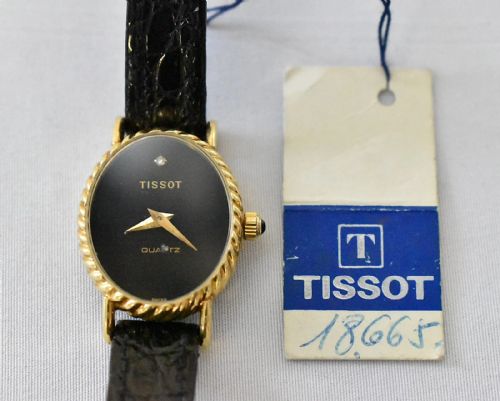


Ladies Dress Watch
A ladies dress watch combines precision horology with fine jewellery, offering an elegant timepiece for evening wear.
Ladies Dress Watch
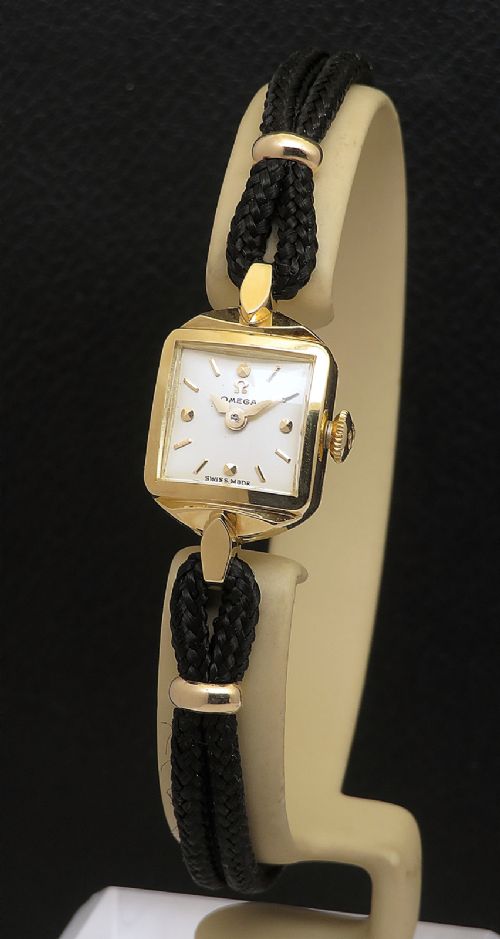
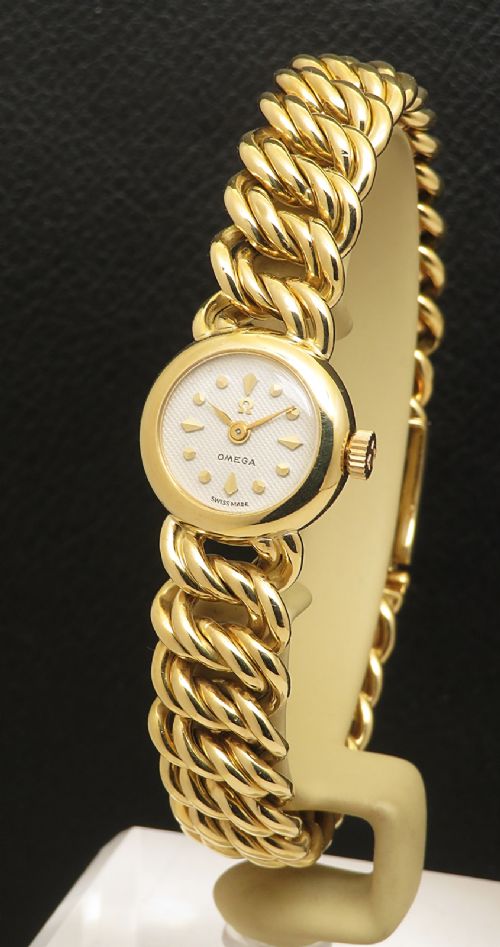
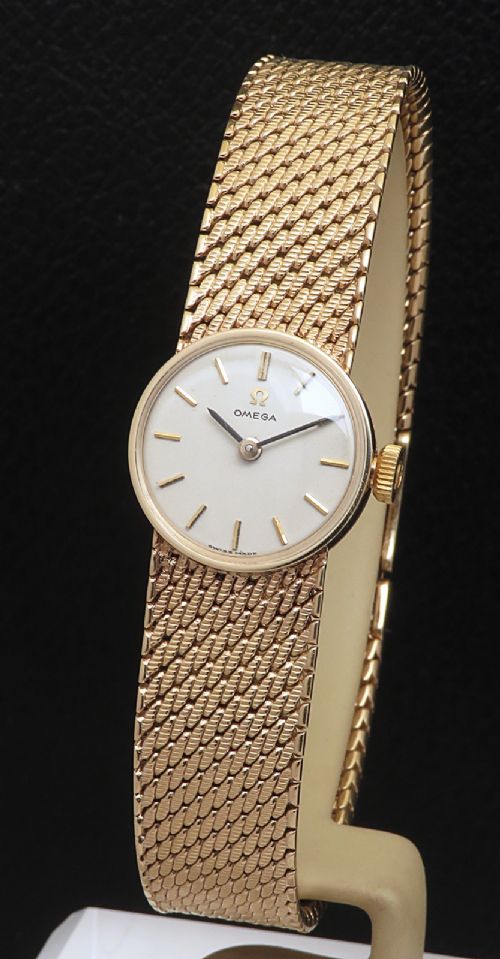
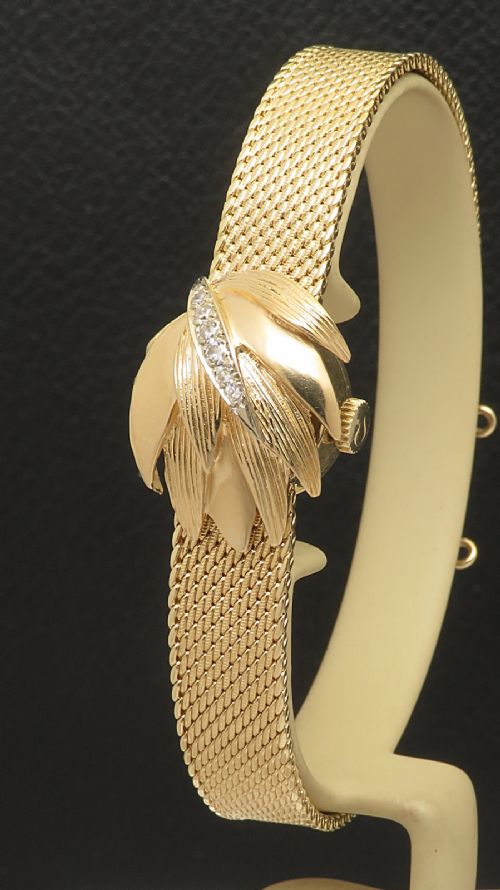
A ladies dress watch is a small, ornate timepiece designed primarily for formal wear rather than everyday timekeeping, often doubling as a bracelet.
The pieces on this page span from the 1920s to later than 1960, encompassing styles such as Art Deco and Mid-Century Modern.
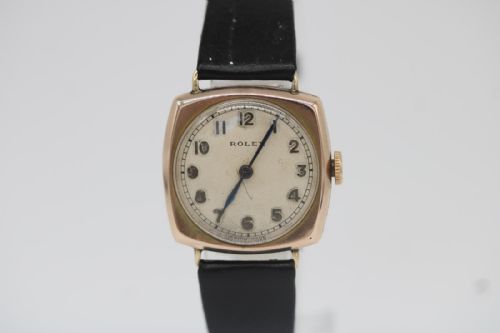
Forms range from simple gold wristwatches to elaborate cocktail watches set with diamonds and platinum.
Materials and construction
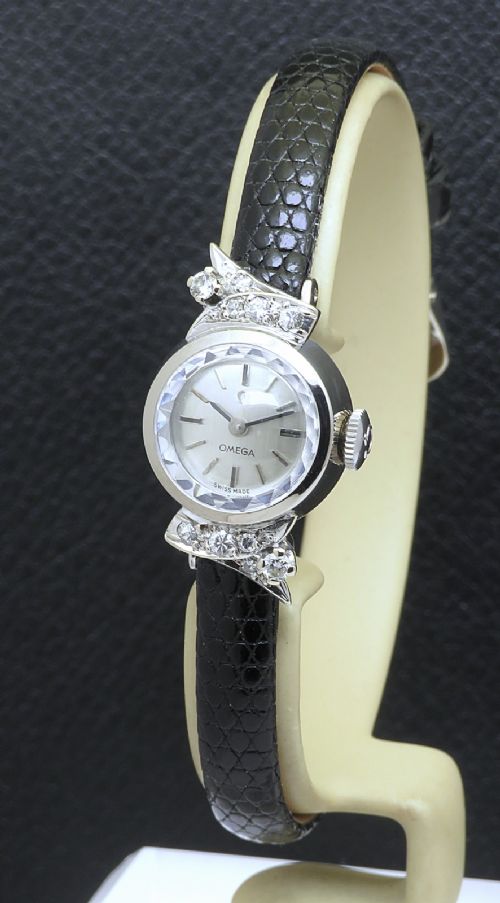
Cases utilise precious metals including platinum, 18ct white gold, 9ct gold, and stainless steel, paired with straps of leather, fabric, or precious metal bracelets.
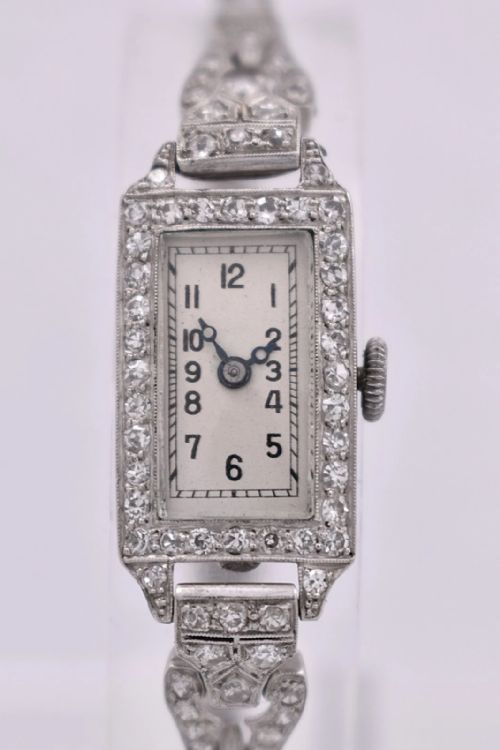
Gemstone setting is prominent, particularly diamonds integrated into platinum and white gold bezels and hooded lugs.
Movements rely on manual wind mechanisms, Swiss jewelled lever escapements, and later quartz technology.
The inventory spans multiple decades, from 1920s Art Deco pieces to later 20th-century designs.
Distinctions in quality
Quality rests on the weight and purity of the precious metals, the carat weight and clarity of any diamond settings, and the prestige of the maker.
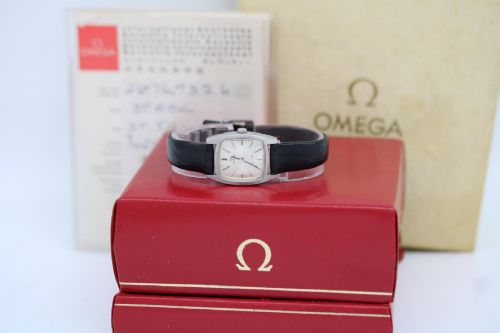
The complexity of the case design and whether original boxes and papers accompany the watch elevate the piece.
The integrity of the movement, such as Swiss jewelled lever mechanisms, defines the horological standard of the watch.
Omega·Rolex Tudor·Tissot·Bucherer·Asprey·Elgin·Vertex·Movado·Longines·Bulova·Benrus·Jaeger-LeCoultre
The Ladies Dress Watch Glossary
- Cocktail watch
- A small, highly decorative ladies dress watch intended for evening wear, frequently encrusted with diamonds. These pieces often conceal the dial behind a hinged cover or integrate it into a bracelet.
- Manual wind
- A mechanical watch movement that requires the wearer to turn the crown periodically to tension the mainspring. This traditional method allows for slimmer watch cases.
- Art Deco
- A design style spanning the 1920s and 1930s characterised by geometric symmetry, clean lines, and stylised motifs. It heavily influences the platinum and diamond watches from this era.
- Swiss jewelled lever
- An escapement mechanism utilising synthetic rubies to reduce friction in the gear train. This contributes to the timekeeping accuracy of the watch.
- Tank style
- A rectangular watch design inspired by military tanks, featuring parallel vertical bars that incorporate the lugs. This geometric form is common in 1930s wristwatches.
Ladies Dress Watch: Frequently Asked Questions
How do I wind a manual watch?
Turn the crown gently clockwise between your thumb and forefinger until you feel resistance. Stop immediately to avoid over-tensioning the mainspring.
Do this at the same time each day to maintain consistent timekeeping for your vintage timepiece.
How do I date a cocktail watch?
Examine the design style, such as geometric Art Deco motifs from the 1920s and 1930s or cleaner Mid-Century lines from the 1950s and 1960s. Maker hallmarks and serial numbers inside the case back provide precise manufacturing dates.
Original boxes and papers, when present, also confirm the era of the watch.
Can I replace the strap?
Straps made of leather or fabric can be replaced by a watchmaker to match your wardrobe. Integrated metal bracelets require professional handling to preserve the original fixings.
Retain any original branded straps and buckles to maintain the historical integrity of the piece.