




Lacquered Wooden Chest
Lacquered wooden chest pieces bring rich hand-finished surfaces and enduring storage utility into a room.
Lacquered Wooden Chest
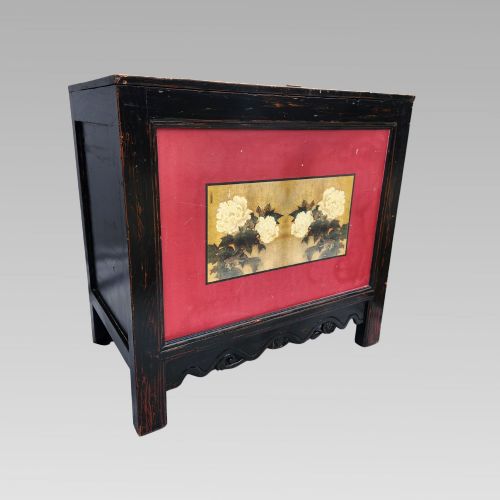
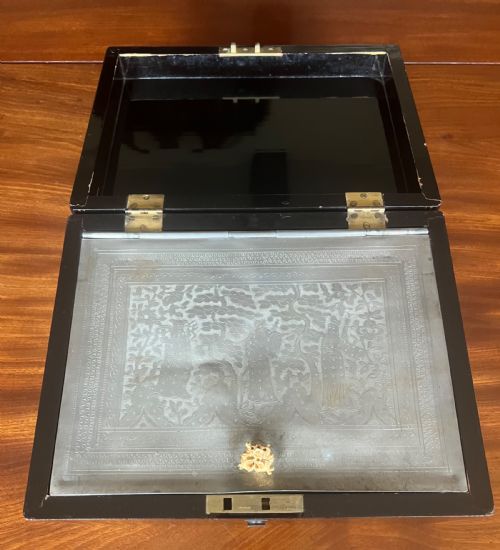
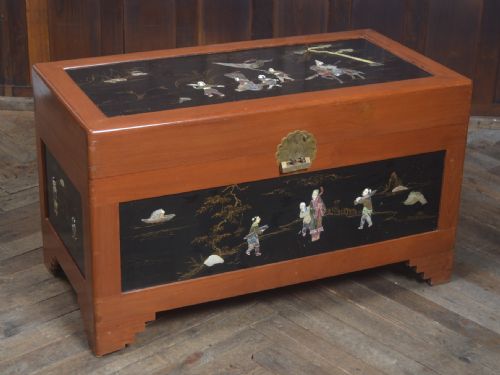
When you search for a lacquered wooden chest, you encounter a diverse array of forms spanning centuries of international craftsmanship. These pieces range from substantial storage trunks and blanket boxes to compact cabinets, tea caddies, and chests of drawers.
On this page, you are most likely to meet 19th-century Chinese, Japanese, and Indian examples, alongside Georgian and Regency period English pieces. The selection includes traditional Chinese storage cabinets, Japanese tansu chests, and intricately decorated British penwork boxes.
Materials and construction
The underlying structure of these pieces relies on woods such as camphor, elm, and kiri, which provide stable timber foundations for decorative treatment. Artisans applied layers of lacquer to seal and protect the wood before adding detailed surface ornamentation.
Decoration often involved gold leaf, paint, bone inlay, and brass hardware to accentuate the visual depth of the lacquered surface. Penwork and Chinoiserie motifs appear frequently, executed with meticulous ink work and surface finishing.
The inventory spans the 18th century, Georgian period, Regency era, and the 19th century up to the 1930s.
Determining quality
Quality in these pieces rests primarily on the preservation of the lacquer surface and the precision of the underlying woodwork. Examples with intact original finishes, detailed hand-painted motifs, and secure joints command greater appreciation.
The sophistication of the decorative programme - whether delicate penwork, intricate carving, or complex gold leaf application - distinguishes standard utility boxes from exceptional decorative works.
The Lacquered Wooden Chest Glossary
- Lacquer
- A durable resin finish applied to wooden objects to create a smooth, glossy, protective surface. It hardens into a resilient coating that resists moisture and wear.
- Tansu
- Traditional Japanese mobile storage cabinetry built with accessible drawers and compartments. These pieces utilise sturdy joinery without nails.
- Penwork
- A meticulous decorative technique using India ink on wood to create intricate monochrome designs resembling engravings. It was particularly favoured during the Regency period.
- Cofer
- A traditional large box or chest used for storing valuables or textiles. They frequently feature reinforced corners and secure locking mechanisms.
Lacquered Wooden Chest: Frequently Asked Questions
How do I clean a lacquered chest?
Dust the surface gently with a soft, dry microfibre cloth to prevent scratching the delicate finish. Avoid using chemical sprays, abrasive cleaners, or excess water.
Keep the piece away from direct sunlight and fluctuating humidity to protect the wood and prevent the lacquer from cracking over time.
What woods were used for these chests?
Cabinetmakers utilised various regional timbers, including camphor wood, elm, and kiri. These woods offered stability and relative lightness for transport.
Secondary woods and structural elements often depended on the origin of manufacture, spanning Asian workshops and English cabinet makers.
How do I identify a Regency penwork piece?
Look for intricate black ink drawings executed directly on a light wood ground, often finished with a clear protective varnish. These designs typically depict classical motifs, landscapes, or exotic scenes.
They frequently appear on smaller decorative items like tea caddies and jewellery boxes from the early 19th century.