





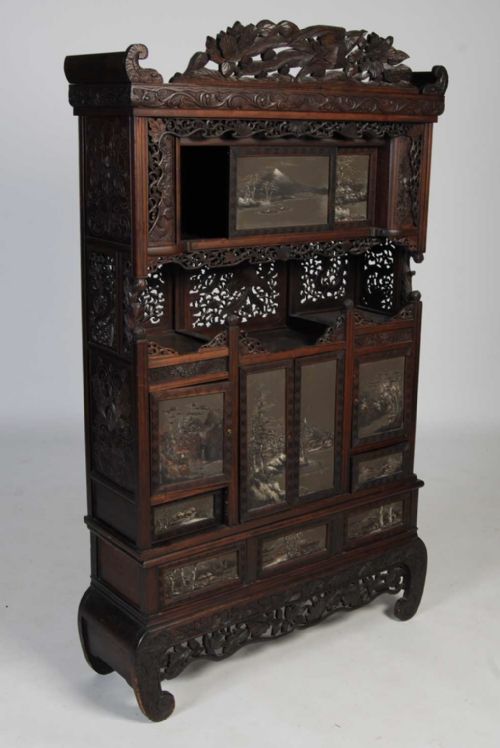

Lacquered Wood Shelves
Lacquered wood shelves bring intricate surface craft and structured display into a room, offering compartments and tiers for collections.
Lacquered Wood Shelves
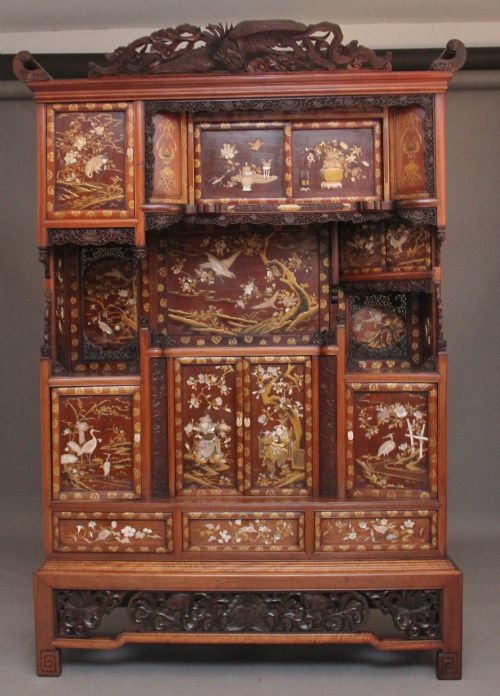
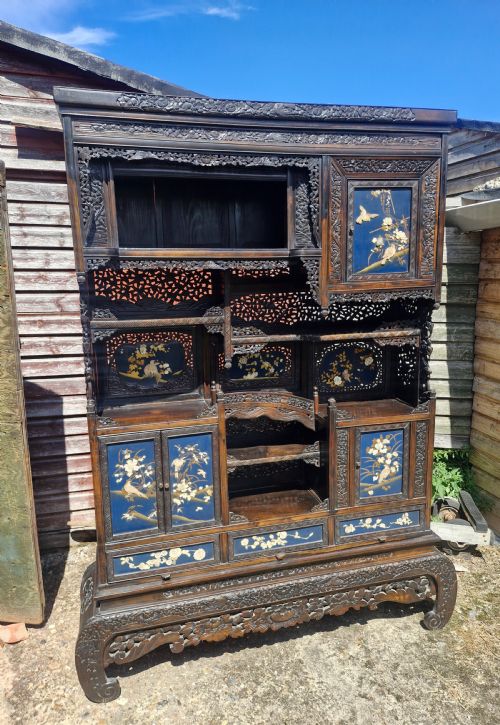
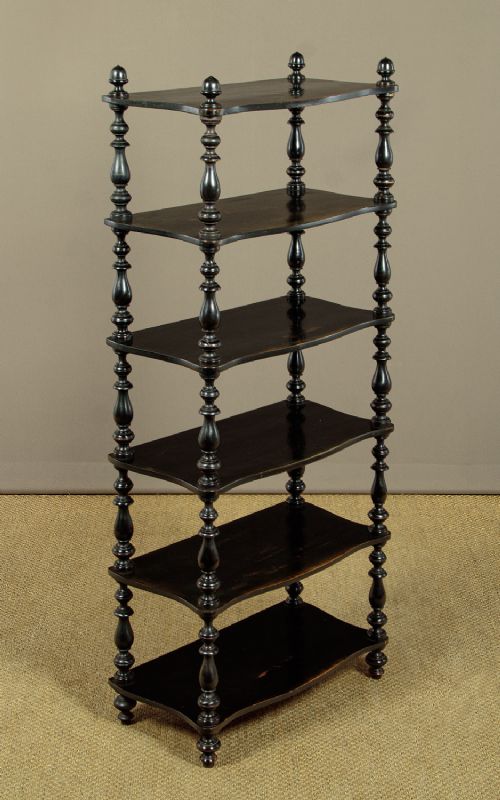
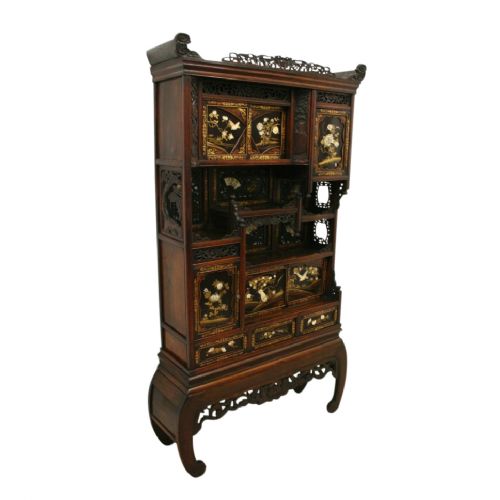
When you search for lacquered wood shelves, you encounter Japanese Meiji period shodana cabinets, Chinese Qing dynasty cabinets, and Victorian ebonised tiered stands.
The pieces on this page span the nineteenth century, Edwardian, and George V eras, taking forms such as multi-tiered étagères, desk tabletop accessories, and wall mirrors with integrated shelving.
You are most likely to meet Japanese shodana cabinets featuring intricate tiered storage alongside larger display cabinets and wall-mounted pieces.
How they were made
Construction relies on hardwood and ebonised wood treated with dark lacquer finishes, sometimes enriched by faux tortoiseshell or green Chinoiserie paint.
Many surfaces incorporate inlaid mother of pearl alongside carved wooden details, supported by brass hardware and occasional glass panels.
Lacquered Wood Shelves Retail Price Guide 2026
Typical asking prices for lacquered wood shelves among the pieces listed under this phrase on Sellingantiques today, from the lower quarter to the upper quarter. They describe what is for sale here now, not the wider market.
Materials recorded across the inventory include hardwood, lacquer, ebonised wood, glass, mother of pearl, and brass.
What varies in quality
The distinction between standard and finer examples rests upon the depth of the lacquer finish and the precision of the underlying carving.
Complexity of form distinguishes simple tiered stands from elaborate shodana cabinets with multiple compartments and integrated display spaces.
The Lacquered Wood Shelves Glossary
- Shodana
- A Japanese tiered display cabinet featuring asymmetrical shelves and small cupboards. These pieces showcase traditional woodwork and lacquer techniques.
- Ebonised
- Wood stained or painted to imitate ebony. This dark finish provides a formal backdrop for displayed items.
- Chinoiserie
- European decorative style reflecting Chinese artistic traditions. It frequently employs painted motifs on lacquered surfaces.
- Étagère
- A piece of furniture consisting of open shelves for displaying small objects. Tiers provide structured space without heavy doors.
Lacquered Wood Shelves: Frequently Asked Questions
What are lacquered wood shelves?
Lacquered wood shelves comprise cabinets, étagères, and tiered stands finished with protective and decorative lacquer. They provide structured compartments for displaying decorative objects.
Origins span Japanese Meiji workshops, Chinese Qing dynasties, and European revival periods. Each piece reflects distinct regional woodworking traditions.
How were these shelves used?
These pieces served to display porcelain, small bronzes, and curiosities within a formal interior. Tabletop versions organised papers and desk accessories.
Larger cabinets functioned as principal display furniture in reception rooms. Tiered stands provided vertical storage for collections.
How do I live with them?
Position them away from direct sunlight to protect delicate lacquer finishes and painted surfaces. Use soft cloths for routine dusting without chemical polishes.
Allow sufficient space around larger shodana cabinets to appreciate their asymmetrical construction. Balance the weight of objects placed on open tiers.
How do I identify periods?
Examine the underlying materials, construction methods, and decorative motifs to determine the era. Japanese Meiji pieces often feature carved hardwood and specific cabinet configurations.
Victorian and Edwardian British examples utilise ebonised timber and mirrors. Chinese Qing pieces display distinct regional joinery and lacquer applications.