




Lacquered Tea Tray
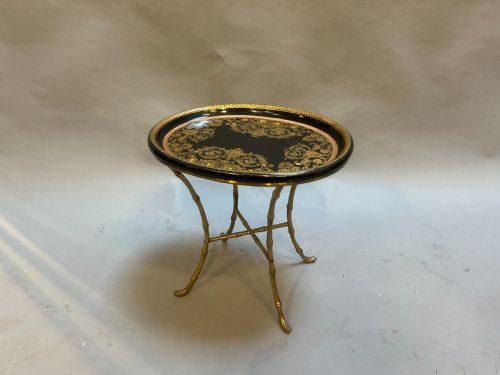
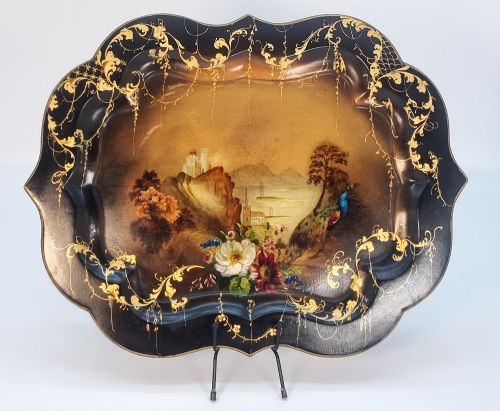
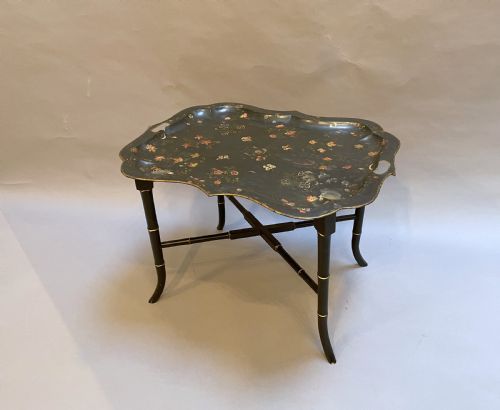
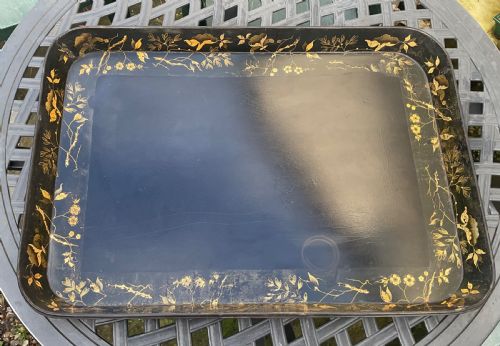
A lacquered tea tray brings hand-painted surfaces and polished black finishes into a room, functioning as a serving piece or mounted upon a stand.
Lacquered Tea Tray
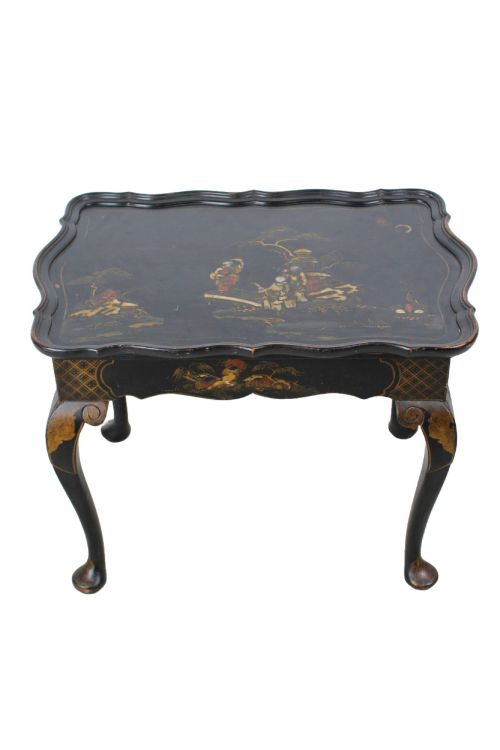
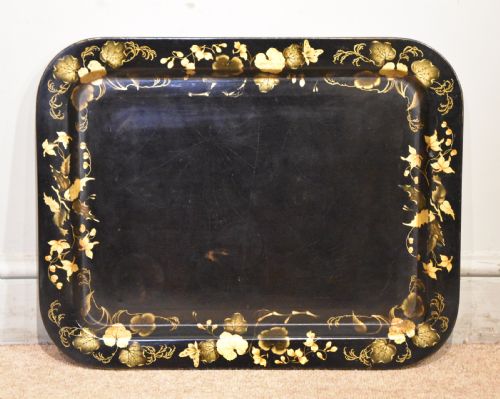
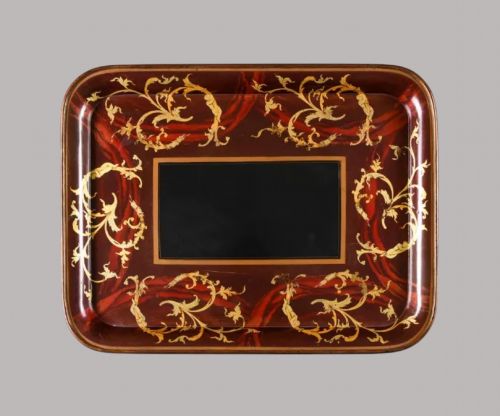
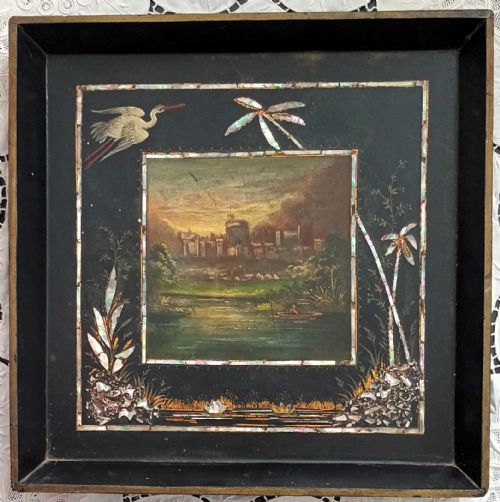
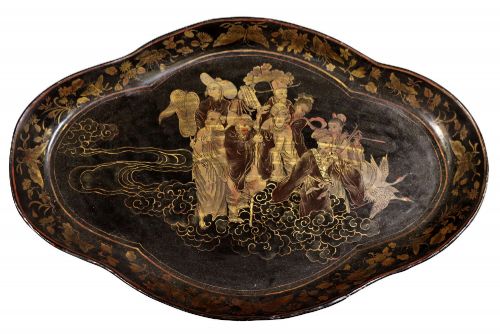
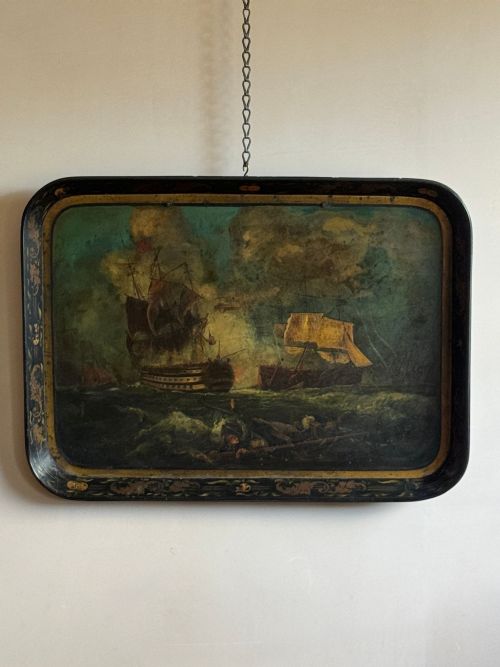
A lacquered tea tray combines utility with decorative painting, appearing in rectangular, oval, and kidney shapes across this selection. The pieces span the eighteenth, nineteenth, and early twentieth centuries, moving from Georgian workshops through Regency and Victorian periods up to Edwardian iterations.
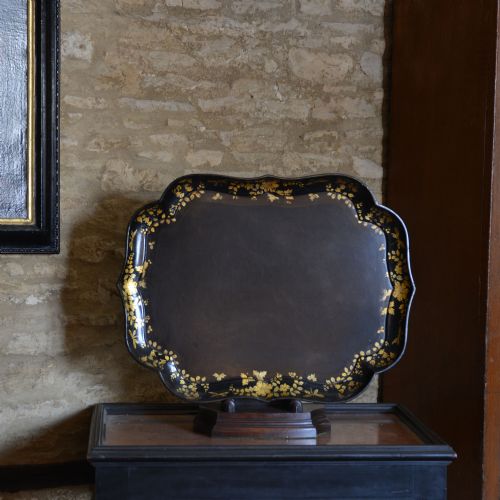
Many examples survive as flat serving vessels, while others sit upon contemporary or period folding stands to function as coffee tables and occasional tables. Collectors encounter black ebonised grounds alongside scarlet surfaces, frequently decorated with Chinoiserie motifs or pastoral scenes.
Materials and construction
Makers built the primary body using papier-mâché or sheet metal known as toleware, applying layers of lacquer to create a durable, smooth ground. Wood and walnut also appear in the underlying structures of certain tables and trays.
Decoration relied upon hand painting, gold leaf, and gilt embellishments to build up intricate oriental landscapes, floral sprays, or pictorial narratives. Brass and silver plate occasionally augment the edges through gallery rails or handles.
Listings feature papier-mâché alongside toleware, wood, and metal, spanning the eighteenth to the twentieth centuries.
Craftsmanship and preservation
The distinction between tiers rests in the crispness of the hand-painted brushwork and the depth of the original lacquer finish. Maker signatures and retained stamps elevate certain pieces above anonymous factory output.
Surface preservation dictates value, where untouched original decoration without heavy restoration maintains the integrity of the piece. The structural stability of papier-mâché bases and the originality of associated stands influence the overall standing of an item.
Jennens & Bettridge·Henry Clay
The Lacquered Tea Tray Glossary
- Papier-mâché
- A composite material made from paper pulp or layers of paper pasted together, pressed in moulds and baked before receiving lacquer. This substrate allowed makers to produce robust, lightweight trays with smooth surfaces.
- Toleware
- Painted or enamelled sheet metal items produced from the eighteenth century onwards. These metal trays often received dark lacquer grounds and gilt decoration.
- Chinoiserie
- European artistic style reflecting Chinese motifs and decorative schemes, popular during the Georgian and Victorian periods. Artisans rendered imaginary oriental landscapes in gold and paint upon dark trays.
- Japanned
- European work imitating Japanese and Chinese lacquer techniques using layers of varnish and heat treatment. The process created a glossy black or coloured finish on furniture and serving wares.
- Gallery tray
- A tray featuring an elevated pierced rim or metal railing around the perimeter. This edge prevented items from sliding during service.
Lacquered Tea Tray: Frequently Asked Questions
How do I clean a lacquered tea tray?
Dust the surface gently with a soft, dry cloth to remove particles. Avoid water, moisture, and chemical cleaning products which damage aged lacquer and gilt.
Keep the piece away from direct sunlight and heat sources to prevent the papier-mâché or wood substrate from warping or cracking over time.
Can I use these trays for serving tea?
Most antique examples serve better as decorative objects or static display pieces due to the delicate nature of historic lacquer and hand-painted surfaces. Moisture and heat from hot teapots can mark the vintage finish.
If utilised for serving, place a linen cloth underneath vessels to protect the painted base from friction and condensation.
Are these trays original on their stands?
Many trays survived independently and received stands later in their history to convert them into tables. Inspect the underside for mounting marks, screw holes, or bracket impressions that indicate whether the stand matches the period of the tray.
Both period-matched combinations and later adaptations appear frequently, each offering practical height for domestic use as a coffee table.
How do I date a papier-mâché tray?
Examine the weight, thickness, and composition of the papier-mâché core alongside the style of the painted decoration. Georgian and Regency pieces often feature heavier, dense material and refined brushwork.
Stamped maker marks on the underside provide the most reliable dating evidence, pointing to specific nineteenth-century firm production periods.