


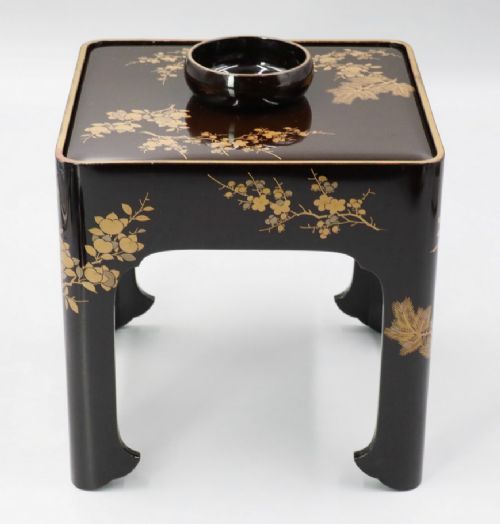
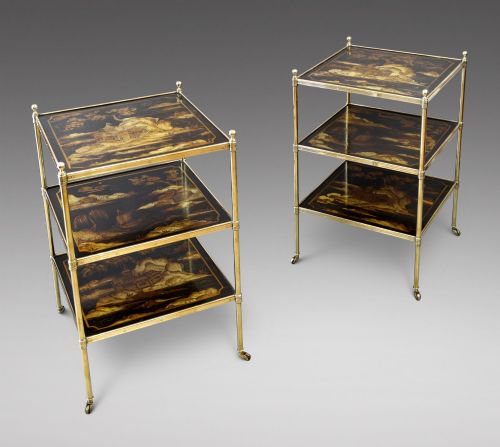


Lacquered Display Table
A lacquered display table brings layered depth and polished sheen to a room, offering a distinct stage for precious objects.
Lacquered Display Table
When you search for a lacquered display table, you encounter pieces designed to exhibit smaller decorative items while introducing rich surface decoration to an interior. The selection spans distinct forms, including bamboo side tables, plant stands, and etageres suited for surface display.
The examples originate across the nineteenth and twentieth centuries, encompassing Victorian Chinoiserie, Aesthetic Movement designs, and Japanese Meiji craftsmanship. These items serve both functional display purposes and decorative roles within a room layout.
Victorian and Regency pieces appear alongside Asian export works, showing varied interpretations of lacquer techniques on wood and bamboo supports. Each object provides a specific platform for decorative objects, whether structured as a multi-tiered etagere or a single pedestal.
How they were made
Construction relies upon wood, bamboo, and papier-mache substrates finished with successive applications of lacquer. Artisans built up smooth surfaces through multiple coats, often integrating gold leaf and paint to render intricate motifs.
Certain pieces incorporate brass fittings and carved wood elements to reinforce structural joints and decorative borders. The application of oil paint and specialised penwork further defines the surface detail across different stylistic traditions.
Lacquered Display Table Retail Price Guide 2026
Typical asking prices for lacquered display table among the pieces listed under this phrase on Sellingantiques today, from the lower quarter to the upper quarter. They describe what is for sale here now, not the wider market.
Listings feature items spanning the 19th and 20th centuries, utilising lacquer, bamboo, papier-mache, and gold leaf.
What varies in quality
Quality rests upon the preservation of the lacquer surface and the precision of the underlying construction. Superior examples maintain intact layers of lacquer and gilding without widespread crazing or structural failure.
The refinement of painted and carved details distinguishes finer pieces from simpler utilitarian items. The stability of the frame, whether fashioned from bamboo, turned wood, or papier-mache, determines the overall integrity of the table.
Jennens and Bettridge
The Lacquered Display Table Glossary
- Lacquer
- A durable finish derived from tree sap or synthetic resins applied in thin layers and polished to a hard sheen. It creates a smooth, glossy surface that resists moisture and wear.
- Etagere
- A piece of furniture consisting of a set of open shelves for displaying small ornaments. This form provides multiple tiers for arrangement.
- Penwork
- A decorative technique utilising fine ink lines to create intricate surface patterns resembling engraving. It frequently appears on Regency period items.
- Cinnabar
- A bright scarlet form of mercury sulfide used as a pigment in traditional carved lacquerware. It yields deep relief carvings with distinct coloration.
- Aesthetic Movement
- A late nineteenth century design style emphasising visual beauty over narrative content, often drawing inspiration from Japanese art. It favored bamboo structures and asymmetric decoration.
Lacquered Display Table: Frequently Asked Questions
How do I clean a lacquered surface?
Dust the surface gently with a soft, dry microfiber cloth to remove loose particles without scratching the finish. Avoid using chemical polishes, abrasive pads, or excessive water.
For stubborn marks, use a slightly damp cloth with mild soap, drying the area immediately afterwards. Maintaining a stable indoor humidity helps prevent the lacquer from cracking.
Where should I place an etagere?
Position the piece away from direct sunlight and heat sources to protect the lacquer and wood substrates from warping or fading. Corner placements or walls with moderate foot traffic work well.
Ensure the floor is level so the structure remains stable, particularly for taller tiered designs and bamboo frames.
What is the difference between Chinoiserie and Japanese styles?
Chinoiserie reflects European interpretations of Chinese artistic traditions, featuring whimsical landscapes, pavilions, and figures rendered in lacquer and paint. The palette often includes gold on black or coloured grounds.
Japanese Meiji period works emphasise naturalism, flora, and fauna with precise metalwork or lacquer techniques. These pieces showcase distinct eastern motifs rather than European stylistic adaptations.
Can these tables hold heavy items?
Most display tables and plant stands are engineered for lighter decorative objects, ceramics, and small vases rather than heavy bronze sculptures. Bamboo and papier-mache variants require particular care regarding weight distribution.
Check the stability of the joints and shelves before placing fragile or valuable items on display.