





Lacquered Credenza
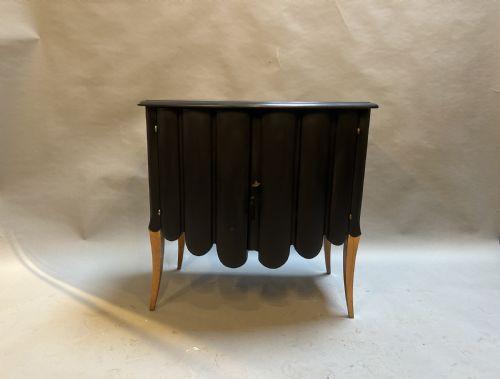
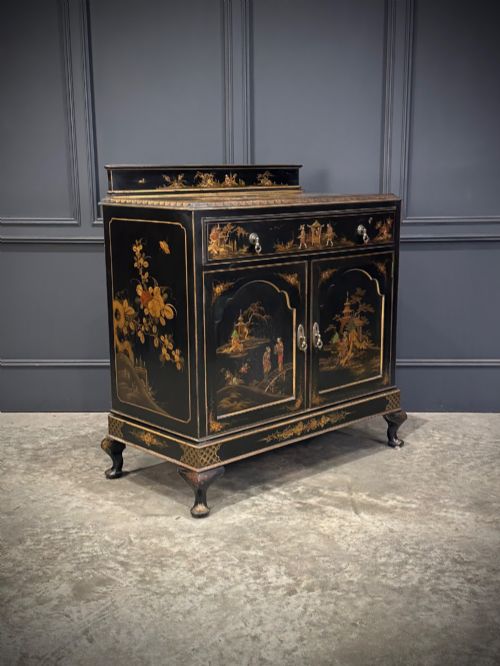
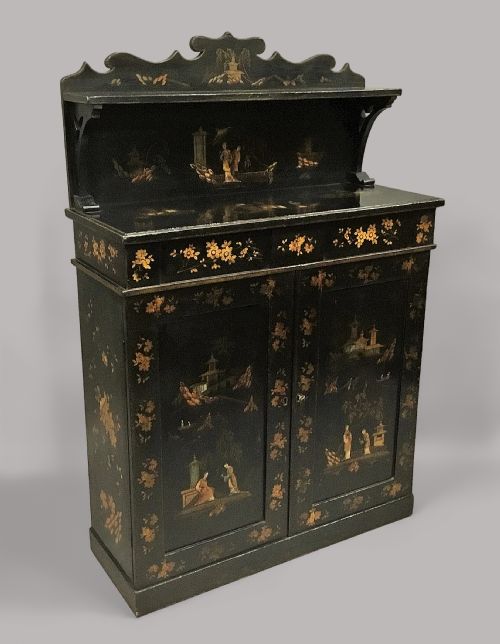
These lacquered credenza pieces bring hand-applied finishes and oriental motifs into a room, offering both surface depth and practical storage.
Lacquered Credenza
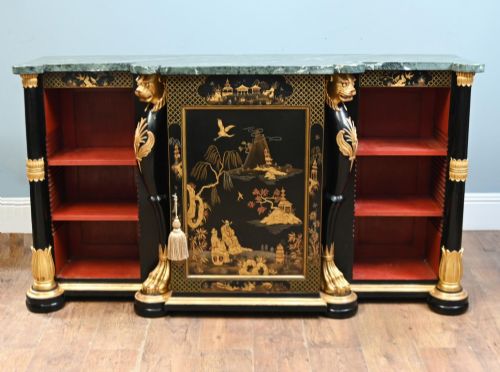
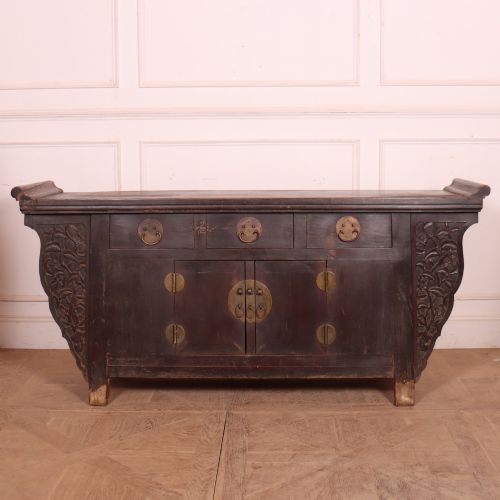
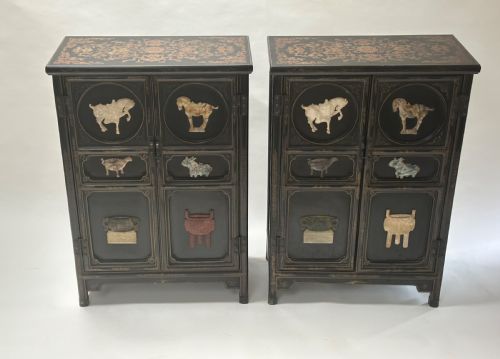
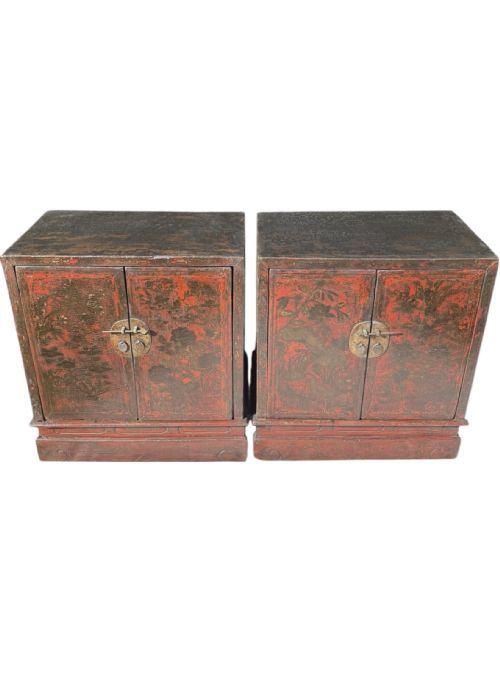
A lacquered credenza encompasses substantial side cabinets, breakfront bookcases, and low sideboards finished with polished resinous coatings. Buyers seeking a lacquered credenza frequently encounter nineteenth-century revival interpretations, Chinese elm side cabinets, and early twentieth-century Chinoiserie examples.
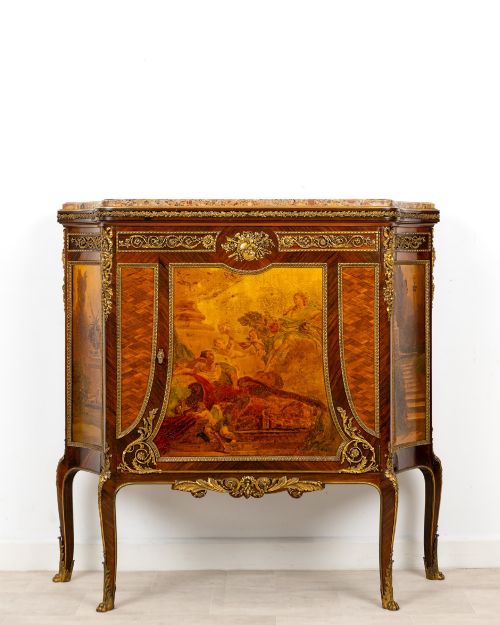
The form spans French Louis revival pieces, Regency pen-work designs, and Art Deco cabinets outfitted with doors, drawers, or display shelving. Many examples utilise traditional black or red lacquer grounds decorated with gilt highlights and raised pictorial scenes.
Origins stretch from European workshops emulating Eastern aesthetics to genuine nineteenth-century Chinese imports and pieces created after makers such as Beurdeley and François Linke.
Materials and construction
Makers built the carcases using dense timbers including ebonised wood, mahogany, and Chinese elm, providing a stable foundation for decorative surface treatments. Artisans applied successive layers of lacquer to achieve deep, lustrous finishes that could be polished to a high sheen.
Mounts, handles, and feet cast in brass and ormolu were frequently added to accent the corners and door panels of nineteenth-century revival and Art Deco cabinets. Gilding and hand-painted Chinoiserie details completed the surface, often sealed with clear protective varnishes.
Lacquered Credenza Retail Price Guide 2026
Typical asking prices for lacquered credenza among the pieces listed under this phrase on Sellingantiques today, from the lower quarter to the upper quarter. They describe what is for sale here now, not the wider market.
Materials recorded across these cabinets include marble, ormolu, brass, gold leaf, and ebonised wood paired with traditional lacquer finishes.
Assessing quality in lacquerwork
The standard of a lacquered credenza rests upon the depth of the finish and the precision of the hand-applied decoration. Superior pieces display multi-layered lacquer with crisp detailing in the gilt work, whereas lesser examples show flat surfaces and mechanical printing.
Joinery and hardware further separate workshop standards, with heavy ormolu mounts, well-fitted doors, and solid secondary timbers indicating superior cabinet-making. The finesse of the painted or carved pictorial scenes determines whether a piece holds artistic merit beyond mere utility.
François Linke·Beurdeley·Gaudreaux
The Lacquered Credenza Glossary
- Chinoiserie
- European artistic style reflecting Chinese motifs and decorative techniques, popular across eighteenth-century and revival periods. This aesthetic relies heavily on scenic vignettes and garden landscapes.
- Japanned
- European imitation of East Asian lacquerwork, created using layered varnishes and metallic powders. Artisans baked these coats onto wooden carcases to simulate oriental hardness.
- Ormolu
- Gilt-bronze ornamentation applied to furniture mounts and feet, cast and finished by hand. This material provides bright metallic contrast against dark lacquered surfaces.
- Vernis Martin
- Eighteenth-century French imitation lacquer perfected by the Martin brothers, known for producing translucent, luminous finishes. Later revival cabinet-makers emulated this technique on grand salon pieces.
- Commode à vantaux
- A large chest of drawers or cabinet featuring side doors enclosing shelving rather than central drawers. These grand pieces often showcase extensive gilt-bronze mounts.
Lacquered Credenza: Frequently Asked Questions
Where should I place a lacquered credenza?
These cabinets work well in dining rooms, entrance halls, or drawing rooms where their reflective surfaces and decorative panels catch ambient light. Position them away from direct sunlight to protect the lacquer finish from fading over time.
Ensure the room maintains stable humidity levels to prevent timber movement beneath the resinous coatings. Pairing the cabinet with neutral walls allows the intricate Chinoiserie details to stand out clearly.
How do I clean a lacquered surface?
Dust the cabinet regularly with a soft, dry cloth to prevent abrasive particles from scratching the glossy finish. Avoid chemical polishes, household sprays, or wet cloths that might soften or cloud the lacquer.
Should marks occur, a damp microfibre cloth followed immediately by dry buffing is usually sufficient. Professional conservation is advised for deep cleaning or repairing damaged varnish.
How can I tell nineteenth-century revival from earlier work?
Nineteenth-century revival pieces often utilise European secondary timbers like oak or pine behind the ebonised or lacquered exterior, alongside machine-cut screws and standardised fixings. Stylistic cues such as heavy ormolu mounts and French Louis XV revival curves also point to this later period of production.
Authentic earlier pieces display hand-cut joinery, traditional Asian construction methods, and aged patina unique to prolonged use. Examining the interior carcase and backboards generally clarifies the manufacturing origin.
What is the difference between lacquer and japanning?
True Asian lacquer is derived from the sap of the toxicodendron vernicifluum tree, applied in numerous thin coats and cured in humid conditions to create an extremely durable finish. Japanning is the European imitation process developed to mimic this hardness using shellac, varnishes, and heat-drying techniques.
European japanned pieces typically show a slightly softer surface texture and different crazing patterns over time compared to natural tree sap lacquer. Both methods yield deep, reflective finishes prized for decorative cabinetry.