



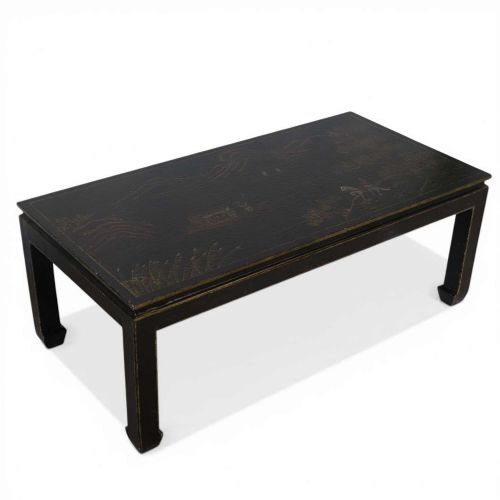




Lacquered Chinoiserie Coffee Table
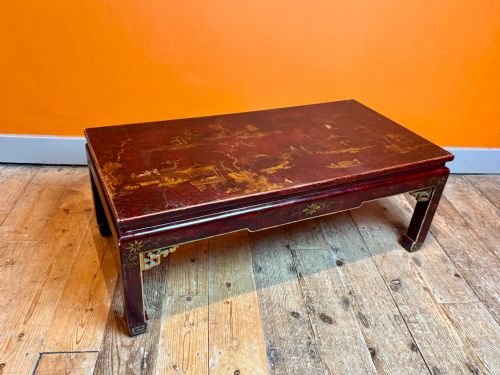
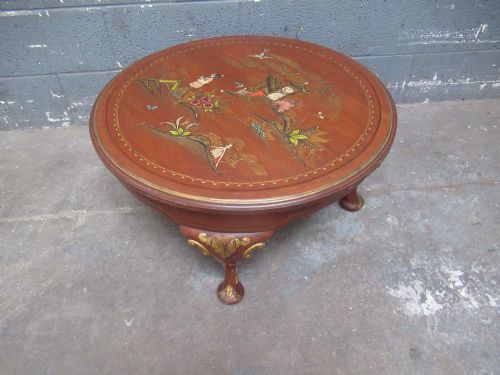
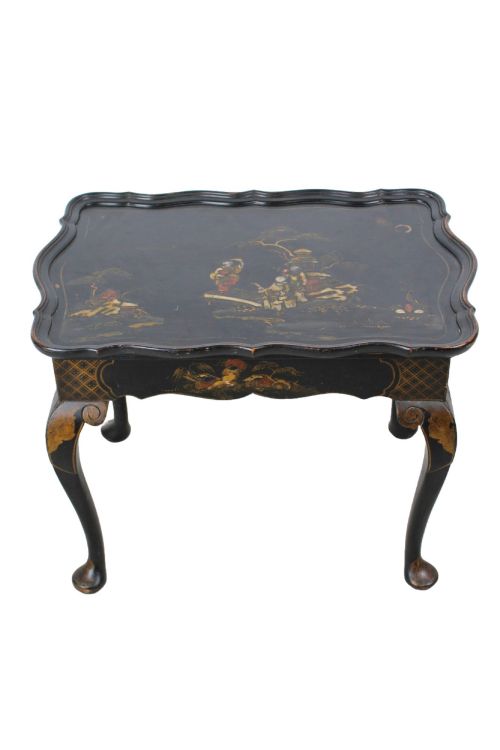
Lacquered chinoiserie coffee table designs bring hand-painted narrative scenes and glossy black or red finishes directly into a sitting room.
Lacquered Chinoiserie Coffee Table
A lacquered chinoiserie coffee table brings together centuries-old decorative traditions and low table forms suited to modern seating. When searching for a lacquered chinoiserie coffee table, buyers encounter diverse formats ranging from low coffee tables and nest of tables to tray tables raised on stands.
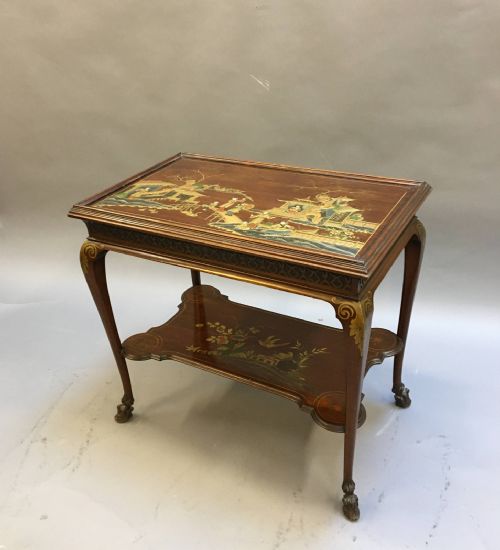
The pieces appearing on this page span the nineteenth century through the early twentieth century, incorporating Edwardian, Victorian, and Regency styles. Many examples adapt earlier serving trays by placing them on custom stands to create functional coffee and occasional tables.
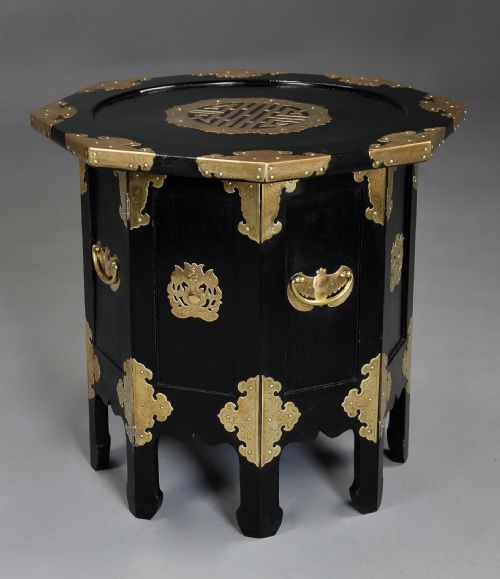
The underlying structure often takes the form of low coffee tables, nests, or octagonal occasional tables. These items provide practical surfaces while displaying detailed painted scenes of figures, landscapes, and floral motifs.
Materials and Construction Techniques
Makers built these tables using wood, papier-mâché, and ebonised wood as primary structural bases. Papier-mâché surfaces provide smooth grounds for intricate painting and lacquer application.
Finishes rely on layers of lacquer combined with gold leaf, gilt, and paint to create rich pictorial depth. Raised relief details frequently accentuate the painted scenes on red and black lacquer grounds.
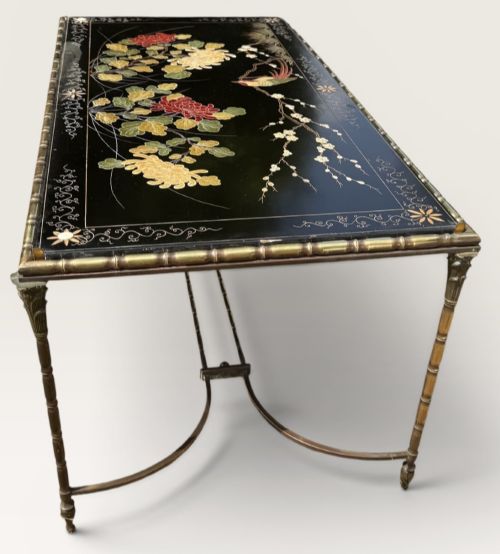
Brass fittings and supports appear on selected pieces to complement the dark ebonised woodwork and metallic gilding. The interaction between glossy lacquer and reflective gold leaf defines the visual weight of each table.
Lacquered Chinoiserie Coffee Table Retail Price Guide 2026
Typical asking prices for lacquered chinoiserie coffee table among the pieces listed under this phrase on Sellingantiques today, from the lower quarter to the upper quarter. They describe what is for sale here now, not the wider market.
Period examples span the nineteenth century through the 1930s, encompassing Victorian, Edwardian, and Regency styles.
Distinctions in Quality and Execution
The distinction between standard production and top-tier execution rests upon the depth of the lacquer layers and the precision of the hand-painted decoration. Superior pieces display finely rendered pictorial scenes with raised relief work that retains crisp definition.
Original stands and bases matching the period of the top surface elevate the integrity of a tray table conversion. Consistency in the ageing of the lacquer and the preservation of the gilt details separate exceptional examples from heavily restored or later decorative items.
Mallets·Maison Bagues
The Lacquered Chinoiserie Coffee Table Glossary
- Chinoiserie
- European decorative style reflecting Chinese artistic influences, popular across various centuries. This aesthetic employs picturesque figures, pagodas, and landscapes.
- Lacquer
- Protective and decorative finish applied in multiple layers to wood or papier-mâché. It creates a smooth, highly glossy surface that accepts gold leaf and paint.
- Japanning
- European imitation of East Asian lacquerwork developed during the seventeenth and eighteenth centuries. It produces dark finishes decorated with gilt figures and motifs.
- Papier-mâché
- Composite material made from paper pulp or paper sheets mixed with adhesive, pressed and dried. It forms a lightweight, stable base for trays and table tops.
- Ebonised wood
- Timber treated to resemble ebony, typically through staining and polishing. This dark surface contrasts with bright gold leaf and colourful lacquer painting.
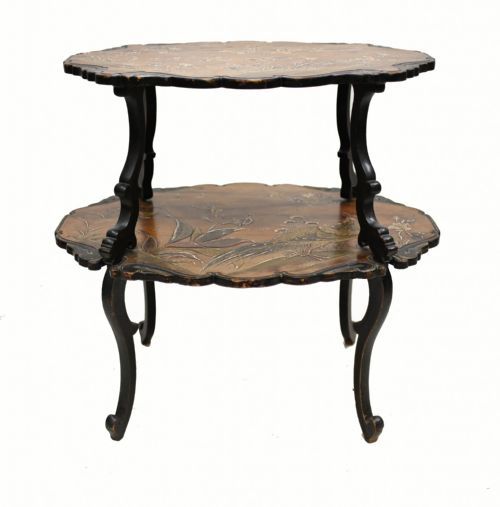
- Nest of tables
- Set of graduated tables designed to fit neatly beneath one another when not in use. They offer flexible surface space in principal rooms.
Lacquered Chinoiserie Coffee Table: Frequently Asked Questions
How do I clean a lacquered surface?
Dust the table gently with a soft, dry microfibre cloth to remove particles without scratching the glossy finish. Avoid using chemical sprays, abrasive cleaners, or excess water on antique lacquer and gilt areas.
Place coasters beneath cups and protect the surface from direct heat sources and strong sunlight. Proper care preserves the fragile layers of paint and gold leaf over time.
What is a tray table?
A tray table consists of a removable serving tray placed securely onto a dedicated folding or fixed stand. These pieces originated as functional serving trays during the nineteenth century before conversion into coffee tables.
The raised edges prevent items from sliding off, making them practical for daily use in a living space. Many examples retain their original handles and deep decorative wells.
How can I tell nineteenth century pieces apart?
Nineteenth century examples often utilise papier-mâché bases for trays alongside traditional timber construction. The lacquer on older tables displays natural craquelure and softer patination developed over generations.
Early twentieth century pieces frequently adopt lighter Edwardian or Regency revival proportions. Examining the construction of the base and the wear patterns on the lacquer helps indicate the age.
Are nests of tables practical?
A nest of tables provides adaptable surface area that expands when entertaining and tucks away compactly. The graduated sizes allow the smaller tables to slide neatly under the main table.
They function well beside sofas or chairs as movable lamp tables and drink supports. The matching lacquer decoration maintains visual harmony across all four pieces.