


Lacquer Grandfather Clock
A lacquer grandfather clock brings vibrant hand-painted chinoiserie scenes and deep historical presence into a room.
Lacquer Grandfather Clock
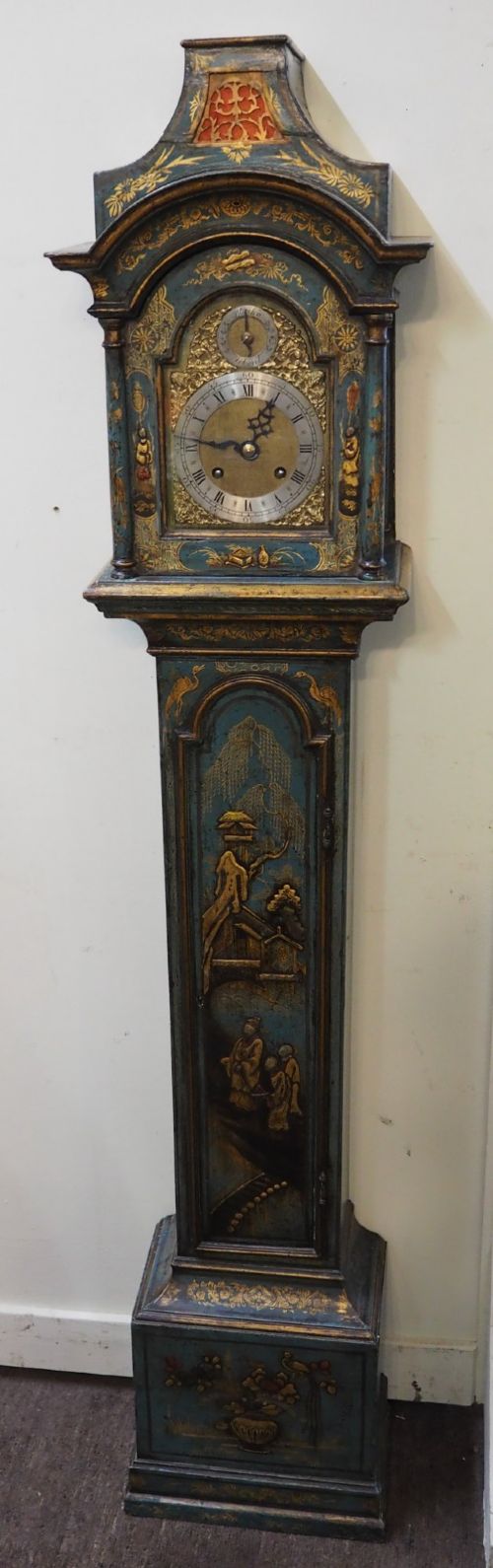
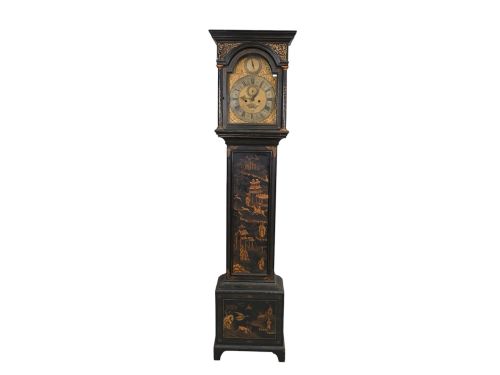
A lacquer grandfather clock, also known as a longcase clock, combines tall timber housing with intricate orientalist decoration. These imposing timepieces stand tall in hallways and reception rooms, serving as both functional instruments and striking decorative furniture.
The examples gathered here span from the early Georgian period through to the 1930s revival. Most pieces originate from the eighteenth century, featuring rich japanned finishes and traditional brass dials.
Materials and Construction
Makers built the tall wooden cases using native timbers before applying successive layers of lacquer to create a smooth, durable ground. Artisans then decorated these surfaces with raised motifs using gold leaf and pigment, depicting figures, landscapes and pavilions.
Listings feature longcase clocks and grandmother clocks spanning the Georgian period, the 18th century, and the 1920 to 1930 revival years.
Assessing Quality and Execution
The depth and intricacy of the chinoiserie decoration largely determine the distinction between ordinary and exceptional pieces. Master craftsmen applied multiple layers of lacquer and gold leaf, producing richly detailed scenes with high relief, whereas simpler versions show flat, sparse painting.
The integration of the movement with the cabinet also dictates overall merit. Superior clocks house robust, finely engraved brass movements signed by notable makers, paired with well-proportioned wooden cases that retain their original decorative surfaces.
William Kipling London·Wise of Reading·Thomas Utting of Yarmouth·Gardner of London·Robert Berry
The Lacquer Grandfather Clock Glossary
- Japanned wood
- European furniture finished with a glossy resin varnish in imitation of East Asian lacquerware. This technique involved raised metallic decoration over a dark ground.
- Chinoiserie
- The European interpretation of Chinese and East Asian artistic traditions, popular in furniture decoration during the seventeenth and eighteenth centuries. It typically depicts imaginary landscapes, pagodas and costumed figures.
- Longcase clock
- A tall pendulum clock enclosed in a wooden case, commonly referred to as a grandfather clock. The design protects the pendulum and weights while providing a vertical surface for ornamentation.
- Automaton
- A mechanical moving figure integrated into the clock dial, such as rocking Father Time. These animated elements added dynamic visual interest to the face of the clock.
Lacquer Grandfather Clock: Frequently Asked Questions
What is a lacquer grandfather clock?
A lacquer grandfather clock is a tall floor-standing timepiece housed in a wooden case decorated with painted orientalist scenes. These pieces combine mechanical clockwork with elaborate surface artistry.
Originating primarily in the eighteenth century, they served as grand statements of wealth and taste in domestic interiors.
How do I care for a lacquer case?
Keep the clock away from direct sunlight and steady heat sources to prevent the lacquer from cracking or fading. Dust the surface gently with a soft, dry cloth without applying modern polishes.
Stable indoor humidity helps preserve both the wooden carcass and the delicate gold leaf decoration.
What periods do these clocks come from?
The pieces span from the early Georgian era through the mid eighteenth century, with later revivals appearing in the twentieth century. Eighteenth-century examples often feature deep green, blue or black japanned finishes.
Twentieth-century interpretations bring brighter cream or alternative pastel lacquer colours to the longcase tradition.
How do movements differ?
Movements range from standard eight-day brass mechanisms to more complex systems featuring chime selections or moving automata. Earlier examples rely on weight-driven brass gear trains signed by the maker on the dial.
Later twentieth-century versions introduced modern enhancements like Westminster chimes while maintaining traditional cabinet proportions.