


Kutani Porcelain Vessel
A kutani porcelain vessel brings the rich iron red and gold palette of Japanese ceramic artistry into your home.
Kutani Porcelain Vessel
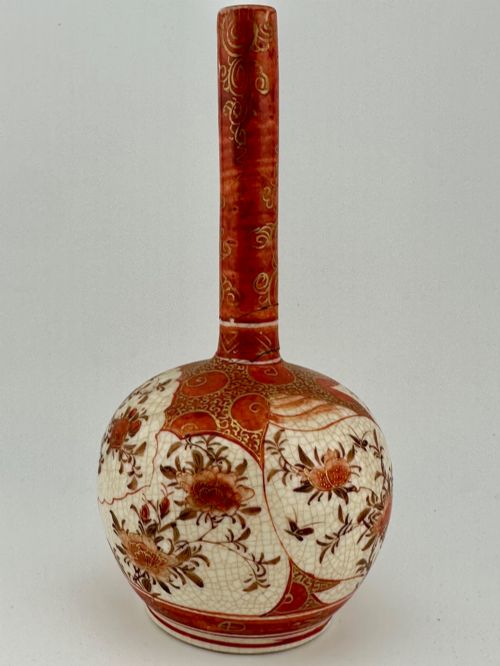
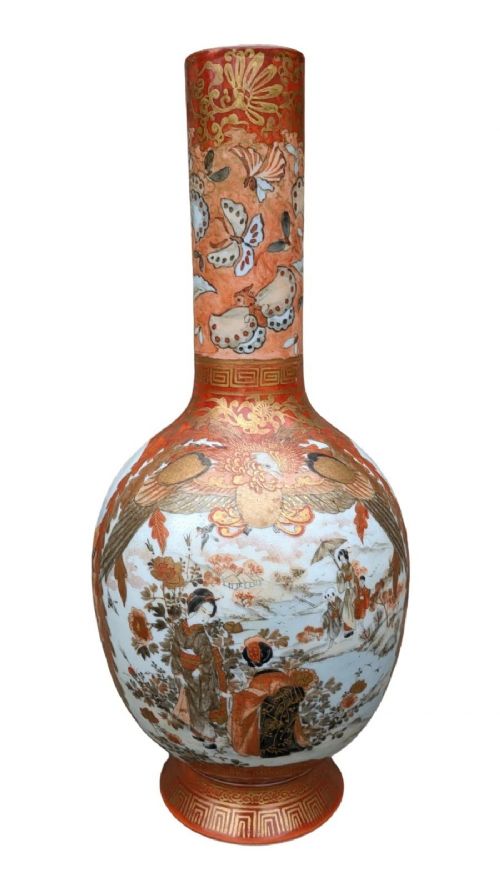
A kutani porcelain vessel is a traditional Japanese ceramic object made during the Meiji and Taisho periods, spanning the late nineteenth and early twentieth centuries. These pieces encompass functional and decorative forms such as long neck bottle vases, large vases, small hand painted vases, and specific ritual or decorative items.
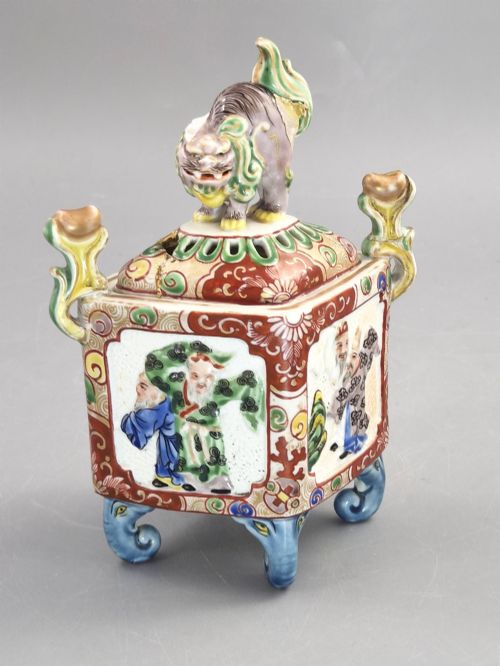
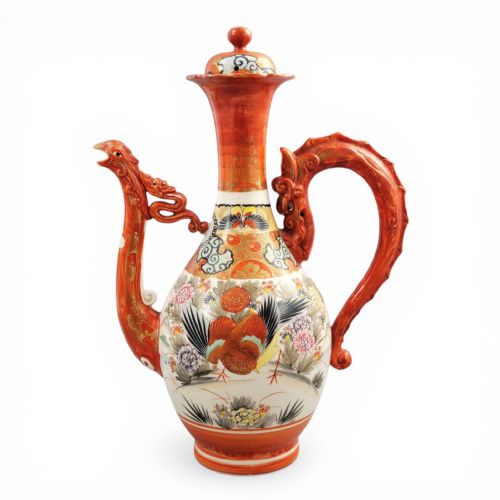
The most common examples you will encounter on this page are vases from the Meiji period, often decorated with intricate overglaze enamels and gold leaf. Alongside standard vases, the listings include specialised forms like incense burners, designated as koro, and decorative ewers featuring figural elements such as elephant head feet or phoenix spouts.
Originating primarily from the Kaga region of Japan, these vessels showcase distinct regional aesthetics that developed during the late nineteenth century. Whether shaped as a treasure ship or decorated with dragon motifs, each item reflects the craftsmanship of Japanese ceramic production from this era.
Materials and construction
These vessels are constructed from white porcelain clay, shaped into forms such as bottle vases, censers, and ewers, then fired before receiving detailed surface decoration. Artisans applied colourful overglaze enamels, notably iron red, alongside gold leaf and extensive gilding to create complex pictorial and geometric patterns.
Surface ornamentation frequently incorporates moriage techniques, building up thick layers of slip or enamel to achieve tactile relief details like lion handles or dragon motifs. Many pieces are completed with carved wood stands that complement the porcelain body.
Some vessels abandon the standard vase shape entirely to take the form of an auspicious treasure ship carrying good fortune.
Assessing quality and execution
Quality in these ceramics rests on the precision of the hand painted enamel work and the subtlety of the gilding applied across the porcelain surface. Finer examples display meticulous brushwork in the iron red pigments and well-defined relief work in decorative elements such as lion handles or dragon details.
The sophistication of the form also dictates the distinction between standard production items and superior works, seen in sculptural additions like elephant head feet or complex figural shapes like treasure ships. The integration of the glaze with the underlying porcelain body and the crispness of the firing define the upper tier of these pieces.
Kinrin Workshop
The Kutani Porcelain Vessel Glossary
- Moriage
- A ceramic technique where slip is piped onto the surface to create raised decorative patterns and textures. This method adds a tactile, three-dimensional quality to the vessel exterior.
- Koro
- A traditional Japanese incense burner, typically fitted with a pierced lid for releasing fragrance. These incense burners often rest on decorative supports such as animal feet and feature sculpted finials.
- Meiji Period
- The era in Japanese history lasting from 1868 to 1912, marked by the opening of trade with the West. Ceramics from this period frequently combine traditional motifs with elaborate decorative execution.
- Ewer
- A large pitcher or jug with a spouted opening, designed for pouring liquids or used purely for display. In these Japanese ceramics, ewers often incorporate mythical creature details like phoenix spouts.
- Takarabune
- A mythical treasure ship in Japanese folklore, traditionally depicted carrying the Seven Gods of Fortune and precious goods. Ceramic vessels formed in this shape serve as decorative tabletop items.
Kutani Porcelain Vessel: Frequently Asked Questions
What is a kutani porcelain vessel?
A kutani porcelain vessel is a ceramic piece originating from Japan, typically created during the Meiji or Taisho periods. These items are known for their distinctive use of iron red enamels and gold leaf.
They encompass a variety of forms, including vases, incense burners, and decorative ewers, often featuring hand painted details.
How were these vessels used?
Many of these pieces served as decorative ornaments in domestic interiors, displayed on carved wood stands to showcase their intricate artwork. Specific forms like the koro were used to burn incense during gatherings.
Others, such as ewers or shaped vessels like treasure ships, functioned primarily as ornamental art objects reflecting traditional Japanese folklore and motifs.
How do I date a Meiji period piece?
Dating these ceramics relies on stylistic markers and historical production eras, specifically the Meiji period spanning the late nineteenth and early twentieth centuries. Artisans during this time utilised specific overglaze enamel palettes and decorative techniques.
Evidence such as workshop attributions or specific motifs can help narrow down the production period of an individual vase or censer.
How do I care for antique porcelain?
Antique porcelain requires gentle handling to protect delicate overglaze enamels and applied gold leaf from abrasion. Dusting should be done softly with a dry cloth, avoiding harsh cleaning agents.
Keeping the pieces away from direct sunlight and extreme temperature fluctuations helps preserve the integrity of the glaze and any accompanying carved wood stands.