

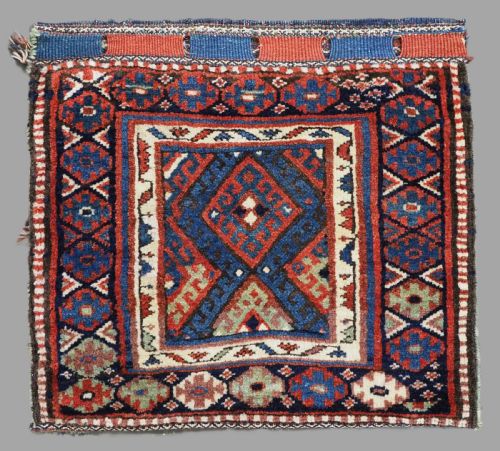


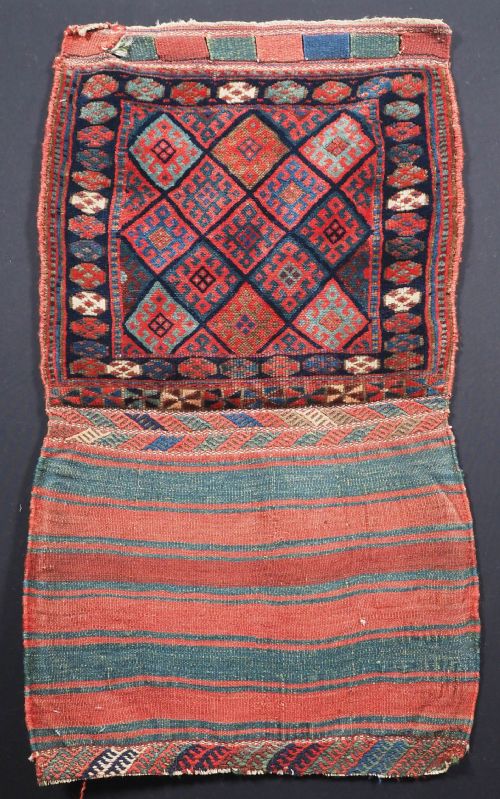


Kurdish Tribal Bag
These Kurdish tribal bag pieces are woven wool containers carrying genuine nomadic history into modern spaces.
Kurdish Tribal Bag
A Kurdish tribal bag is a woven textile created by nomadic and village makers for storage or transport during travel. When you search for this phrase, you find practical items adapted into decorative elements for interiors.
The pieces listed on this page appear in various functional forms including complete bags, saddlebag faces, chantehs, tasheh tacheh wheat sacks, juvals, and cushion conversions. These textile objects originate from periods spanning the late nineteenth century to the early twentieth century.
Geographic attribution covers West Persia, the Char Mahal Valley, and Turkish regions, reflecting the movement and settlement of the Bakhtiari, Lor, and Jaf Kurd tribes. Most items you meet here demonstrate traditional tribal or nomadic design traditions passed down through generations.
How they were made
Makers constructed these textiles predominantly using wool and hand-spun wool, ensuring resilience for daily nomadic use. Goat hair and cotton also appear in the material makeup, particularly for structural foundations and supports.
Weavers employed flat-weave techniques for plain weave backs alongside pile construction for decorative faces. These construction methods combined durability with intricate pattern work tailored to nomadic life.
Listings span dates from 1880 to 1920, incorporating wool, goat hair, and cotton across Persian and Turkish tribal origins.
What varies in quality
Quality rests in the crispness of the weaving and the integrity of the materials, distinguishing everyday utility items from finer tribal expressions. Hand-spun wool texture and even knotting or weaving density dictate the lasting character of each piece.
Completeness alters the nature of an object, separating intact bags with plain weave backs from isolated bag faces or later cushion conversions. The precision of tribal motifs and the survival of original structural elements define the higher tier of these textiles.
The Kurdish Tribal Bag Glossary
- Chanteh
- A small woven bag traditionally used by nomads for carrying personal items or documents. This form is often encountered as a compact antique textile.
- Juval
- A large storage bag used inside a tent for bedding or household goods. These pieces represent the larger scale of nomadic weaving.
- Tasheh
- A specific type of wheat sack or storage container made by tribal weavers. These utilitarian objects often display robust geometric patterns.
- Saddlebag face
- The decorative front panel of a paired riding bag, separated from its reverse over time. Collectors frequently frame or display these panels independently.
- Plain weave
- A simple interlacing method creating a flat, unpiled fabric surface. This technique frequently forms the strong backs of Kurdish bags.
Kurdish Tribal Bag: Frequently Asked Questions
What is a Kurdish tribal bag?
A Kurdish tribal bag is a practical woven container made by nomadic weavers for storage or transport.
These textiles include complete bags, saddlebag faces, and wheat sacks originating from late nineteenth and early twentieth-century regions.
How were these bags used?
Nomads utilised these containers to store household goods, grain, or personal belongings during seasonal migrations.
They functioned as pack animals equipment or tent storage before surviving as decorative textile fragments.
How do I live with a tribal bag?
You can display bag faces as wall hangings or place complete bags and cushions in low-traffic areas.
Keep them away from direct sunlight to protect the natural wool fibres from fading over time.
How can I tell the types apart?
Smaller personal pouches are classified as chantehs, while larger storage containers are known as juvals or wheat sacks.
Examining the scale, shape, and presence of pile versus flat-weave surfaces reveals the specific original function.