


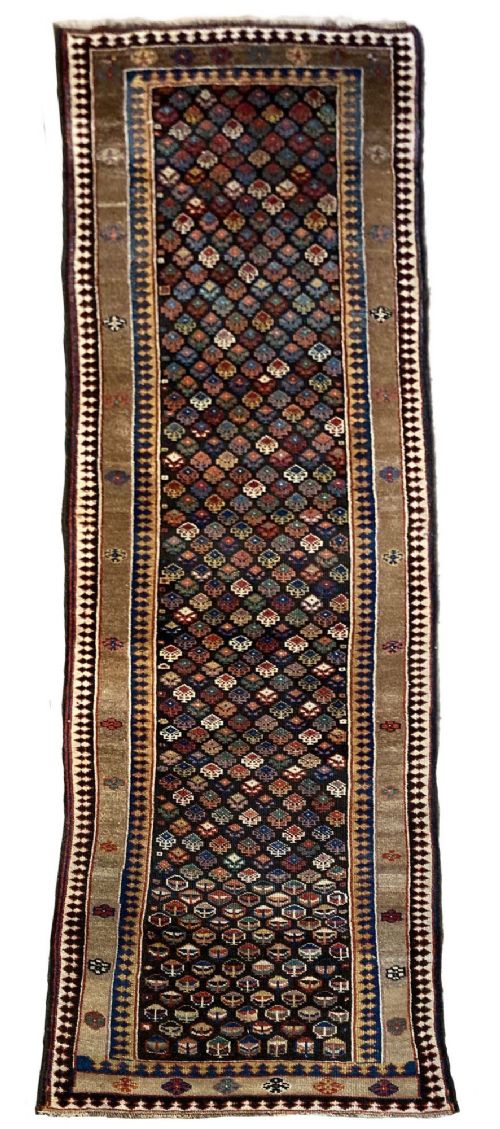


Kurdish Corridor Carpet
When you search for a Kurdish corridor carpet, you are looking at substantial tribal floor coverings woven in elongated formats for hallways and galleries.
Kurdish Corridor Carpet
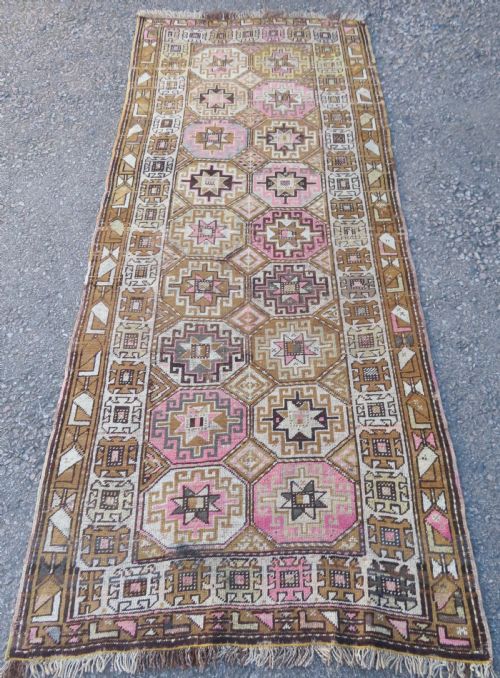
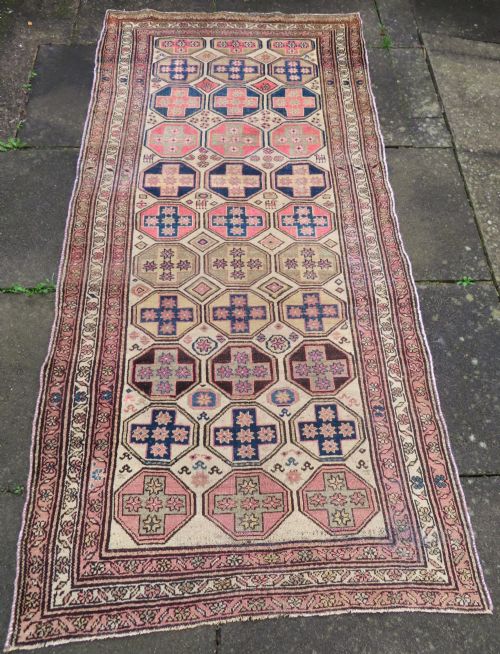
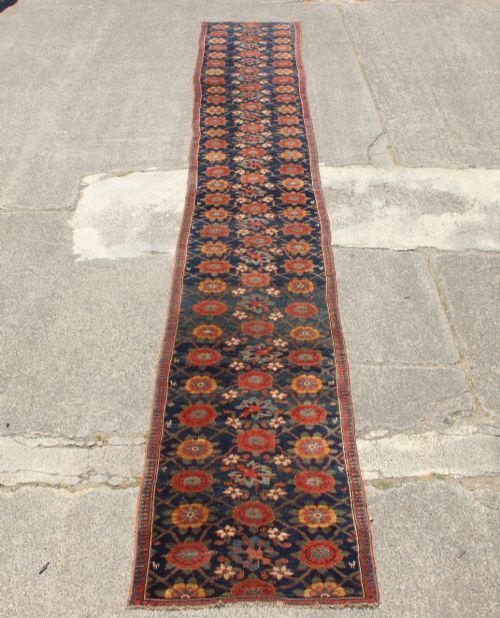
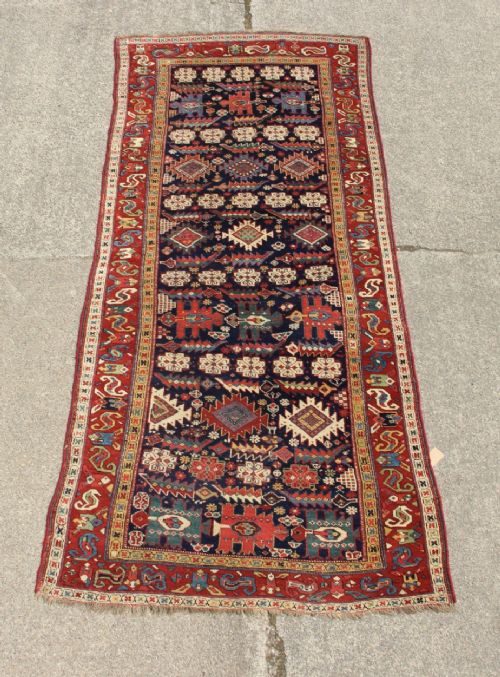
A Kurdish corridor carpet or runner presents a narrow, extended format designed specifically for hallways and long rooms in nineteenth and early twentieth century homes. These pieces originate primarily from tribal and village contexts in North West Persia, including centres like Bidjar, Senneh, Hamadan, and Sauj Bulagh.
The format typically spans lengths well over two metres while maintaining a restricted width suitable for corridors. Alongside traditional runners, the listings include wider formats known as kellehs, which offer a more substantial floor presence while retaining tribal character.
Designs on these rugs incorporate diverse motifs such as the Mina Khani pattern, latch hook medallions, garden layouts, all-over shrub designs, and pictorial elements including birds and tribal figures. Their origins link them directly to the weaving traditions of Persian, Kurdish, and nomadic groups.
Materials and weaving techniques
The construction relies on durable natural foundations utilising cotton or wool for the warp and weft. Pile construction predominantly employs hand-spun wool, providing resilience suited to heavy traffic areas.
Weavers utilised traditional village and nomadic knotting techniques characteristic of North West Persia. This combination of sturdy materials and tight knotting accounts for the survival of these runners across decades of domestic use.
Kurdish Corridor Carpet Retail Price Guide 2026
Typical asking prices for kurdish corridor carpet among the pieces listed under this phrase on Sellingantiques today, from the lower quarter to the upper quarter. They describe what is for sale here now, not the wider market.
Listings span a chronological range from the 1850s to the 1930s, utilising hand-spun wool and cotton.
Assessing quality in antique runners
Quality in a Kurdish corridor carpet rests on the handling of wool and the precision of the weave. Finer pieces demonstrate dense knotting and supple hand-spun wool that retains richness in texture.
Design execution and clarity of motif distinguish finer examples from standard village production. Well-drawn borders, balanced proportions, and well-preserved colour palettes elevate individual carpets within the category.
The Kurdish Corridor Carpet Glossary
- Kelleh
- A large rug format, broader than a runner but longer than a standard carpet, often used in large halls or principal rooms.
- Runner
- An elongated narrow carpet format intended for corridors, staircases, and hallways.
- Mina Khani
- A traditional all-over geometric floral pattern featuring repeating daisy-like blossoms linked by curved vines.
- Latch Hook
- A geometric ornamentation motif formed by stepped triangles projecting from edges or medallions.
- Warp
- The foundational vertical threads stretched on the loom to support the entire woven structure.
Kurdish Corridor Carpet: Frequently Asked Questions
Where were these carpets made?
These carpets were woven in the villages and tribal regions of North West Persia, including areas associated with Kurdish, Bidjar, Hamadan, and Senneh traditions.
Production spanned from the mid nineteenth century through the early twentieth century, reflecting distinct regional weaving practises.
How do I use a long runner at home?
A long runner fits naturally into hallways, corridors, entryways, and gallery spaces where narrow floor coverings are required.
Their elongated proportions help define transitional spaces while adding warmth and traditional pattern to timber or stone floors.
What motifs appear on these carpets?
Designs frequently feature geometric medallions, repeating floral arrangements like the Mina Khani pattern, and all-over shrub or garden layouts.
Some examples incorporate pictorial elements including birds perched on trees or stylised tribal figures within the field and borders.
How do I determine the age of a runner?
Dating relies on stylistic indicators, structure, wool quality, and structural characteristics recorded across pieces from the nineteenth and early twentieth centuries.
Earlier examples from the mid to late nineteenth century often display distinct natural dye palettes and hand-spun materials.