




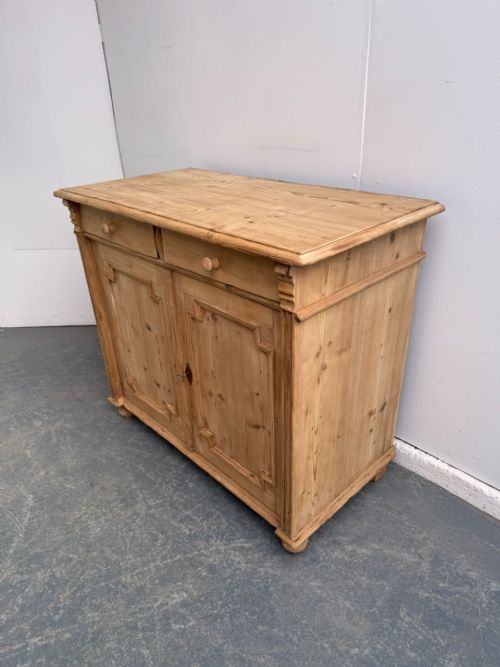


Kitchen Base Unit
These kitchen base unit pieces offer solid working timber and practical storage, bringing genuine period utility to any room.
Kitchen Base Unit
A kitchen base unit search reveals sturdy foundational furniture built from timber, spanning the eighteenth, nineteenth, and early twentieth centuries. These functional items primarily appear as dresser bases, sideboards, and dressers with regional character.
The most frequent examples encountered on this page are pine and oak dresser bases from the Victorian and Georgian periods. These pieces often feature cupboards and drawers designed for domestic storage.
Makers from country and revival traditions produced these items using robust construction methods suited for daily use. Examples range from plain pine utility pieces to carved oak designs.
Materials and construction
Construction relies heavily on solid pine and oak, often paired with brass hardware and iron fixtures. Craftsmen shaped these timbers to create heavy-duty frames capable of supporting everyday household tasks.
Surfaces frequently show the marks of hand-planing and traditional joinery rather than industrial assembly. Many pine examples survive in a stripped state, ready for waxing or painting by the owner.
Kitchen Base Unit Retail Price Guide 2026
Typical asking prices for kitchen base unit among the pieces listed under this phrase on Sellingantiques today, from the lower quarter to the upper quarter. They describe what is for sale here now, not the wider market.
Listings feature items from the eighteenth century up to nineteen ten, constructed primarily in pine and oak.
Judging quality in timber furniture
Quality rests upon the selection of timber and the integrity of the original construction rather than decorative excess. Superior examples display thick, well-seasoned boards and tight joints that withstand centuries of use.
Proportion and restrained detail separate ordinary utility items from finer country pieces. The presence of original brass or iron hardware also elevates a piece above those with later replacements.
The Kitchen Base Unit Glossary
- Dresser base
- The lower portion of a traditional kitchen dresser, consisting of a counter surface above cupboards and drawers without the upper plate rack.
- Pine
- A soft timber commonly used for country furniture, valued for its pale grain and adaptability to being waxed or painted.
- Oak
- A hard, durable timber favoured for early furniture, known for its distinct figuring and strength.
- Jacobean Revival
- A style popular around nineteen ten that mimics seventeenth-century decorative motifs, often featuring dark finishes and geometric moulding.
Kitchen Base Unit: Frequently Asked Questions
What is a kitchen base unit?
A kitchen base unit in this context refers to a sturdy antique timber sideboard or dresser base used for storage and workspace.
These pieces provide low-level surface areas and enclosed shelving suitable for modern utility rooms or kitchens.
How do I date a pine dresser base?
Dating relies on construction marks, timber thickness, and fastener types such as hand-forged iron nails.
Earlier eighteenth-century pieces display different drawer dovetailing and board widths compared to Victorian or nineteen-hundreds examples.
Can I paint a pine base unit?
Many antique pine bases are sold ready for waxing or painting to suit contemporary interior schemes.
Applying a modern paint finish is a common practice for nineteenth-century pine furniture without damaging its historical integrity.
What is the difference between oak and pine pieces?
Oak items generally originate from earlier periods and offer a darker, denser surface with prominent grain patterns.
Pine examples tend to be lighter in tone, stemming frequently from nineteenth-century country workshops.