





Kitchen Art Oil
Kitchen art oil works capture the quiet beauty of food, dining rooms and culinary spaces through centuries of paint and canvas.
Kitchen Art Oil
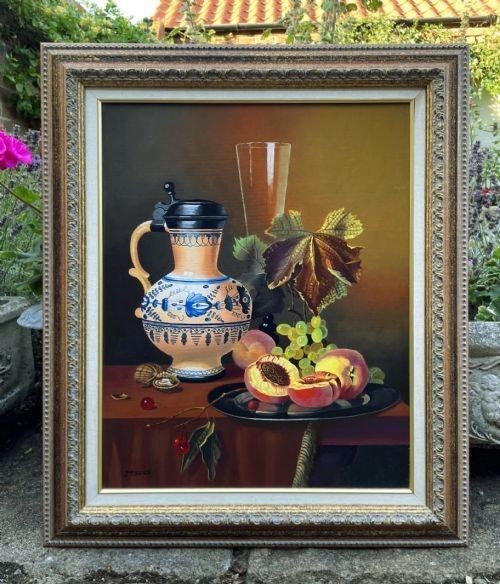
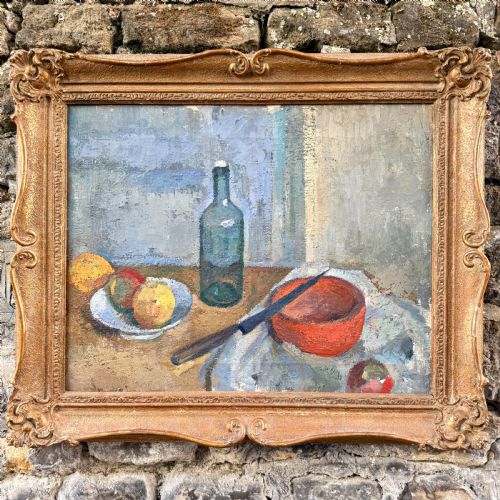
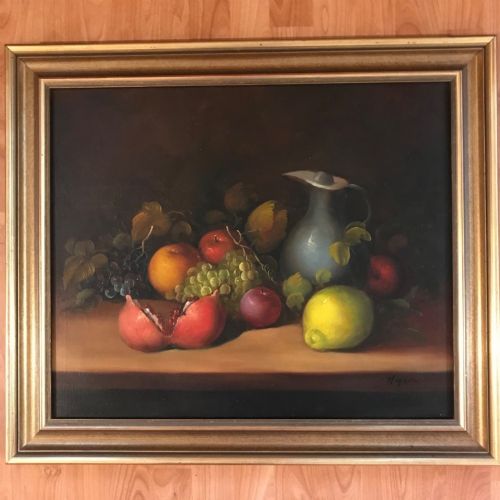
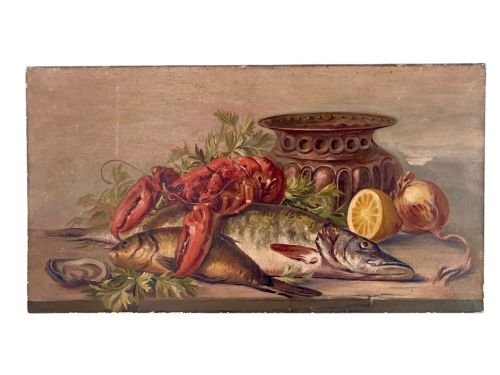
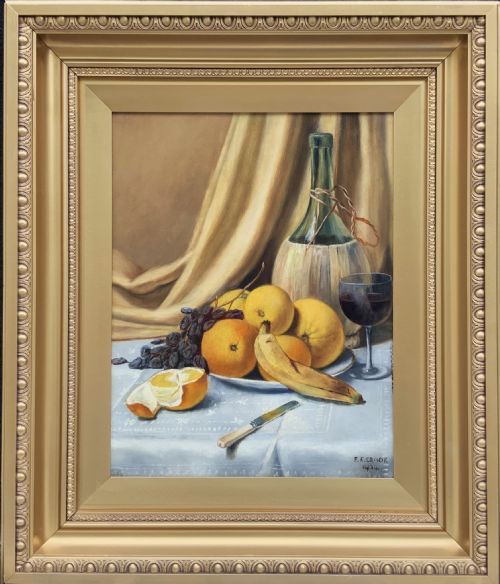
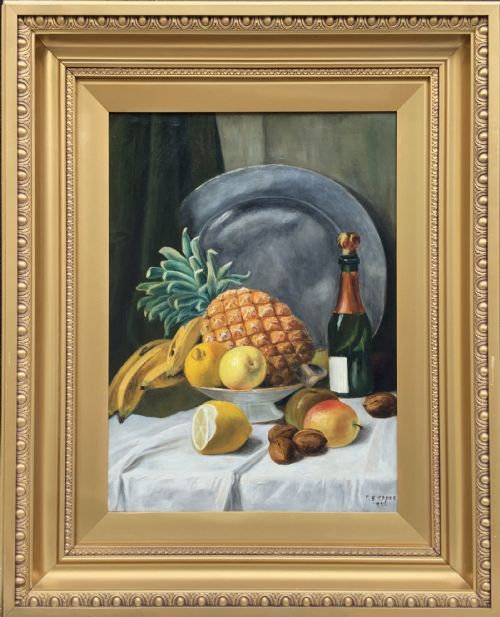
Kitchen art oil pieces encompass a rich variety of oil paintings focusing on food, culinary interiors, larder scenes and still life arrangements. Buyers exploring kitchen art oil will encounter works spanning from the nineteenth century through the mid-twentieth century, with notable representation from the Edwardian era and the nineteen-sixties.
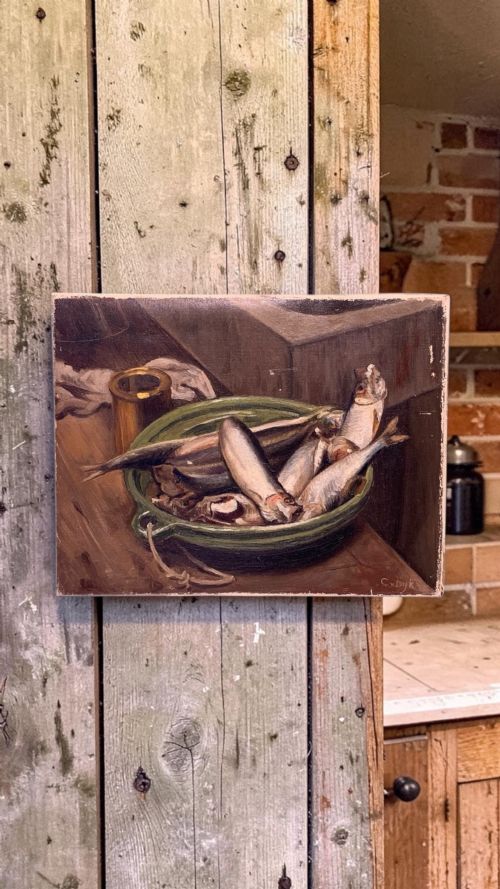
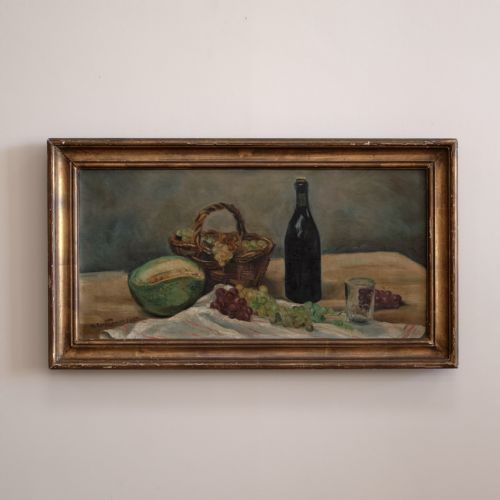
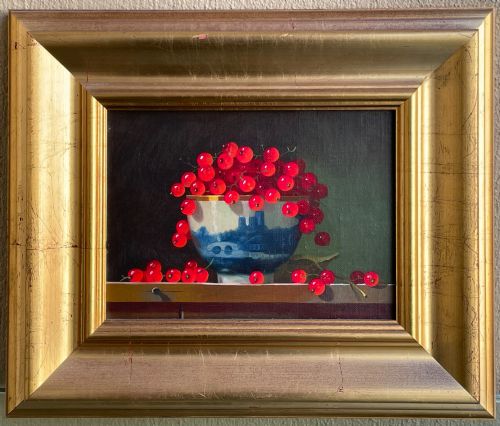
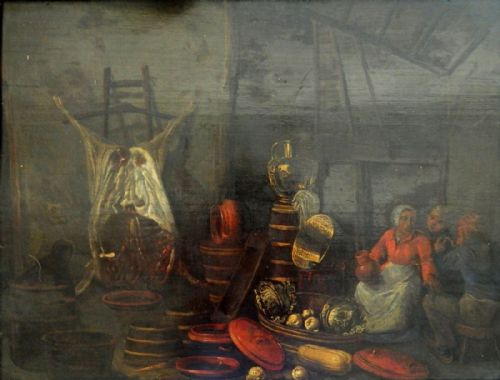
The subjects range widely from classic fruit studies featuring apples, pomegranates and grapes to more complex interior scenes with fish, lobsters, vegetables and serving jugs. Many of these paintings reflect traditional domestic and larder themes, capturing everyday provisions with careful composition and tonal depth.
Works on this page include pieces created in various regional styles, such as French school still lifes, Dutch still life influences, and mid-century European studies. The selection brings together canvas supports and wood panels framed in period mouldings.
Materials and construction
These works are executed primarily in oil paint applied to woven canvas supports or solid wood panels. The application of oil pigment allowed artists to build rich textures and deep tones, particularly effective for rendering the surfaces of fruit, ceramics, and textiles.
Many paintings are housed within original wooden frames, some featuring gilded wood or solid period mouldings that complement the depth of the canvas. The combination of traditional pigment formulations and canvas preparation ensured the longevity of these domestic and still life compositions.
Kitchen Art Oil Retail Price Guide 2026
Typical asking prices for kitchen art oil among the pieces listed under this phrase on Sellingantiques today, from the lower quarter to the upper quarter. They describe what is for sale here now, not the wider market.
Look closely to spot hidden playing cards, dice, and curious snails sharing the larder table with everyday bread and lemons.
Assessing quality and execution
Quality in these oil paintings rests primarily on the confidence of the brushwork, the handling of light across subject matter such as fruit and ceramics, and the overall compositional balance. Superior examples demonstrate a careful command of tone that gives depth to domestic interiors and larder scenes.
The presence of period framing, legible signatures, and documented artist attributions also distinguish more accomplished works from anonymous decorative pieces. The treatment of texture, from the skin of a lemon to the weave of a tablecloth, marks the distinction between standard studies and finer artistic output.
Ian Parker·Thomas Couture·Gustav Goemans·John Robertson Reid·Pauline Delacroix Garnier
The Kitchen Art Oil Glossary
- Still life
- A painting or drawing depicting inanimate subject matter, typically commonplace objects such as food, fruit, or vessels. These arrangements allow artists to focus on light, colour, and texture.
- Oil paint
- A slow-drying paint made by combining pigments with a drying oil, most commonly linseed oil. This medium permits subtle blending and rich colour saturation.
- Wood panel
- A rigid flat piece of timber used as a support for painting prior to the widespread adoption of stretched canvas. Panels offer a firm and stable surface for detailed brushwork.
Kitchen Art Oil: Frequently Asked Questions
What subjects appear in kitchen art oil?
These paintings predominantly feature food, fruit, tableware, and domestic interior scenes. Common motifs include apples, pomegranates, fish, jugs, and larder arrangements.
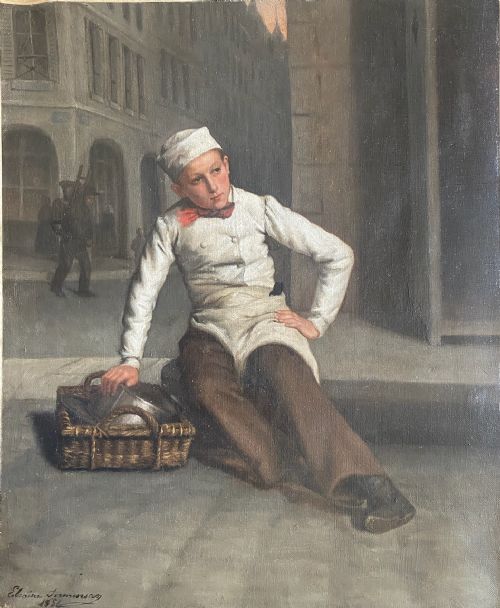
Many works also depict kitchen staff, servants, or dining preparations within historical interior settings, reflecting daily domestic life.
How do I date these oil paintings?
Dating relies on stylistic clues, clothing in portraits, framing materials, and recorded signatures. Pieces range from nineteenth-century academic styles to twentieth-century mid-century European interpretations.
Examining the canvas preparation and the type of wood panel can also provide helpful indicators of the period of creation.
Where were these paintings displayed originally?
Such artworks were typically created for domestic dining rooms, kitchens, or country houses to celebrate culinary abundance and hospitality. Salon-exhibiting artists also produced formal still life and interior pieces for public exhibitions.
Today, they suit dining spaces, kitchens, and living areas where traditional or mid-century aesthetics are desired.
Are these paintings signed by the artists?
Some works feature legible signatures, artist attributions, or gallery documentation, while others remain part of regional schools or anonymous traditions. Signed pieces often provide a clearer connection to specific European art movements and makers.
Both signed and unsigned examples offer authentic period character through their materials and painting techniques.