



Kirman Floral Rug
These Persian kirman floral rug examples bring centuries of South Persian weaving tradition into a room.
Kirman Floral Rug
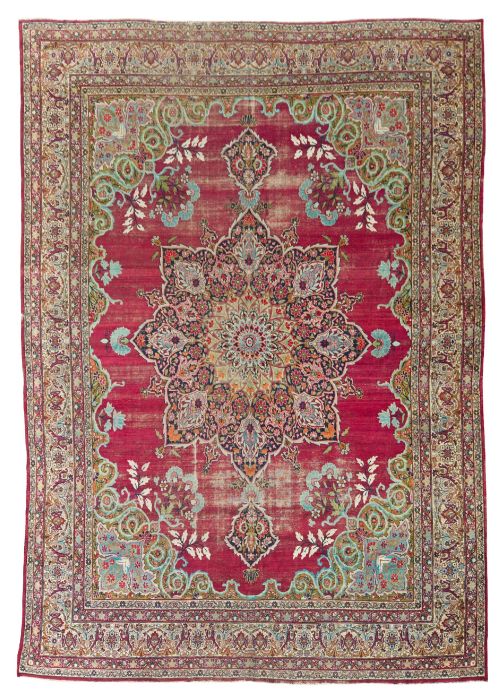
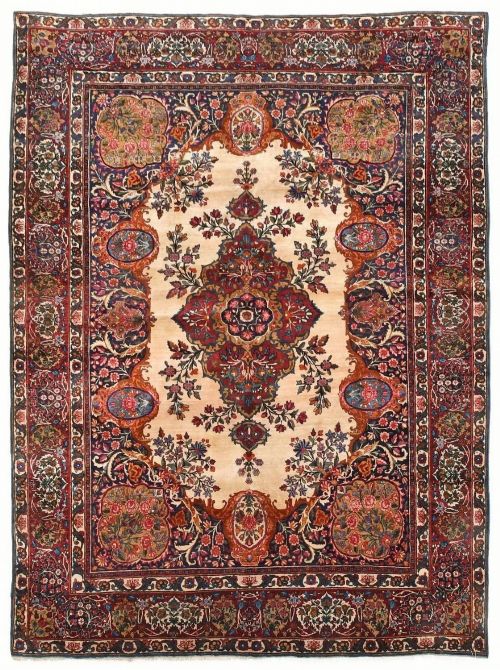
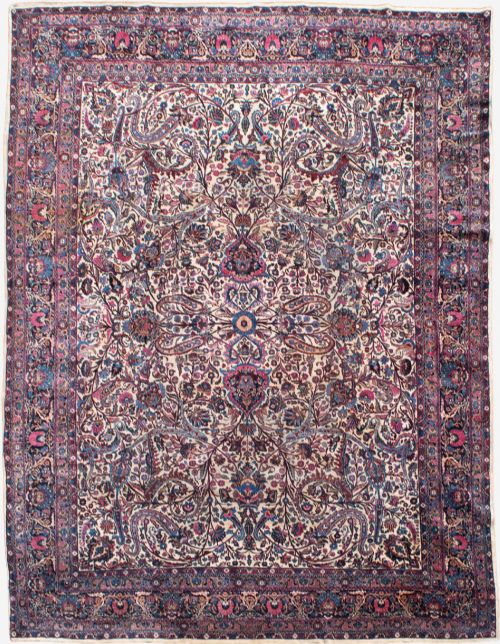
A kirman floral rug originates from South Persia, taking its name from the historic weaving centre where artisans produced both room-size carpets and smaller formats. When searching for a kirman floral rug, buyers encounter pieces spanning the late nineteenth century through to the early decades of the twentieth century. The selections available range from exceptionally long runners and small scatter rugs to massive room-size carpets measuring over five metres in length.
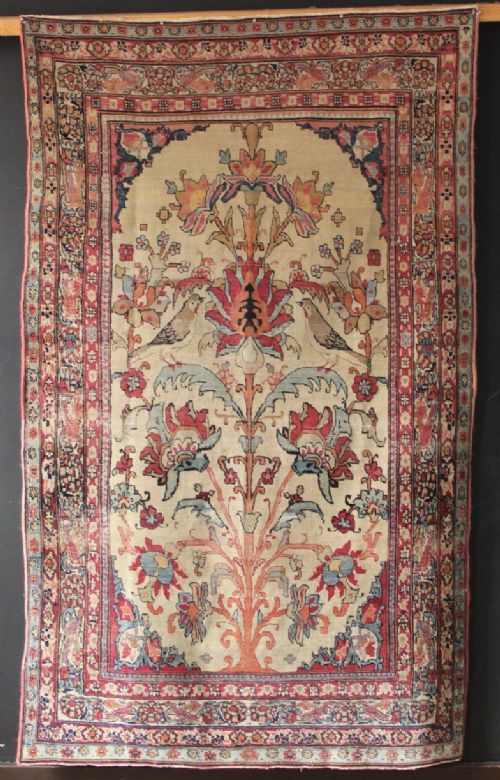
The dominant aesthetic draws heavily on traditional Persian design vocabulary, frequently incorporating repeat floral boteh motifs, intricate festoons, and millefleurs prayer designs. Ivory grounds appear alongside richer field colours, creating versatile options for interior spaces. Buyers are most likely to meet room-size carpets and rugs dating from the late nineteenth century up to the nineteen-thirties.
How they were made
Weavers constructed these carpets using a foundation of durable cotton warp and weft threads to support the dense pile. The pile itself consists of wool, chosen for its resilience and ability to hold fine, intricate botanical detail across complex compositions.
Master artisans employed traditional Persian knotting techniques, allowing for the precise execution of delicate curves and dense floral arrangements seen in Lavar and standard Kirman production. The combination of sturdy cotton foundations and fine wool pile enabled these textiles to withstand generations of daily use while retaining intricate pattern work.
Kirman Floral Rug Retail Price Guide 2026
Typical asking prices for kirman floral rug among the pieces listed under this phrase on Sellingantiques today, from the lower quarter to the upper quarter. They describe what is for sale here now, not the wider market.
Some runners push proportions to the extreme, offering exceptionally long narrow paths of flowers for very specific architectural spaces.
What varies in quality
Knot density and fineness of execution dictate the upper tier of the range, allowing complex millefleurs and botanical schemes to resolve with absolute clarity. Pieces described as fine or very fine utilise superior wool manipulation to achieve crisper outlines in the floral motifs.
Proportion and scale also separate standard room-size examples from exceptional formats, such as runners of unusually long narrow proportions or oversized carpets. The handling of the ivory ground and the intricacy of the surrounding floral festoons distinguish the more ambitious weaving workshops from standard commercial production.
The Kirman Floral Rug Glossary
- Boteh
- A traditional Persian teardrop or almond-shaped motif filled with floral or paisley detailing. This pattern appears frequently across repeat fields in South Persian weaving.
- Millefleurs
- A decorative style dominated by a dense background of tiny, interconnected flowers. These prayer rugs and carpets showcase extraordinary botanical detail.
- Lavar
- A specific sub-category of Kirman weaving often associated with finer knotting and delicate floral compositions. Pieces bearing this attribution generally date to the nineteenth century.
- Runner
- A long, narrow format carpet designed for hallways or corridors. Examples in this tradition often display exceptionally elongated proportions.
Kirman Floral Rug: Frequently Asked Questions
Where were these rugs made?
These textiles were produced in Kirman, located in South Persia. The region established a lasting reputation for sophisticated floral weaving.
Master workshops utilised local materials to supply both domestic markets and international trade with high-status decorative floor coverings.
How do I clean an old carpet?
Gentle surface cleaning and professional specialist attention preserve the delicate wool pile and cotton foundation. Regular light vacuuming without a beater bar prevents dust accumulation.
Avoid harsh chemical treatments that can strip the natural lanolin from the wool fibres over time.
What is a prayer rug format?
Prayer rugs feature a distinct architectural niche design, often incorporating a mihrab arch at one end. They served a devotional function in domestic settings.
These compositions frequently incorporate millefleurs details and specialised floral arrangements distinct from standard room-size field patterns.
How do I date an antique piece?
Dating relies on stylistic shifts, dye palettes, and structural characteristics recorded across nineteenth and twentieth-century examples. Earlier nineteenth-century pieces often display finer wool handling and specific botanical layouts.
Comparing knot density and border designs helps place individual examples within the broader timeline of production.