

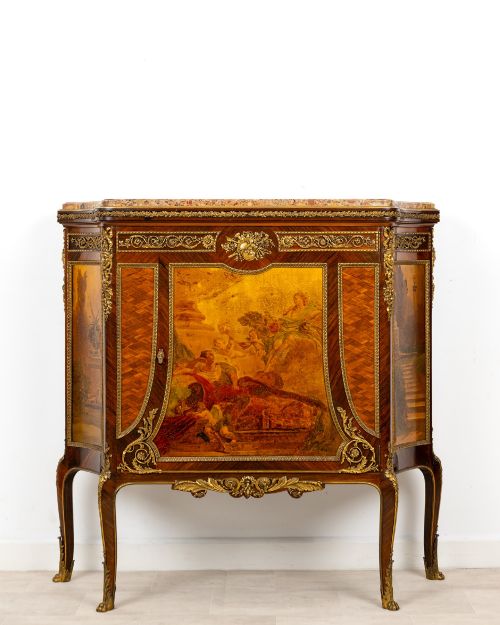
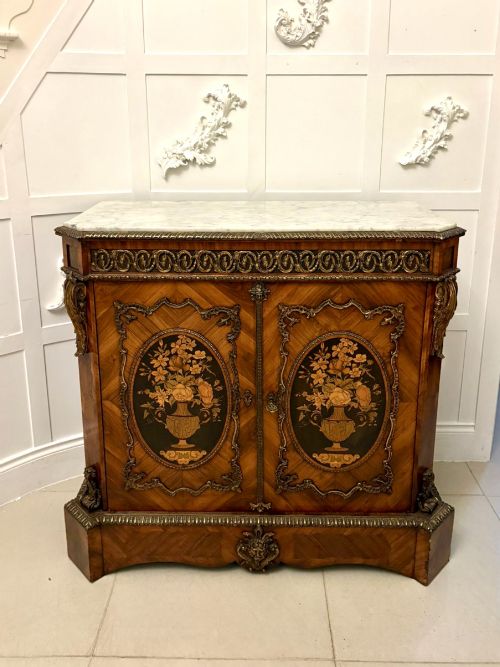
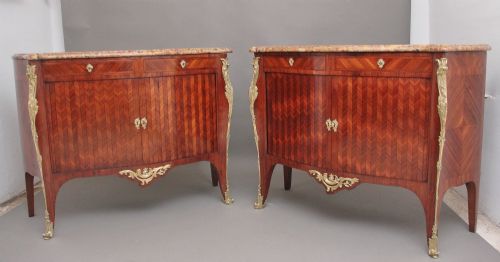

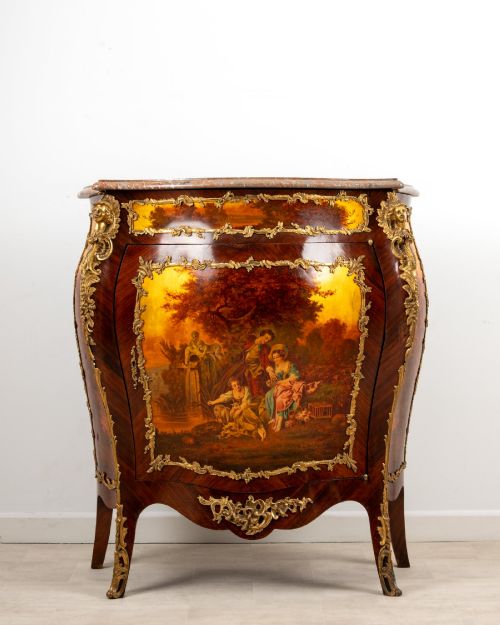


Kingwood French Credenza
A kingwood french credenza brings warmth and formal display to a room through dense violet-brown grain, gilt mounts, and marble.
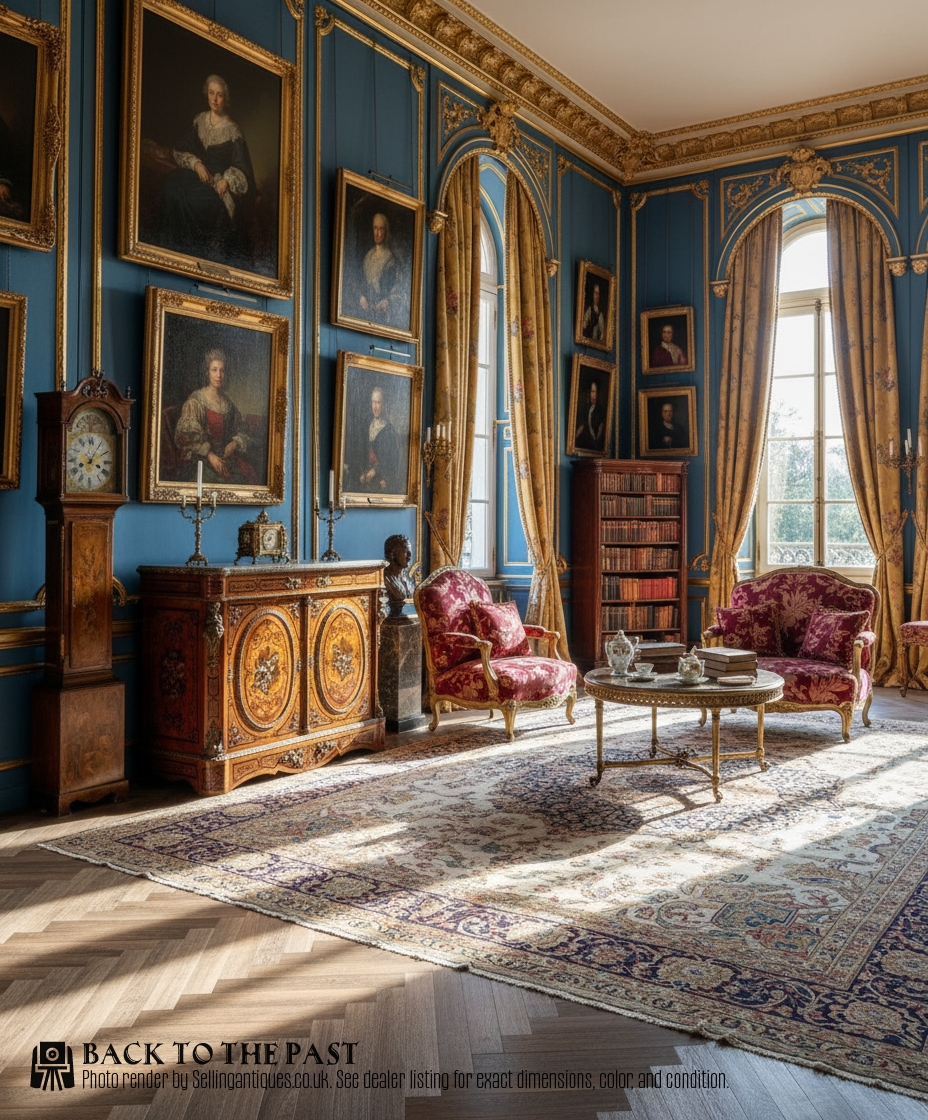
Kingwood French Credenza
When you search for a kingwood french credenza, you encounter heavily ornamented storage furniture designed for formal reception rooms during the nineteenth century. These pieces appear primarily in nineteenth-century interpretations of Louis XV and Louis XVI revivals, alongside occasional eighteenth-century examples.
The common form on this page is a low-standing side cabinet featuring doors, glass vitrine tops, or serpentine marble surfaces. Cabinet makers adapted these proportions from commodes, bookcases, and sideboards, integrating porcelain plaques and floral marquetry.
Materials and construction methods
Constructors laid kingwood, rosewood, walnut, and burr walnut veneers in geometric marquetry and parquetry patterns over heavier secondary timbers. This created rich surface contrasts before cabinet makers applied varnish or polish.
Casters fitted cast ormolu and gilt bronze mounts around panels, corners, and feet to accentuate the curves. Heavy slab marble tops, often shaped with serpentine or rounded edges, completed the upper surfaces of these cabinets.
Kingwood French Credenza Retail Price Guide 2026
Typical asking prices for kingwood french credenza among the pieces listed under this phrase on Sellingantiques today, from the lower quarter to the upper quarter. They describe what is for sale here now, not the wider market.
The listings on this site span the eighteenth to the twentieth centuries, dominated by nineteenth-century French revival pieces.
Distinctions in craftsmanship and materials
The refinement of the ormolu mounts separates standard production from exceptional examples. Finer cabinets display chased and fire-gilded bronze work with crisp detailing, whereas lesser pieces rely on simpler, unchased brass or alloy mounts.
The complexity of the veneer work dictates the tier of the piece. Simple straight-grained panels sit at the base of the range, while intricate floral marquetry, parquetry, and painted Vernis Martin panels indicate higher workshop standards.
Maison Millet·Paul Sormani·Mercier Frères
The Kingwood French Credenza Glossary
- Kingwood
- A dense, hard timber featuring dark violet-brown tones with lighter golden streaks. Cabinet makers valued it for high-end decorative veneers during the eighteenth and nineteenth centuries.
- Ormolu
- Gilt bronze applied as decorative mounts on furniture. Craftsmen cast and chased the metal to create gilded ornamentation around doors and corners.
- Marquetry
- Inlaid wood veneers forming pictorial or geometric designs. Artisans cut various coloured timbers to fit precisely into a background veneer.
- Vernis Martin
- A simulated Japanese lacquer technique developed in France. Furniture makers used successive layers of varnish to create glossy, painted decorative surfaces.
- Parquetry
- Geometric patterns formed by small pieces of wood veneer. Makers arranged contrasting timbers in grids, cubes, or herringbone layouts.
Kingwood French Credenza: Frequently Asked Questions
What is a kingwood french credenza?
A kingwood french credenza is a low nineteenth-century display cabinet veneered in richly grained exotic timber and embellished with bronze mounts.
These pieces served as formal serving surfaces and display furniture in grand reception rooms, often paired with matching commodes.
How do I identify Louis XV style?
Louis XV style is defined by sweeping serpentine curves, asymmetrical ornamentation, and naturalistic floral marquetry. Furniture from this revival period avoids straight lines in favour of flowing cabriole legs and rounded corners.
Ormolu mounts on these pieces typically trace the contours of the panels and frame the doors to highlight the organic shapes.
Are marble tops original?
Marble tops on these credenzas are generally original to the piece, cut specifically to match the serpentine or rectilinear contours of the carcase. They provided a durable, decorative surface for displaying porcelain and decorative objects.
Variations in marble colour and thickness reflect the specific workshop and the revival period of manufacture.
How do I care for kingwood veneer?
Keep kingwood furniture away from direct sunlight and steady heat sources to prevent the underlying veneers from drying and lifting. Maintain a stable indoor humidity level to protect the polished wood surfaces.
Dust the surface gently with a dry, soft cloth and avoid chemical polishes that can damage historic varnish layers.