


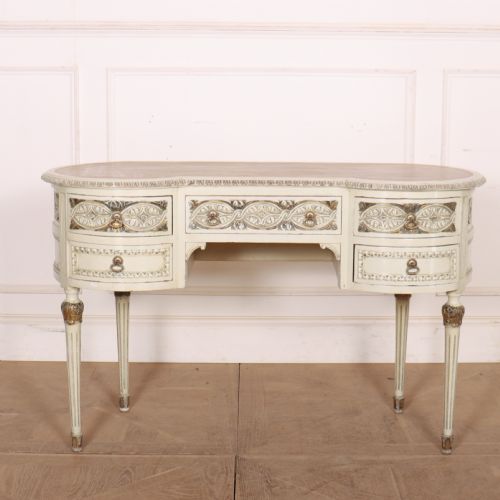


Kidney Dressing Desk
A kidney dressing desk brings a graceful sweep of the Victorian or Edwardian boudoir straight into a modern study.
Kidney Dressing Desk
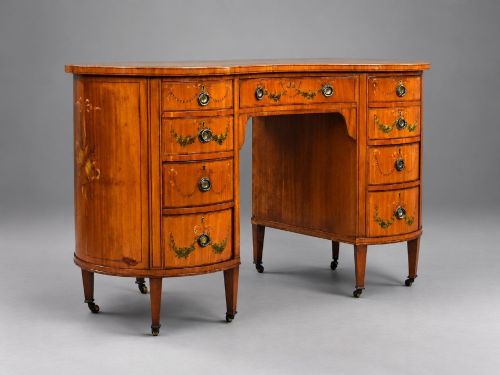
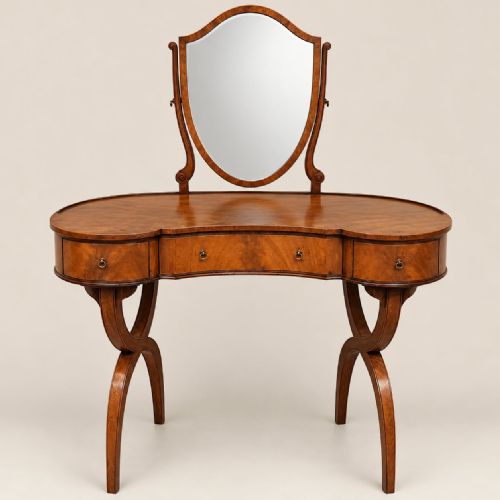
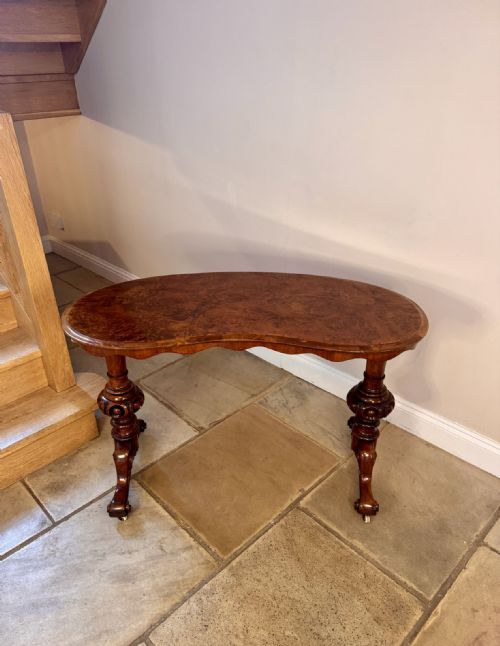
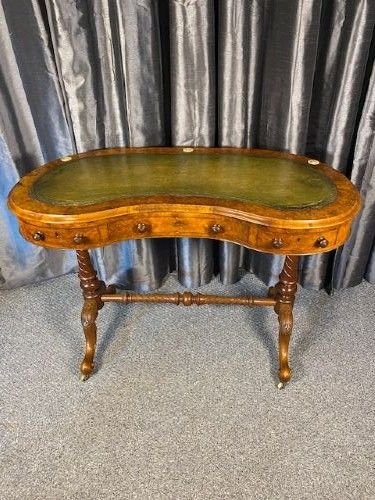
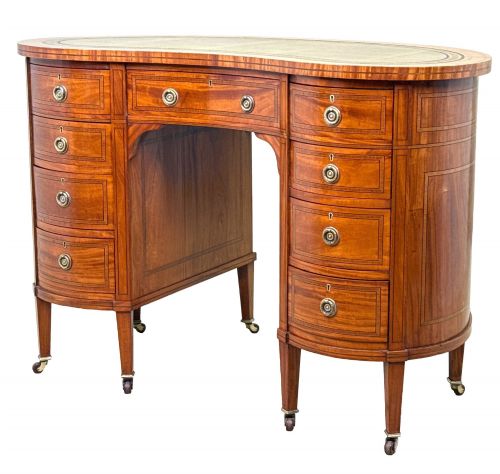
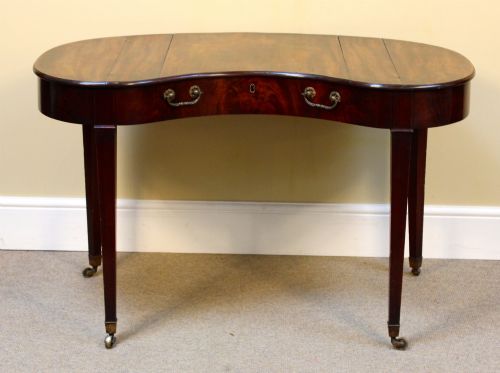
When you search for a kidney dressing desk, you encounter pieces shaped with a concave front curve that wraps around the user, typically functioning as a dressing table, side table, or writing desk. The form appears across the Victorian and Edwardian eras, alongside pieces attributed to the mid nineteenth century and the later decades leading into nineteen hundred.
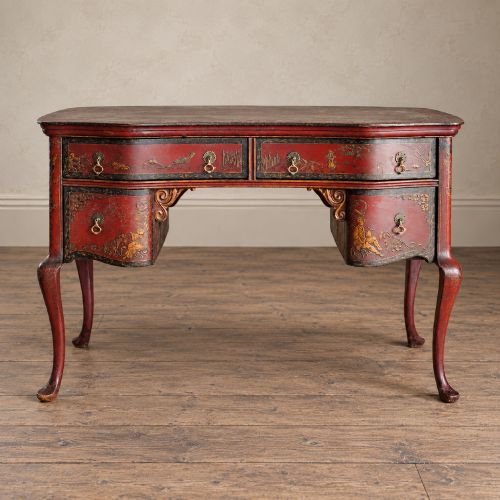
The selection ranges from simple mahogany and walnut surfaces to elaborate Sheraton Revival inlays and Chinoiserie lacquered finishes. Examples span from mid nineteenth century side tables to later Edwardian inlaid writing desks and even occasional Art Deco interpretations.
Materials and construction
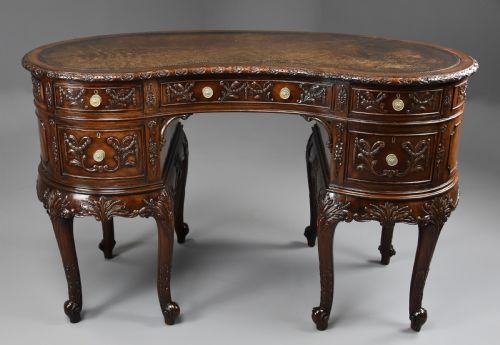
Cabinet makers utilised dense hardwoods like mahogany, walnut, and burr walnut for the primary structure, often applying satinwood inlay or contrasting kingwood veneers across the curved top. Brass handles and mounts frequently accent the drawers, while inset leather writing surfaces provide a functional top.
The distinctive curved shape demands precise joinery to maintain the continuous kidney contour across both the outer rim and the arrangement of pedestal or frieze drawers beneath. Painted and lacquered surfaces also appear, notably on late Victorian and Chinoiserie pieces.
Kidney Dressing Desk Retail Price Guide 2026
Typical asking prices for kidney dressing desk among the pieces listed under this phrase on Sellingantiques today, from the lower quarter to the upper quarter. They describe what is for sale here now, not the wider market.
Judging the work
Quality rests in the handling of the curved timber and the crispness of any inlay work. Finer examples display carefully chosen burr walnut or satinwood grains that follow the sweeping line of the top without distortion.
The construction of the drawers and the integration of freestanding finished backs separate standard production from more ambitious cabinet work. Details such as fine carving around the legs or sophisticated painted decoration elevate individual pieces.
Richardson and Sons·Shapland and Petter·Maurice Adams
The Kidney Dressing Desk Glossary
- Kidney shaped
- Describing furniture with a concave front and convex back resembling the organ, designed to curve around the user. This profile defines the entire category of these desks and tables.
- Inlay
- A technique where pieces of contrasting wood, such as satinwood, are inserted into depressions in the primary wood surface to form decorative patterns. It frequently decorates Edwardian and Victorian examples.
- Burr walnut
- Wood taken from a walnut tree growth that produces intricate, swirling grain patterns. Highly prized by cabinet makers for creating decorative table tops.
- Kneehole
- The central recessed space beneath a desk designed to accommodate the user's legs. Many writing desks on this page feature this arrangement flanked by small drawers.
- Chinoiserie
- European imitation and adaptation of Chinese artistic traditions, often featuring painted or lacquered decoration. This style appears on select nineteenth century dressing tables.
Kidney Dressing Desk: Frequently Asked Questions
What is a kidney dressing desk?
A kidney dressing desk is a curved writing or dressing table featuring a distinctive inward-curving front edge. The shape allows the user to sit comfortably close to the drawers and surface.
These pieces typically date from the Victorian and Edwardian periods, appearing in mahogany, walnut, and inlaid satinwood.
How do I use one today?
These tables function well as compact writing desks, bedroom dressing tables, or freestanding side tables in a hallway or living room. Their finished backs often allow them to sit away from the wall.
The shallow curved profile makes them useful in smaller spaces where a rectangular desk might dominate the room.
How do I tell Victorian from Edwardian pieces?
Victorian examples tend to use rich solid timbers like mahogany and burr walnut, sometimes with heavier proportions and simpler dark finishes. They frequently date from the mid to late nineteenth century.
Edwardian pieces often display lighter satinwood inlays, Sheraton Revival motifs, and occasionally brighter painted decorations dating around nineteen hundred.
Are all kidney desks also dressing tables?
Not all pieces serve as dressing tables, as the evidence includes dedicated writing desks, side tables, and occasional tables with the same curved outline. Some feature kneehole drawer configurations suited specifically for writing.
Original mirrors or compartments can indicate a dressing table, while flat or leather-lined tops point towards writing use.