

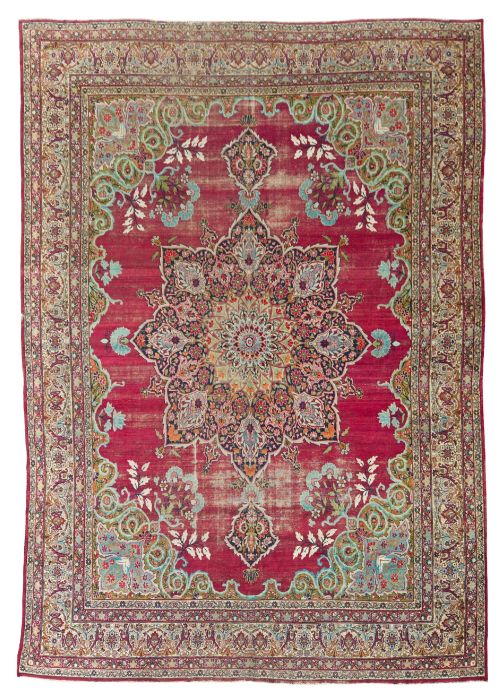
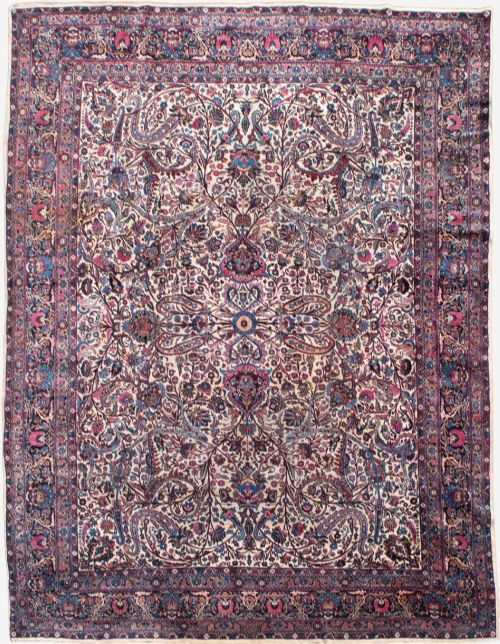
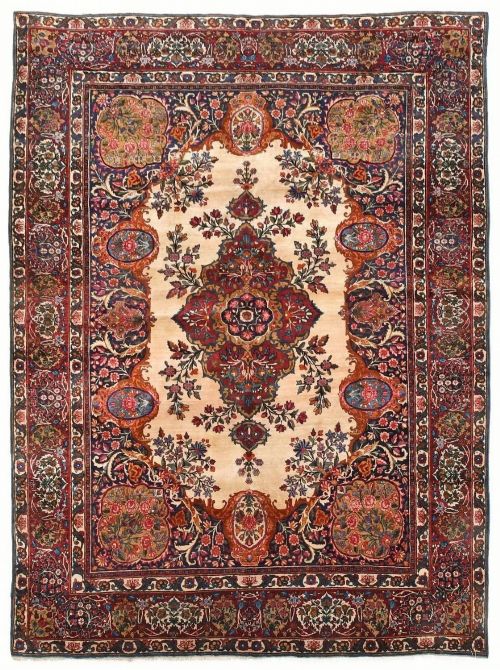
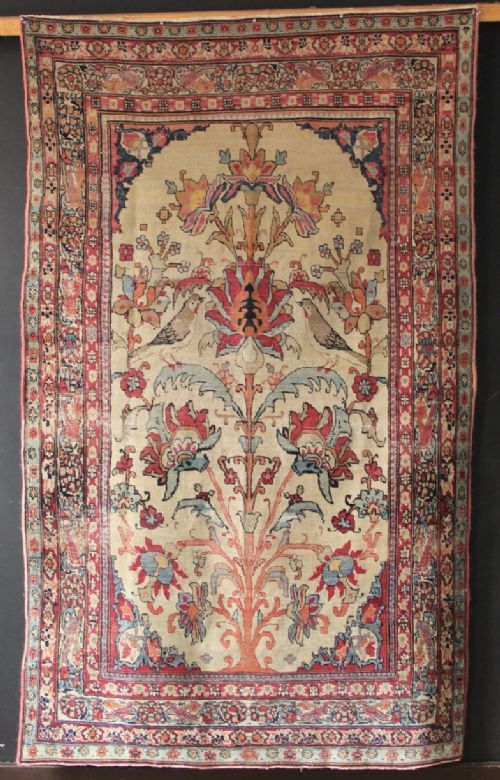


Kerman Floral Persian Carpet
A kerman floral persian carpet brings centuries of South Persian weaving tradition into a room, valued for its fine knotting and intricate botanical designs.
Kerman Floral Persian Carpet
When you search for a kerman floral persian carpet, you encounter room-size carpets, large area rugs, runners, and smaller formats originating from South Persia. These woven floor coverings emerge from various decades spanning the latter half of the nineteenth century through the early twentieth century.
The most common examples on this page are room-size and large carpets bearing traditional Persian styling. You will also find specialised formats such as prayer rugs and exceptionally long runners alongside compact scatter rugs.
Originating from the city of Kerman and its surrounding workshops in South Persia, these pieces represent a distinct regional output. The designs rely heavily on floral motifs, boteh patterns, and millefleurs compositions created across different decades of production.
What varies in quality
The degree of fineness in the weave distinguishes different tiers within this category. Pieces described as fine or very fine display a higher density of knots that permit more intricate rendering of floral and millefleurs designs.
Scale and proportion also define the range, from standard room sizes to oversized carpets and unusually long narrow runners. The complexity of the specific design scheme, such as repeat floral boteh patterns or prayer mihrabs, contributes to the character of each piece.
Kerman Floral Persian Carpet Retail Price Guide 2026
Typical asking prices for kerman floral persian carpet among the pieces listed under this phrase on Sellingantiques today, from the lower quarter to the upper quarter. They describe what is for sale here now, not the wider market.
Formats range from intimate prayer rugs to oversized carpets exceeding five metres in length.
The Kerman Floral Persian Carpet Glossary
- Kerman
- A historic city and major carpet-weaving centre in South Persia known for producing finely knotted rugs with elaborate floral designs.
- Lavar
- A term often associated with specific fine older carpets produced in the Kerman region, frequently linked to exceptional wool quality and detailed floral work.
- Boteh
- A stylised almond or pear-shaped motif of Persian origin representing a floral spray, bush, or flame, commonly repeated across the field of these rugs.
- Millefleurs
- A decorative pattern composed of a multitude of small flowers filling the background or field of the rug.
- Prayer rug
- A small format rug featuring an architectural arch or mihrab design indicating the direction of prayer.
Kerman Floral Persian Carpet: Frequently Asked Questions
How do I care for an antique Kerman carpet?
Place the carpet in an area away from direct sunlight to protect the wool pile from fading over time. Rotate the piece periodically to ensure even foot traffic across the surface.
Vacuum gently using suction only without a rotating brush roll to avoid damaging the cotton foundation and wool fibres. Consult a professional specialist experienced in antique Persian textiles for cleaning.
Where were Kerman carpets made?
These carpets were woven in Kerman and surrounding districts located in South Persia. The region has a long-established history of textile production.
Master weavers in these workshops utilised locally sourced materials to create distinctive regional styles that reached markets across the globe.
What size do Kerman carpets come in?
The inventory includes a diverse range of dimensions from small scatter rugs and prayer formats to long narrow runners. Room-size carpets and oversized examples spanning several metres are also represented.
Larger formats were traditionally commissioned for substantial reception rooms, while smaller rugs served specific functional or portable purposes.
How can I tell the age of a Kerman rug?
Dating relies on stylistic indicators, structural characteristics, and material wear patterns observed across different decades of production. Pieces span from the late nineteenth century through the early twentieth century.
Comparing the specific floral motifs, colour palettes, and weave density against documented examples helps place a rug within its historical period.