



Red Floral Kirman Rug
These red floral kirman rug pieces are woven floor coverings from South Persia, sought after for their intricate floral compositions and enduring traditional craftsmanship.
Red Floral Kirman Rug
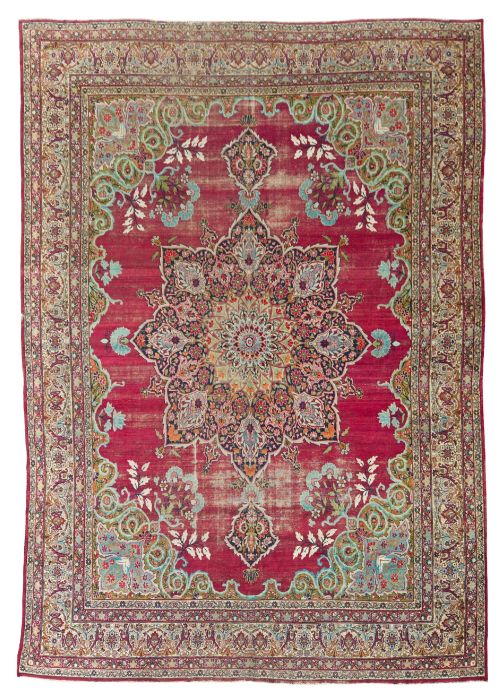
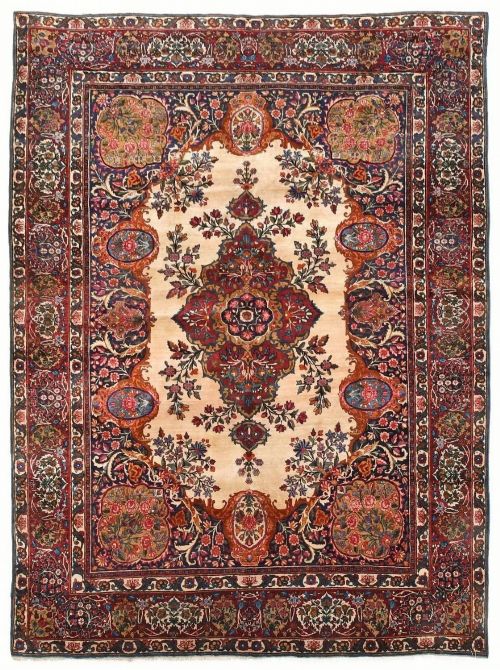
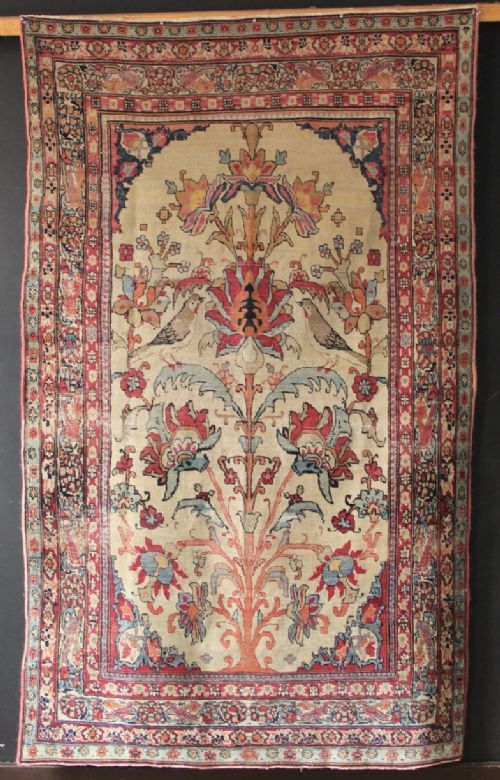
A red floral kirman rug brings traditional Persian artistry directly to the floor, originating from South Persia during the nineteenth and early twentieth centuries. These woven works include room-size carpets and smaller area rugs featuring repeat floral boteh motifs and millefleurs prayer designs.
Buyers frequently encounter pieces dating from the eighteen-sixties through to the nineteen-thirties, reflecting steady production across multiple decades. The surviving examples span compact formats measuring under two metres alongside large room-size carpets exceeding three metres in length.
How they were made
Weavers constructed these traditional Persian carpets using a foundation of durable cotton, providing structural stability for the dense pile. The surface pile itself consists of spun wool, selected for resilience and warmth underfoot.
Traditional workshop techniques in South Persia combined these natural materials to produce intricate patterns such as the millefleurs prayer design and repeat floral boteh motifs. The resulting textiles demonstrate established regional weaving methods passed down through generations.
Red Floral Kirman Rug Retail Price Guide 2026
Typical asking prices for red floral kirman rug among the pieces listed under this phrase on Sellingantiques today, from the lower quarter to the upper quarter. They describe what is for sale here now, not the wider market.
What varies in quality
The standard of a red floral kirman rug rests upon the clarity of its botanical motifs and the overall density of the weave. Finer specimens display meticulously articulated millefleurs prayer patterns and balanced floral compositions across the wool surface.
Wear and degradation alter the visual character of older carpets, distinguishing intact surfaces from distressed examples. The execution of the traditional Persian design dictates the visual impact of each piece within a room.
The Red Floral Kirman Rug Glossary
- Kirman
- A traditional woven carpet originating from South Persia, known for elaborate floral and prayer designs. These rugs reflect centuries of regional craftsmanship in textile production.
- Boteh
- A stylised almond or paisley motif frequently repeated across Persian carpet fields. This ancient symbol often represents a floral spray or cypress tree.
- Millefleurs
- A dense pattern composed of countless small flowers and botanical elements. It appears frequently in traditional Persian prayer rugs.
- Pile
- The upright yarn loops or cut ends that form the soft surface of a carpet. It is typically woven from wool onto a cotton foundation.
Red Floral Kirman Rug: Frequently Asked Questions
Where were these rugs made?
These rugs were produced in South Persia, specifically within the historic weaving tradition of Kirman. Workshops in this region specialised in intricate floral carpets and detailed prayer formats.
Craftsmen utilised local materials like wool and cotton to construct durable floor coverings that continue to survive from the nineteenth and early twentieth centuries.
How do I care for an antique rug?
Living with these antique textiles requires gentle vacuuming without a rotating brush to protect the wool pile. Professional cleaning suited for vintage Persian carpets helps maintain the natural fibres.
Placing the rug away from direct sunlight prevents fading of the traditional red tones and botanical motifs over time.
How can I tell the age of a Kirman carpet?
Dating these carpets involves examining the materials, structural characteristics, and stylistic conventions visible in the weave. Pieces span from the mid-nineteenth century through the nineteen-thirties, showing shifts in scale and design.
Distressed surfaces and specific construction details often indicate earlier nineteenth-century origins compared to later twentieth-century examples.