
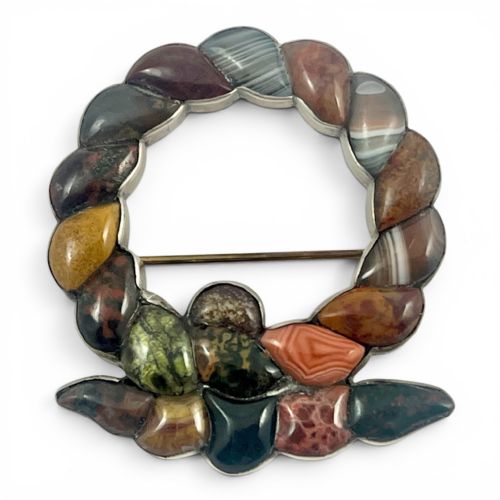


Jasper Agate Pin
These jasper agate pin pieces are Victorian Scottish silver brooches and kilt pins set with banded pebbles, offering a tangible link to nineteenth-century Highland revival style.
Jasper Agate Pin
A jasper agate pin is typically a Victorian Scottish silver brooch or plaid pin created during the nineteenth-century revival movements. These items function as wearable pieces of stonemasonry, often taking the form of swords, bows, or baskets.
The pieces on this page stem mostly from the Victorian era, spanning dates from eighteen-forty to nineteen-hundred. They showcase provincial Scottish silverwork combined with native hardstones collected from the landscape.
Buyers encounter forms ranging from simple braided plaid brooches to large specimen pieces featuring citrine and bloodstone alongside jasper and agate. Each variant reflects the romanticism of the period and the practical function of fastening heavy woollen garments.
How they were made
Silversmiths shaped sterling silver into detailed mounts resembling broadswords, bows, or traditional basket-hilts. These frames provided robust structural support for the heavy stones set within them.
Lapidaries cut and polished natural hardstones including jasper, agate, bloodstone, and citrine into geometric or fitted shapes. These minerals were then arranged closely together to form intricate mosaic or braided patterns across the silver surface.
One silver pin takes the literal shape of a basket-hilted broadsword to hold a Highland plaid.
What varies in quality
The sophistication of the silverwork distinguishes finer examples from simpler production. Master smiths achieved intricate chased details on sword hilts and bow knots that elevate the metal beyond a mere setting.
The selection and arrangement of the hardstones dictate the visual impact of the piece. Superior items utilise stones with striking natural banding, vivid jasper colours, and precise stone-cutting that leaves minimal gaps in the mosaic surface.
The Jasper Agate Pin Glossary
- Agate
- A variety of chalcedony displaying natural banded patterns. These stones form the colourful face of many Scottish pebble jewellery pieces.
- Jasper
- An opaque, impure variety of silica that provides earthy reds, greens, and yellows in Victorian hardstone designs.
- Plaid brooch
- A large circular brooch traditionally used to fasten a Highland plaid or shawl over the shoulder. These items often incorporate intricate silver mounts and multiple hardstones.
- Citrine
- A yellow variety of quartz frequently mounted alongside agate and jasper in nineteenth-century Scottish brooches. It adds bright flashes of colour to the centre of the silverwork.
Jasper Agate Pin: Frequently Asked Questions
What is a jasper agate pin?
A jasper agate pin is a nineteenth-century Victorian brooch or kilt pin, usually originating from Scotland. These pieces combine sterling silver with polished natural stones like jasper and agate.
Craftsmen shaped the silver into regional motifs such as broadswords and bows. They serve as both decorative accessories and historical examples of lapidary work.
How were these pins worn?
Victorian wearers used these substantial pins to fasten heavy woollen tartans, plaids, and shawls. Their sturdy construction held thick textiles securely in place.
Today, collectors wear them as statement brooches on modern garments or preserve them as historical costume pieces.
How do I date a jasper agate pin?
Dating relies on the stylistic markers of the Victorian era, particularly the Scottish Revival movement. Listings often point to specific decades between eighteen-forty and nineteen-hundred based on mount design and hallmarks.
Examining the pin mechanisms and the cut of the silver also helps narrow down the period of manufacture.
What stones appear in these pieces?
The primary stones are agate and jasper, frequently complemented by bloodstone and citrine. These minerals reflect the natural geology of Scotland.
Lapidaries polished the stones to highlight their natural banding and earthy colour variations before setting them into silver frames.