

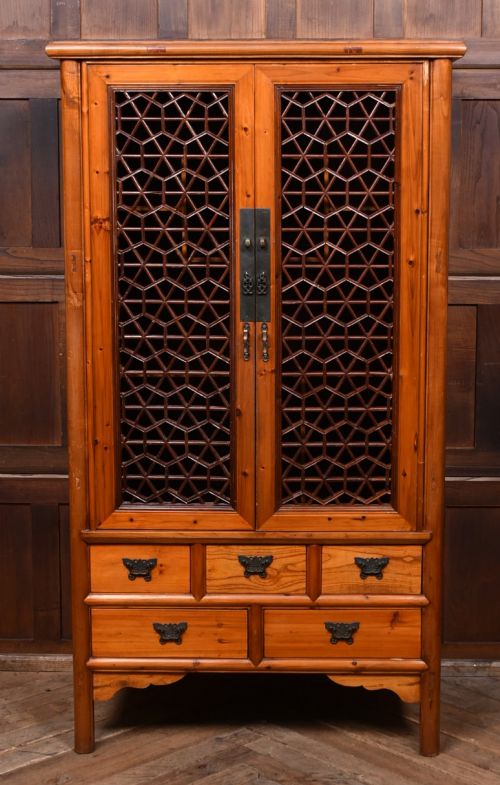


Japanese Wooden Tansu
Japanese wooden tansu are traditional storage chests built with sliding panels, drawers and iron hardware, prized for their modular design and honest joinery.
Japanese Wooden Tansu
When you search for Japanese wooden tansu, you encounter diverse forms created for domestic storage, ranging from kitchen units to wheeled merchant chests. These pieces span the Edo and Meiji periods through to the Taisho era, reflecting the functional needs of Japanese households and trades.
The most common examples on this page are nineteenth-century chests of drawers and storage cabinets. These items display distinct regional designs, from step chests meant for staircases to specialised merchant and shipboard storage.
Each tansu serves as a portable architectural element, constructed to store clothing, provisions or valuables safely. Their sturdy frames and compartmentalized interiors suit contemporary homes seeking functional historic furniture.
How They Were Made
Joiners built Japanese wooden tansu using native timbers such as cedar, elm, pine, cypress, keyaki, and kiri wood. These materials provided structural strength while remaining light enough for movement between rooms or on vessels.
Blacksmiths forged heavy iron hardware, including strap hinges, corner brackets and complex lock plates, to reinforce the wooden frames. Cabinetmakers occasionally applied red lacquer finishes to protect the wood and enhance the surface appearance.
Japanese Wooden Tansu Retail Price Guide 2026
Typical asking prices for japanese wooden tansu among the pieces listed under this phrase on Sellingantiques today, from the lower quarter to the upper quarter. They describe what is for sale here now, not the wider market.
The listings on this page span the Edo, Meiji, and Taisho periods, utilising woods such as elm, cedar, cypress, and keyaki.
What Varies in Quality
The distinction between standard utility pieces and finer examples rests on the choice of timber and the precision of the joinery. Woods like keyaki and zelkova display pronounced grain patterns that elevate the visual weight of a cabinet.
Hardware execution also separates workshops, with hand-forged iron mounts showing careful shaping and engraving compared to simpler plate metal. The complexity of the internal locking mechanisms and hidden compartments indicates the skill invested in the piece.
The Japanese Wooden Tansu Glossary
- Tansu
- Traditional Japanese mobile storage chests built primarily for domestic or commercial use. They often feature multiple drawers, sliding doors and heavy iron hardware.
- Mizuya
- Japanese kitchen tansu utilised for storing food, utensils and dishware. These cabinets combine slatted sliding panels with open shelving and drawers.
- Kuruma-Dansu
- A wheeled chest designed for quick removal of valuables during fires. The heavy wooden wheels sit beneath a sturdy framed body.
- Kaidan Tansu
- A step chest constructed in a staircase configuration to save space in small dwellings. The individual steps double as drawer fronts and storage compartments.
- Zenibako
- A portable wooden money box utilised by merchants for coin storage. These compact boxes feature secure sliding lids and internal compartments.
Japanese Wooden Tansu: Frequently Asked Questions
What is a tansu chest?
A tansu is a traditional Japanese mobile storage cabinet built from timber with metal reinforcement. These pieces served diverse domestic functions, ranging from clothing storage to kitchen organisation.
Craftsmen designed them to be carried or rolled out of houses during fires. Today, they function as sculptural storage items in modern interiors.
How were different tansu used?
Each tansu type fulfilled a specific role within traditional Japanese life and commerce. Merchant chests held ledgers and coins, while step chests provided access to upper levels alongside enclosed storage.
Kitchen cabinets held provisions and tableware behind sliding panels. Ship tansu protected navigation tools and personal valuables at sea.
Which woods were used for tansu?
Cabinetmakers selected native timbers based on local availability and structural requirements. Cedar, elm, pine and cypress provided durable frames for everyday storage.
Finer pieces utilised keyaki, zelkova or kiri wood for their decorative grain patterns and lightweight durability. Iron fittings added necessary rigidity to these soft and hardwood bodies.
How do I date a tansu?
Dating relies on observing construction methods, timber types and the evolution of the iron hardware. Pieces from the Edo period often display heavier timber scantlings and simpler forged mounts.
Meiji and Taisho examples incorporate machine-sawn elements alongside traditional joinery and more refined decorative hardware. Regional styles also shift across these periods.