




Japanese Toggle Carving
Japanese toggle carving comprises intricately detailed toggles known as netsuke, designed to secure traditional pouches and baskets.
Japanese Toggle Carving
When buyers search for japanese toggle carving, they are looking at netsuke, the traditional small sculptural toggles used in Japanese dress to suspend containers from sashes. These miniature carvings span several periods, most commonly appearing from the Edo and Meiji eras.
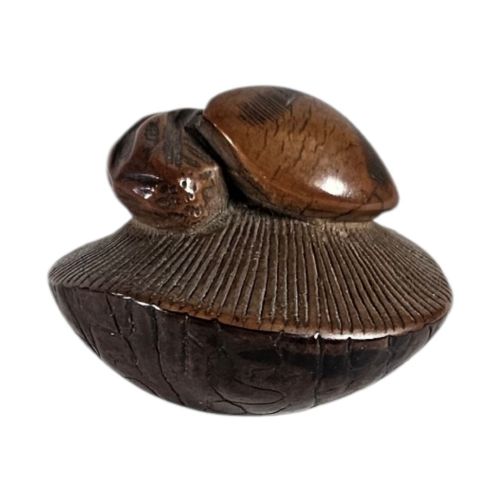
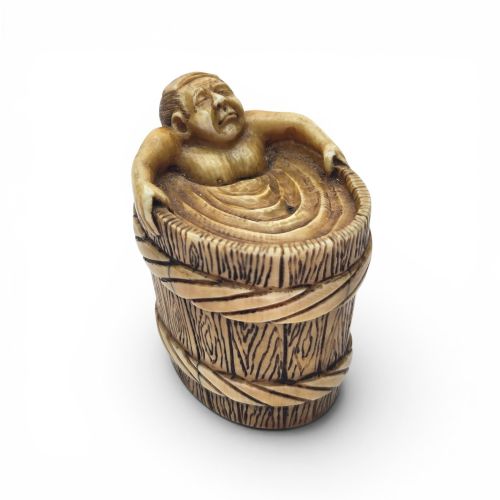
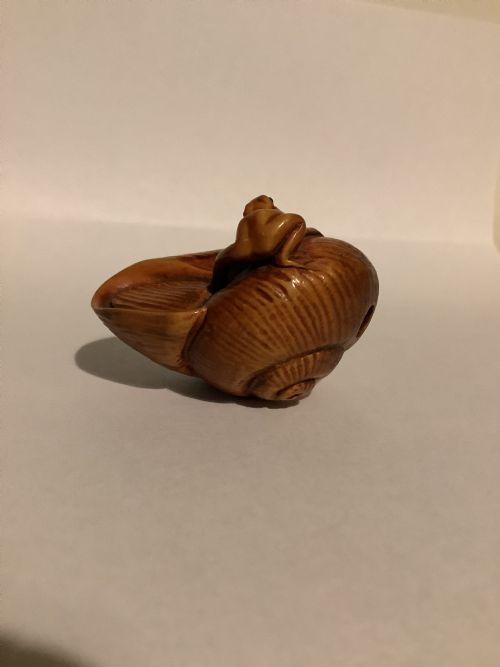
The objects take diverse naturalistic and figurative forms, including frogs, toads, snails on mushrooms, cats, rams, and human figures such as wise men and bather subjects. Materials range extensively across boxwood, stag antler, cherry amber, carved bone, and boar's tusk.
Originating primarily within traditional Japanese craftsmanship, these pieces reflect both domestic utility and high artistic expression. The selection includes specific historical groupings such as the Tomochika School and works associated with named carvers like Masayuki.
How they were made
Carvers employed hand-cutting and chiselling techniques to achieve naturalistic forms, sometimes incorporating inlaid horn or combining wood with champleve cloisonne enamel elements in manju kagamibuta formats.
Listings feature boxwood, stag antler, cherry amber, and carved bone across the Edo, Meiji, and Taisho periods.
What varies in quality
The distinction between ordinary and exceptional work lies in the vitality of the carving and the depth of naturalistic observation, particularly in how the carver captures muscle tension, fur texture, or the smoothness of an animal shell. Master carvers achieved a high degree of tactility, ensuring the object feels balanced and comfortable in the hand.
Signatures and school attribution add documentary value, separating unsigned workshop pieces from signed master works originating from recognised traditions such as the Tomochika School or carvers like Masayuki.
Masayuki
The Japanese Toggle Carving Glossary
- Netsuke
- A miniature carved toggle worn in traditional Japanese dress to suspend a pouch or medicine box from the obi sash. These objects function as both practical fasteners and miniature sculptures.
- Boxwood
- A dense, pale wood prized by Japanese carvers for its fine grain and ability to hold microscopic detail without splintering. It develops a warm patina with handling.
- Kagamibuta
- A specific style of flat, circular netsuke resembling a mirror lid, typically constructed from wood or ivory with a distinct metal or enamel disc set into the top.
- Champleve
- An enamelling technique where troughs or cells are sunken into a metal surface and filled with vitreous enamel before firing. It appears in combination with wood on certain composite toggle forms.
- Manju
- A thick, rounded style of netsuke shaped like a traditional Japanese sweet, often carved in relief or decorated with inlaid materials.
Japanese Toggle Carving: Frequently Asked Questions
What is a netsuke used for?
These carved toggles served a strictly practical purpose in historical Japanese daily attire. They acted as counterweights attached to cords, allowing personal containers like inro boxes or tobacco pouches to hang securely from the sash.
Over time, the craftsmanship evolved beyond mere utility into an important medium of miniature sculpture, reflecting folklore, nature, and social status.
How do I date a Japanese wood carving?
Dating relies on stylistic shifts between the Edo, Meiji, and Taisho periods, alongside material choices and signature verification. Edo pieces often display traditional naturalism, while Meiji examples frequently show heightened theatricality or refined school associations.
Examining the wear patterns and the natural ageing of boxwood or antler also helps establish the approximate age of the carving.
Are these carvings signed by the artist?
Some pieces bear artist signatures or school inscriptions, typically carved discreetly on the underside or base. Signed works attributed to known figures like Masayuki or the Tomochika School carry distinct historical documentation.
Many high-quality pieces remain unsigned, reflecting the broader production of traditional workshops rather than individual master carvers.
What materials are common in these toggles?
Boxwood is the predominant material seen in Japanese toggle carving due to its fine, stable grain. Other frequent materials include stag antler, carved bone, cherry amber, and boar's tusk.
Artists also utilised composite constructions, integrating inlaid horn or champleve cloisonne enamel to create varied textural contrasts.