





Japanese Relief Carved Pot
These japanese relief carved pot pieces bring Meiji period bronze and stoneware into your rooms with birds, blossom, and mother of pearl detail.
Japanese Relief Carved Pot
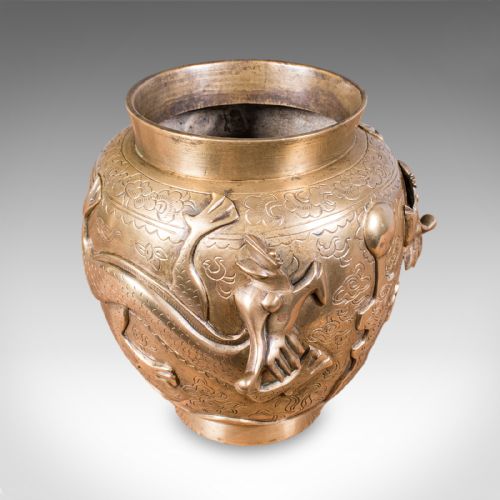
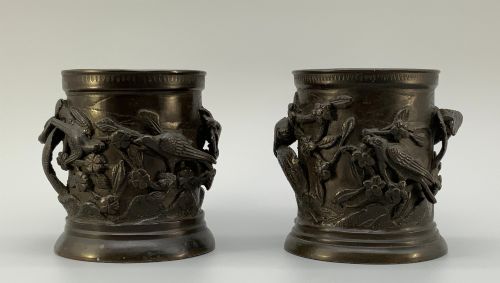
When you search for a japanese relief carved pot, you are looking at nineteenth-century jardinières, vases, and brush pot lamps shaped from bronze, stoneware, and carved wood.
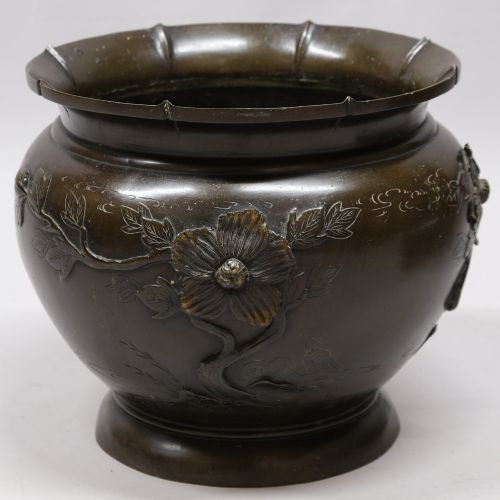
The version you are most likely to meet on this page is a bronze jardinière or planter bearing Meiji period motifs.
Other forms include blue and white porcelain bowls and posy vases dating from the Victorian era down to nineteen ten.
Materials and construction
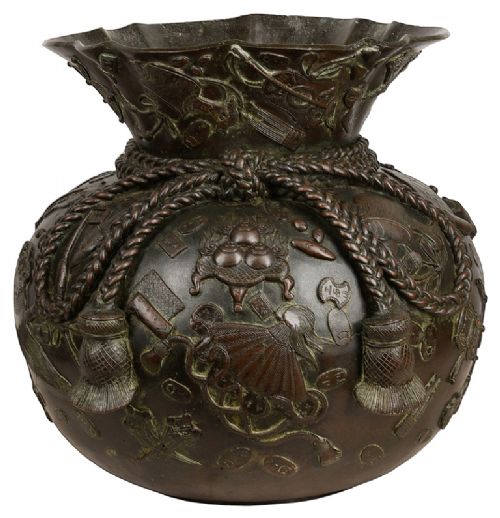
Metal pieces rely on patinated bronze cast into deep relief patterns depicting birds and blossom.
Ceramic examples utilise stoneware and porcelain decorated with blue and white glazes or set with mother of pearl inlay.
Japanese Relief Carved Pot Retail Price Guide 2026
Typical asking prices for japanese relief carved pot among the pieces listed under this phrase on Sellingantiques today, from the lower quarter to the upper quarter. They describe what is for sale here now, not the wider market.
Listings span the nineteenth century and the early twentieth century, incorporating bronze, stoneware, and porcelain.
Judging quality
Depth and precision of the carved relief separate standard planters from finer sculptural works.
Purity of the bronze patina and the integration of inlaid elements dictate the standing of each piece.
Makuzu Kozan II
The Japanese Relief Carved Pot Glossary
- Jardiniere
- A large ornamental pot or planter designed to hold growing plants. These vessels often take a commanding presence in a room.
- Meiji Period
- The era in Japanese history spanning from eighteen sixty-eight to nineteen twelve. Much of the metalwork and stoneware originates from this time.
- Patinated Bronze
- Metal treated with chemicals to produce a stable surface colour. This finish protects the bronze while adding depth to the relief carving.
- Brush Pot
- A cylindrical vessel traditionally used in East Asia for holding writing brushes. Some examples are adapted into table lamps.
Japanese Relief Carved Pot: Frequently Asked Questions
What is a jardiniere?
A jardiniere is a decorative pot designed to hold plants or flowers. They sit on tables or floors to display foliage.
In this selection, bronze and stoneware jardinières showcase detailed relief work from the Meiji period.
How old are these pots?
The pieces date primarily from the nineteenth century through to nineteen ten. This encompasses the Meiji period and the Victorian era.
Stylistic markers and materials help anchor each piece within this timeline.
Are these pieces functional?
Many bronze planters and stoneware bowls remain suitable for holding plants or floral arrangements. Some items have been converted into table lamps.
Care should be taken with moisture to protect the patinated surfaces.
What materials were used?
The listings feature patinated bronze, stoneware, porcelain, and carved wood. Mother of pearl inlay and fabric elements also appear.
Bronze dominates the selection, often worked into deep relief designs.