

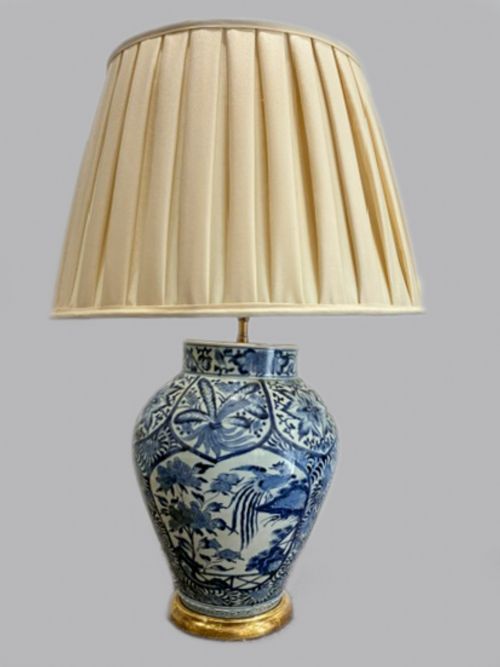
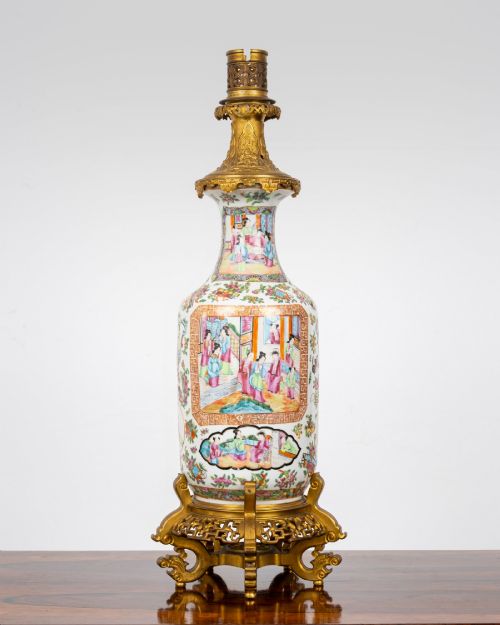



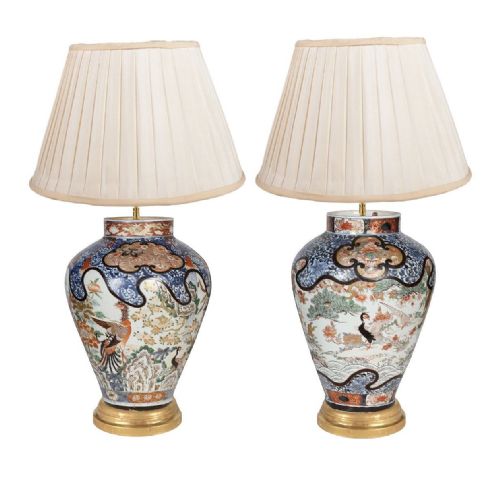


Japanese Porcelain Lighting
Japanese porcelain lighting brings centuries of ceramic artistry into modern rooms through converted antique vases.
Japanese Porcelain Lighting
Japanese porcelain lighting comprises antique vases and vessels adapted into table lamps, often forming matched pairs that suit domestic interiors. When searching for Japanese porcelain lighting, buyers encounter table lamps created from centuries-old ceramic forms.
The selection spans multiple periods, featuring pieces from the 17th century through to the early 20th century. Forms range from large spill vases to twin-handled vessels, mounted with metal and wired for contemporary use.
Materials and construction methods
Makers utilise porcelain and ceramic bodies painted in blue and white, Imari, Satsuma, or Kutani palettes, sometimes enhanced with enamel and gilt bronze mounts. These ceramic vessels are then fitted with brass components and paired with fabric or silk shades.
Conversion techniques involve mounting antique vases, occasionally dating from the Edo or Meiji periods, onto stable bases and adding electrical fittings while preserving the original ceramic body.
Listings feature ceramics spanning the 17th, 18th, and 19th centuries, alongside early 20th-century conversions.
Quality factors in antique conversions
Quality rests in the artistic execution of the original porcelain painting and the integrity of the ceramic body before its conversion into a lamp. Finer pieces display crisp hand-painted detail in the glazes and well-preserved surface enamels.
The standard of metal mounts, such as gilt bronze or brass fittings added during conversion, contributes to the overall cohesion of the piece. Matching pairs demonstrate greater consistency in size and decoration.
The Japanese Porcelain Lighting Glossary
- Satsuma
- A type of Japanese earthenware or porcelain with a ivory-coloured, crackle-glazed finish, typically decorated with intricate enamel and gilt designs.
- Imari
- A style of Japanese export porcelain decorated in underglaze blue, iron red, and gold, originating from the Arita area.
- Kutani
- Japanese porcelain known for its bold colour palettes, frequently featuring greens, blues, yellows, purples, and reds.
- Meiji Period
- The era in Japanese history spanning from 1868 to 1912, characterised by opening trade with the West and distinctive decorative arts.
- Edo Period
- The period in Japanese history lasting from 1603 to 1868, preceding the Meiji era and producing early export ceramics.
Japanese Porcelain Lighting: Frequently Asked Questions
Are these original antique lamps?
The lighting components and wiring are modern additions, but the ceramic bodies are period vases and vessels dating from past centuries.
Most items started life as decorative vases or jars before being converted into functional table lamps at a later date.
Do they come as pairs?
Many listings feature matched pairs of lamps, which are created from corresponding vases of the same period and decorative style.
Single lamps also appear, often utilising larger or more unusual antique ceramic vessels.
How do I identify the period?
Periods are identified through the painting style, glaze characteristics, and potting techniques associated with Japanese kilns.
Documentation often references specific eras like the Meiji period or 18th century based on these stylistic markers.
Can I use modern lamp shades?
The lamps are fitted with standard lamp hardware that accommodates contemporary shades and bulbs.
Fabric or silk shades are frequently paired with the ceramic bases to suit interior lighting needs.