


Japanese Imari Ginger Jar
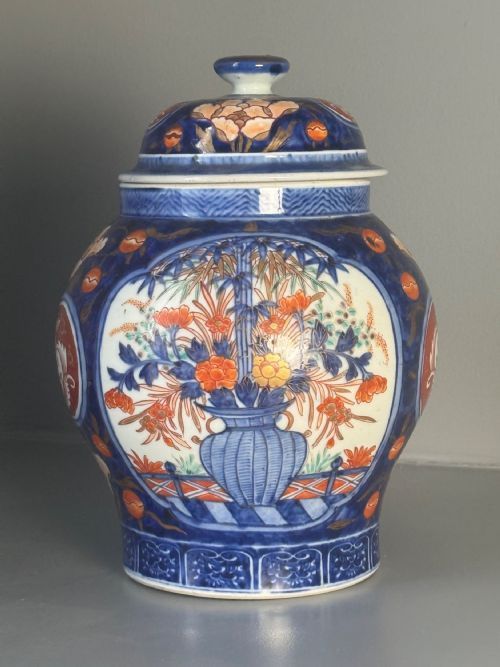
A Japanese Imari ginger jar brings heavy cobalt enamel and iron-red details together on porcelain, offering a striking display piece for any room.
Japanese Imari Ginger Jar
A japanese imari ginger jar is a covered porcelain vessel originating from production centres such as Arita, designed originally for storage and later adapted for display. These pieces combine utilitarian forms with intricate surface decoration spanning centuries of output.
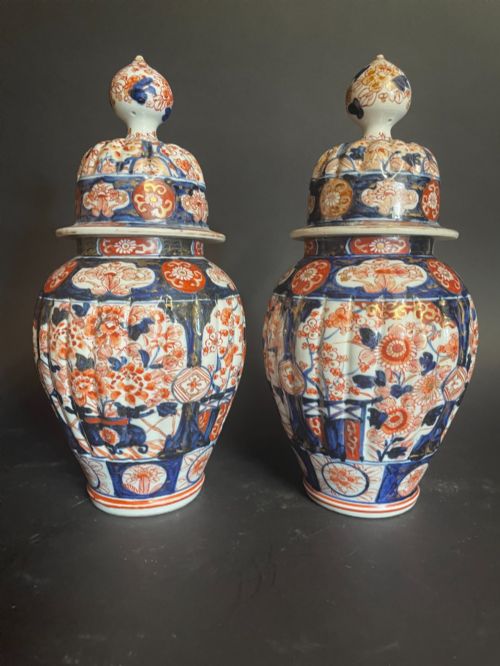
The most common examples encountered on this page date from the nineteenth century, including the Meiji period, alongside eighteenth-century works and later British interpretations. They typically appear with matching domed or recessed lids and follow baluster, octagonal, or rounded forms.
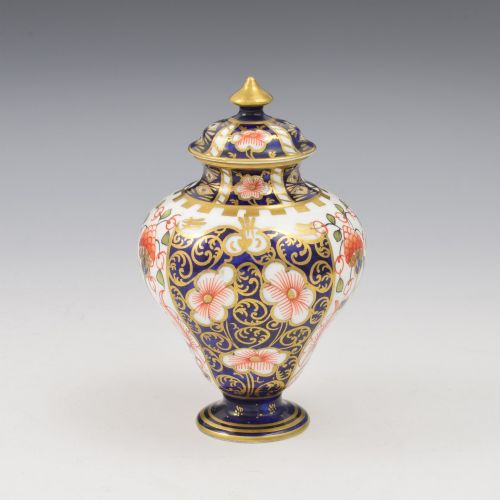
Makers ranged from traditional Japanese kilns working in the Edo and Meiji manners to European manufacturers such as Royal Crown Derby and Samson producing pieces in the Imari palette. Buyers encounter everything from single cabinet jars to large pairs intended for commanding mantel placement.
How they were made
Potters shaped high-fired porcelain bodies on the wheel or within moulds, occasionally forming octagonal or panelled profiles by hand before glazing. Cobalt enamel was applied under the glaze to create the deep blue foundation seen across the vessels.
Overglaze iron-red enamel and gold leaf or gilding were added in a second firing to build up the characteristic layered palette. Enamels sat slightly raised on the glossy white porcelain ground, catching the light across floral and geometric motifs.
Materials recorded across the available pieces include cobalt enamel, gold leaf, and high-fired porcelain bodies.
What varies in quality
The precision and density of the hand-painted decoration dictate the visual success of each piece, distinguishing hurried export wares from carefully composed studio output. Crisp cobalt lines and cleanly registered iron-red highlights reveal the hand of a more accomplished painter.
The weight, throwing consistency, and purity of the porcelain body also set examples apart, with finer pieces maintaining crisp edges on octagonal mouldings and well-balanced proportions between jar and cover. Preservation of the delicate overglaze gilding across centuries of handling further separates standard items from exceptional survivals.
Royal Crown Derby·Samson
The Japanese Imari Ginger Jar Glossary
- Imari
- A style of Japanese porcelain decorated in underglaze blue, iron-red, and gilt, named after the port from which the wares were shipped. This palette became immensely popular across Europe during the seventeenth and eighteenth centuries.
- Arita
- The Japanese town and surrounding region in Hizen province where Japanese porcelain production began. Kilns here supplied the domestic market and export trade with sophisticated ceramic forms.
- Meiji Period
- The era in Japanese history lasting from 1868 to 1912, marked by industrialisation and a massive increase in decorative arts exported to the West. Pieces from this time often exhibit high technical precision and ambitious scale.
- Baluster
- A vertical ceramic form with a rounded lower body tapering towards the neck, frequently utilised for ginger jars and lidded vases. This profile provides stability and a generous surface area for pictorial decoration.
- Cobalt Enamel
- A blue mineral pigment applied to the unbaked porcelain body under a transparent glaze to produce deep, permanent coloration. It forms the stable dark foundation of the traditional palette.
Japanese Imari Ginger Jar: Frequently Asked Questions
What is a Japanese Imari ginger jar?
A Japanese Imari ginger jar is a lidded porcelain vessel decorated in distinctive cobalt blue and iron-red enamels, often enhanced with gold leaf. These jars were originally made for storing spices or tea before becoming purely decorative interior objects.
Most surviving examples date from the nineteenth century, though eighteenth-century pieces and later European adaptations also appear. Their bold palettes and detailed panels made them staples of European interiors from the Edo period onward.
How do I tell Edo and Meiji pieces apart?
Edo period pieces often display looser brushwork and simpler potting, reflecting earlier domestic and export traditions. Meiji period items typically show tighter registration, crisper gilding, and more intricate, densely packed patterns driven by nineteenth-century export demand.
Form and paste can also offer clues, as nineteenth-century production utilised more uniform industrial preparation while maintaining hand-painted surface details. Comparing the weight and the clarity of the underglaze blue helps distinguish between periods.
Were these jars used for actual ginger?
Export ginger jars served primarily as durable containers for shipping preserved ginger, root ginger in syrup, and other valuable commodities to Europe. Their tight-fitting lids helped seal the contents during long maritime journeys.
Once emptied, households repurposed the vessels as decorative mantel ornaments or flower vases. The term ginger jar is largely a Western designation for this specific baluster form.