




Japanese Display Shelf
A Japanese display shelf brings intricate nineteenth-century craftsmanship into a room, offering asymmetric tiers designed to hold small treasures.
Japanese Display Shelf
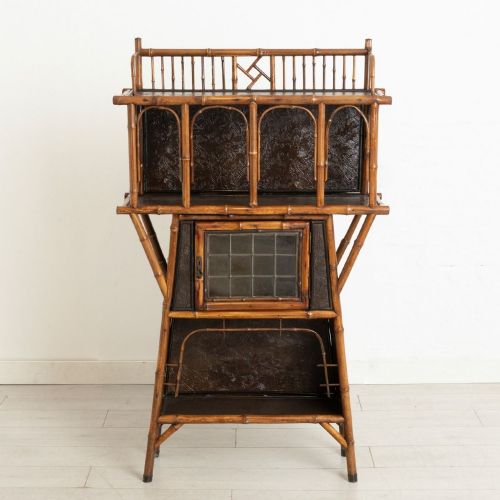
A Japanese display shelf encompasses pieces often described as shodana cabinets, etageres, and bamboo stands originating from the nineteenth century. Buyers searching for a japanese display shelf encounter works spanning the Meiji period, Victorian aesthetic movements, and European interpretations like Chinoiserie and Japonisme.
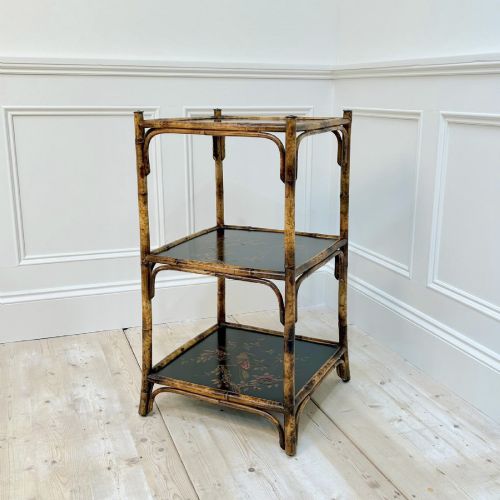
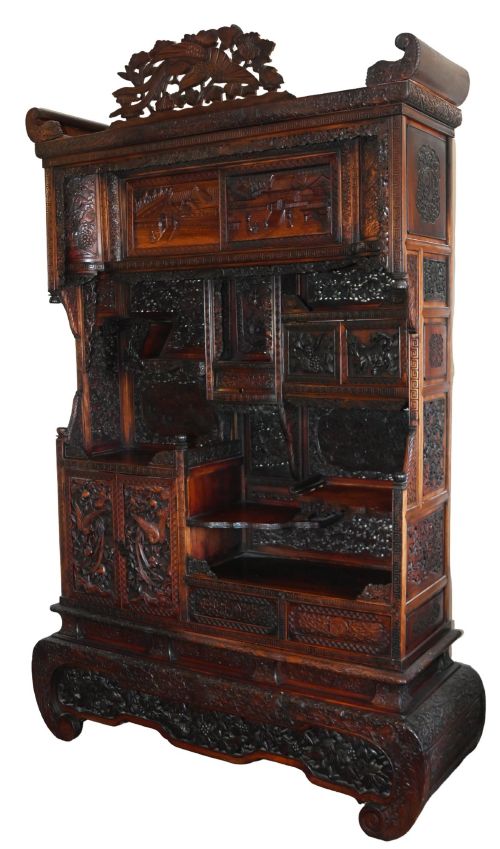
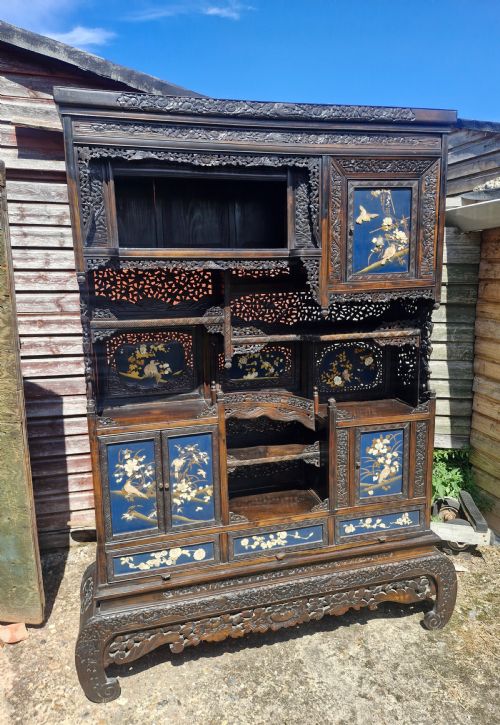
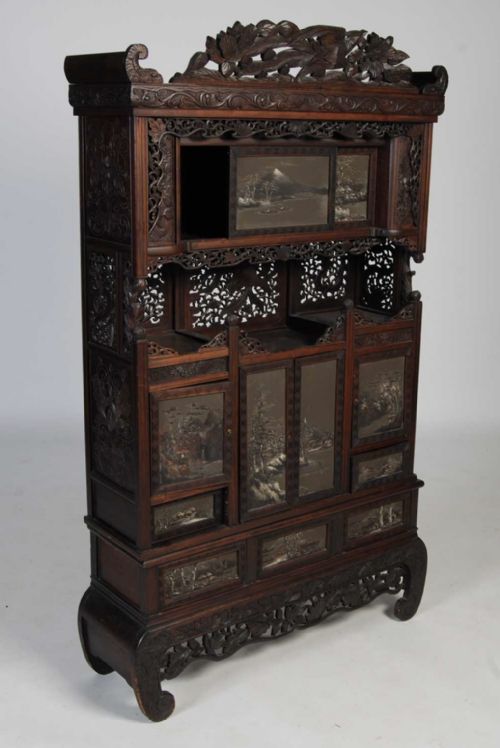
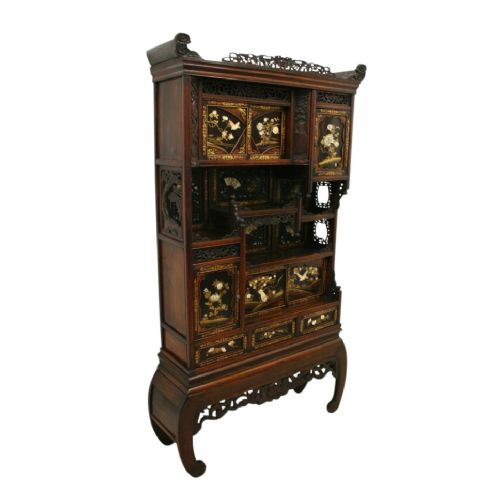
The most common forms on this page are carved wooden shodana cabinets and bamboo stands featuring staggered shelving. These items range from compact side tables to large cabinets intended for prominent placement in a reception room.
Materials and construction methods
Construction relies heavily on dense hardwoods, selected bamboo, and traditional lacquer techniques applied to carcase structures. Many nineteenth-century examples incorporate hand-carved panels, delicate framing, and varied tier arrangements.
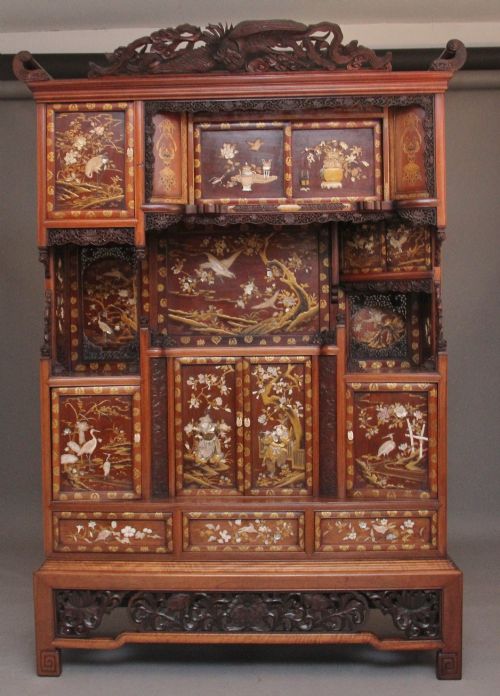
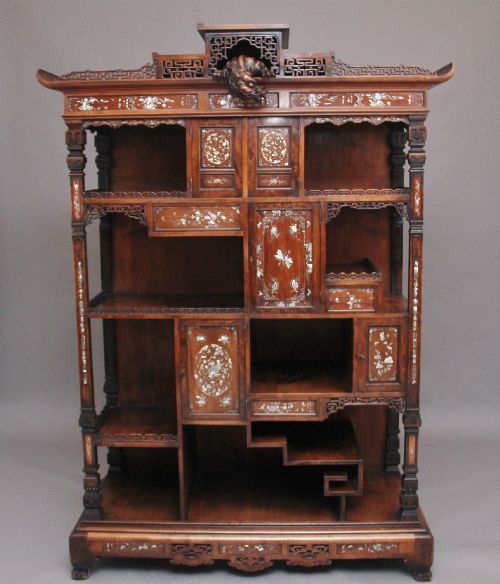
Surface decoration frequently utilises mother of pearl and bone inlay set into dark timber or lacquer grounds. Joinery methods accommodate the natural flexibility of bamboo alongside rigid wooden framing for stepped shelves.
Japanese Display Shelf Retail Price Guide 2026
Typical asking prices for japanese display shelf among the pieces listed under this phrase on Sellingantiques today, from the lower quarter to the upper quarter. They describe what is for sale here now, not the wider market.
Materials recorded across the inventory include bamboo, hardwood, lacquer, glass, bone, and mother of pearl.
Distinctions in quality
Quality rests in the precision of the joinery, the depth of the hand-carving, and the integrity of inlaid materials like bone and mother of pearl. Superior shodana cabinets exhibit balanced proportions across complex asymmetric tiers rather than simple stacked boards.
The handling of lacquer surfaces and the tightness of bamboo joints differentiate standard production from exceptional examples. Finer pieces maintain structural stability across multiple projecting ledges without excessive reinforcement.
Liberty and Co
The Japanese Display Shelf Glossary
- Shodana
- A traditional Japanese cabinet featuring staggered shelves and enclosed compartments designed for displaying small objects of art.
- Etagere
- A piece of furniture consisting of a set of open shelves for displaying ornaments, popular during the Victorian era.
- Meiji Period
- The era in Japanese history lasting from 1868 to 1912, marked by the opening of trade with Western nations and distinctive export art.
- Japonisme
- The influence of Japanese art, fashion, and aesthetics on Western culture, particularly during the late nineteenth century.
- Chinoiserie
- A European decorative style in the imitation of Chinese and East Asian artistic traditions, often blended with Victorian tastes.
Japanese Display Shelf: Frequently Asked Questions
What is a shodana cabinet?
A shodana is a traditional Japanese cabinet built with asymmetric tiers and small cupboards intended for displaying decorative objects.
These pieces reflect the meticulous craftsmanship of the Meiji period and were prized for both utility and visual complexity.
How do I style a bamboo stand?
A bamboo stand works best when used to hold small ceramics, plants, or curated collections of curiosities.
The light structure complements both traditional interiors and modern spaces needing organic texture.
Are these cabinets purely decorative?
While designed primarily to display art objects, many incorporate small cupboards and drawers for discrete storage.
The combination of open shelving and enclosed space offers practical utility for everyday items.
How can I tell Meiji period work apart?
Meiji period pieces often display precise wood carving, lacquer finishes, and inlaid details such as bone or mother of pearl.
Export items from this era frequently balance traditional Japanese forms with the preferences of Western collectors.