





Japanese Decorative Vessels
These Japanese decorative vessels bring centuries of master craftsmanship into a room through bronze, porcelain, and cloisonné enamel.
Japanese Decorative Vessels
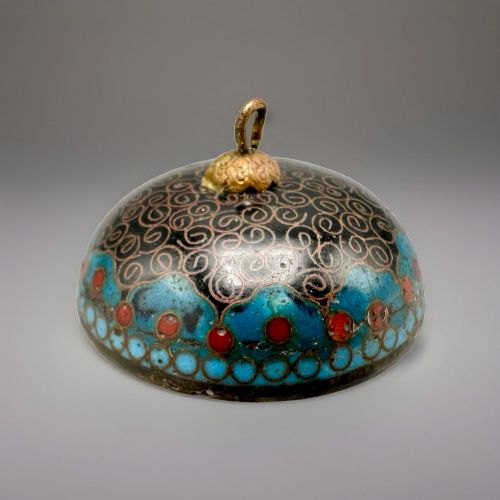
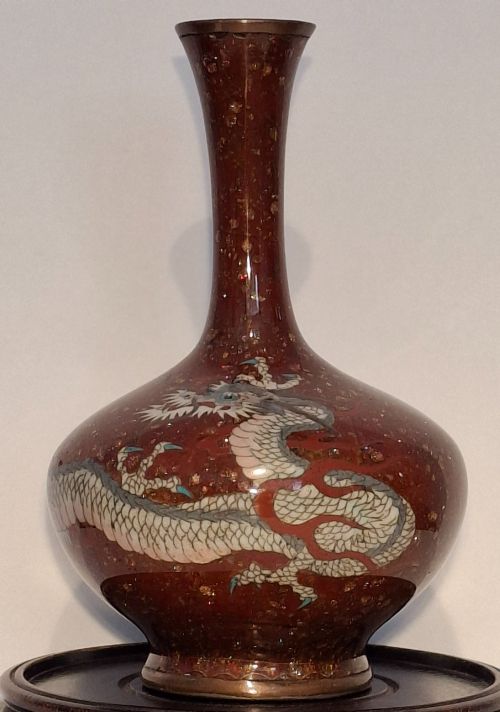
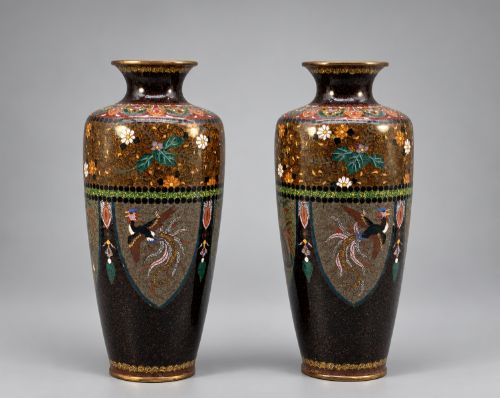
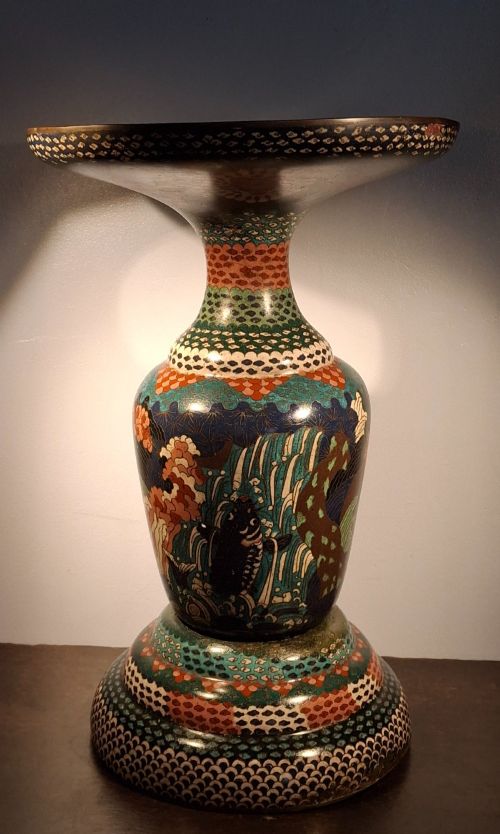
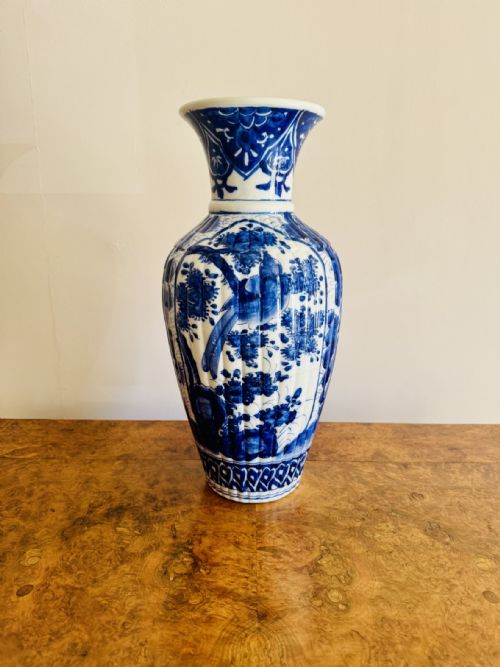
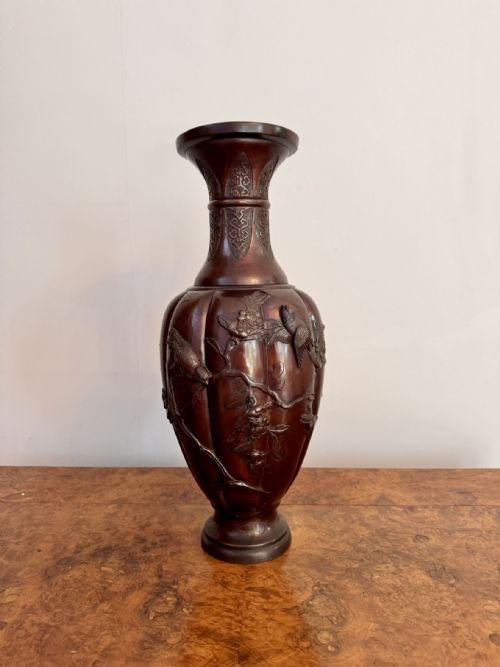
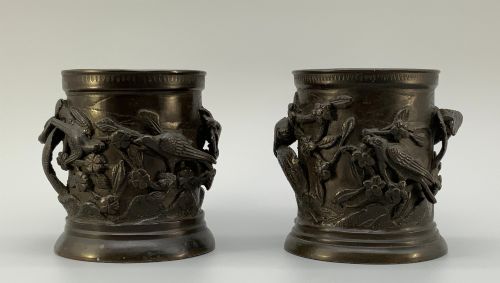
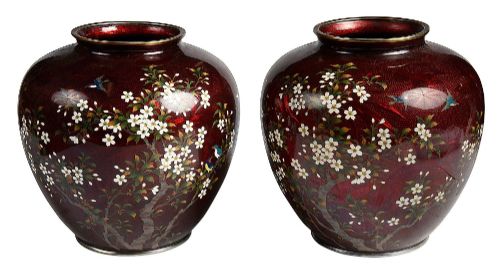
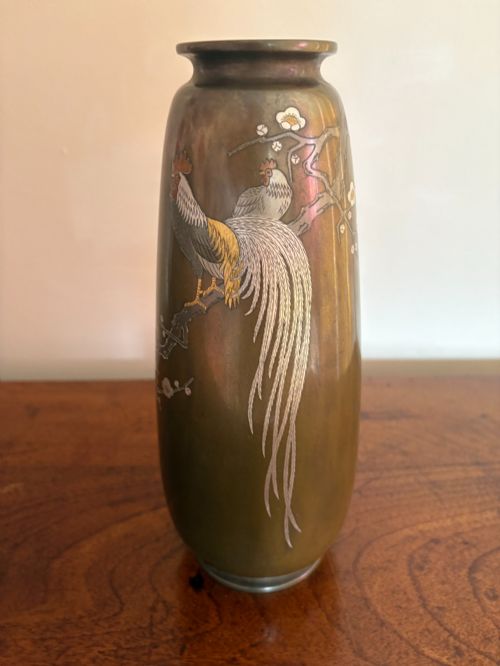
Japanese decorative vessels encompass a rich assortment of vases, jardinieres, ginger jars, and decorative bowls spanning the late Edo period through the Meiji period and into the early twentieth century. Buyers seeking these pieces will frequently encounter works cast in bronze or formed from ceramic and porcelain, often detailed with birds, floral motifs, and koi fish.
The selection ranges from miniature cloisonné enamel pieces to large floor-standing vessels and bamboo ikebana baskets. Many items originate from the Meiji period, reflecting a peak in metalwork and ceramic production that aimed at both domestic utility and international exhibition.
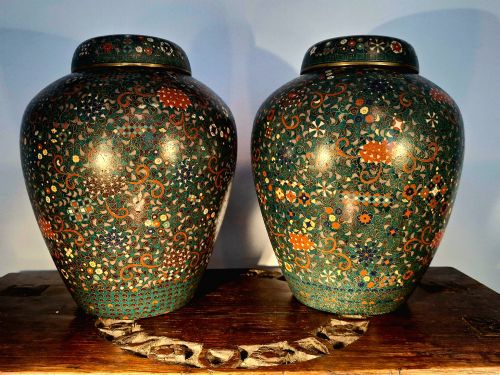
Vessels also include functional forms repurposed for display, such as ashtrays, incense burners, and lidded jars. These objects demonstrate the diverse material output of Japanese workshops working across earthenware, stoneware, and cloisonné enamel.
How they were made
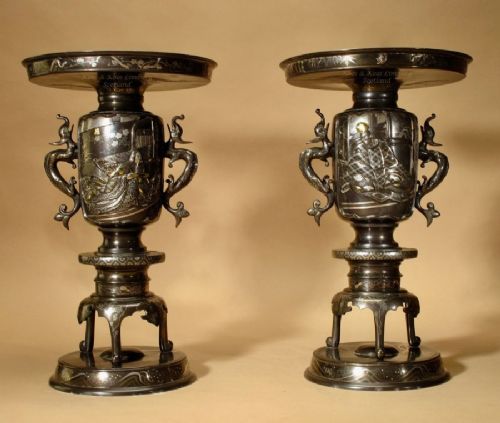
Metal vessels rely on bronze, brass, and copper, frequently enhanced with inlaid silver and gold leaf details. Artisans shaped these through casting and hammering before applying meticulous surface decoration.
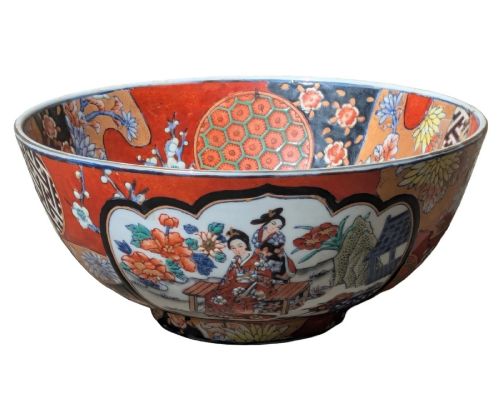
Ceramic forms span earthenware, stoneware, and porcelain, decorated with hand-painted pigments, imari blue and white glazes, or raised moriage relief work. Cloisonné pieces utilise fine wire soldered to a metal base to create cells filled with coloured enamel pastes and fired multiple times.
Japanese Decorative Vessels Retail Price Guide 2026
Typical asking prices for japanese decorative vessels among the pieces listed under this phrase on Sellingantiques today, from the lower quarter to the upper quarter. They describe what is for sale here now, not the wider market.
Several makers hid tiny signatures inside cloisonne mosaic borders, daring close-up inspectors to spot them.
What varies in quality
Quality rests upon the precision of execution, from the evenness of enamel cells in cloisonné to the crispness of casting in bronze vessels. Master artisans achieved tighter wirework and more complex pictorial scenes featuring koi, phoenixes, and landscape panels.
Ceramic quality distinguishes itself through the fineness of the clay body, the complexity of the glaze work, and the skill behind hand-painted family scenes or gilt detailing. Signed pieces from recognised workshops demonstrate superior artistic ambition compared to standard commercial wares.
Tsukamoto Hikokichi·KANASAWA·Makuzu Kozan II·Kozan·Chosei·Kinkozan·Kizan
The Japanese Decorative Vessels Glossary
- Cloisonné enamel
- A metalworking technique where thin flat wires are soldered to a metal body to form compartments filled with vitreous enamel paste.
- Satsuma
- A type of earthenware originating from the Satsuma province, typically characterised by a ivory craquelure glaze and detailed overglaze enamels with gilt.
- Imari
- A traditional style of Japanese porcelain featuring strong underglaze blue combined with iron red, green, and gold highlights.
- Jardiniere
- A large ornamental pot or planter designed to hold growing plants or flower arrangements.
- Ikebana
- The traditional Japanese art of flower arrangement, requiring specialised shallow or tall baskets and vessels designed for stems.
Japanese Decorative Vessels: Frequently Asked Questions
How do I identify a Meiji period vessel?
Meiji period vessels generally date between eighteen sixty-eight and nineteen twelve, a time of rapid modernisation and extraordinary artistic output in Japanese metalwork and ceramics.
Look for intricate cloisonné work, finely cast bronze with inlaid details, or heavily gilt Satsuma ceramics that reflect the ambitious standards of international exhibition pieces.
What is the difference between Satsuma and Imari?
Satsuma pieces are typically earthenware with a distinctive creamy craquelure glaze, frequently decorated with complex pictorial scenes and heavy gilding.
Imari pieces are hard porcelain featuring a striking palette dominated by cobalt blue underglaze paired with iron red and gold.
How should I display a bronze vessel at home?
Bronze vessels work best as sculptural focal points on heavy timber furniture, where their patinated surfaces and inlaid metal details can catch natural light.
Keep them away from direct heat sources and moisture to preserve the original bronze finish and any delicate silver or gold leaf inlay.
What were Japanese jardinieres used for originally?
Jardinieres served as large decorative planters or indoor basins for displaying potted plants and floral arrangements within traditional Japanese and Western domestic interiors.
Their substantial weight and generous proportions made them ideal centrepieces for halls and reception rooms.