



Japanese Decorative Box
These japanese decorative box pieces bring intricate lacquer work and delicate cloisonne enamel into a room, offering both history and practical storage.
Japanese Decorative Box
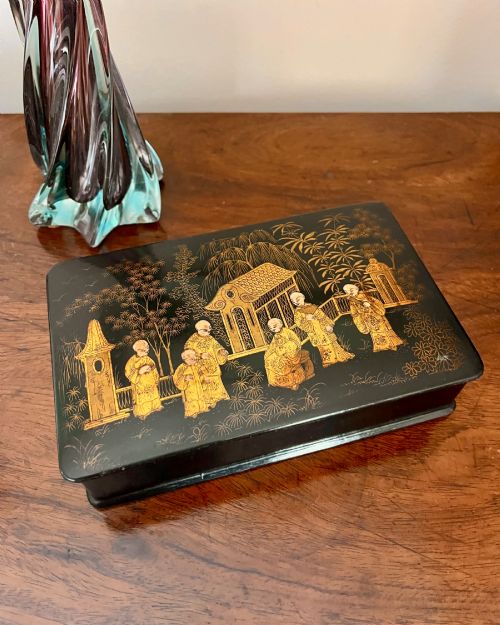
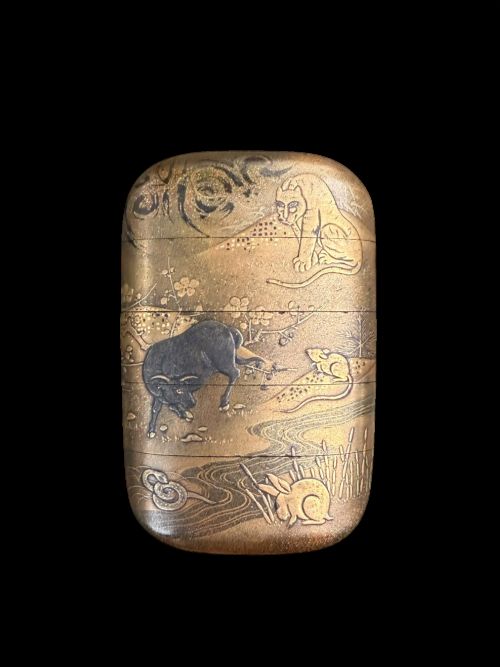
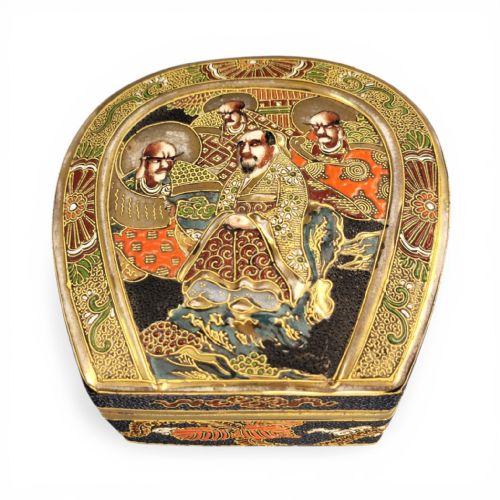
Buyers encounter forms ranging from miniature table cabinets and lidded gourd pots to traditional inro and keepsake cases. Lacquer and wood dominate the material palette, often enriched with gilt, enamel, and gold leaf.
Origins span distinct historical eras such as the Meiji and Edo periods, alongside pieces influenced by Chinoiserie styles. Each container reflects the aesthetic priorities of its specific era of manufacture.
How they were made
Wood serves as the primary structural substrate for lacquered items and table cabinets, shaped to form rigid carcases for intricate surface treatments. Artisans applied layers of natural lacquer to create durable, glossy finishes that protect the timber underneath.
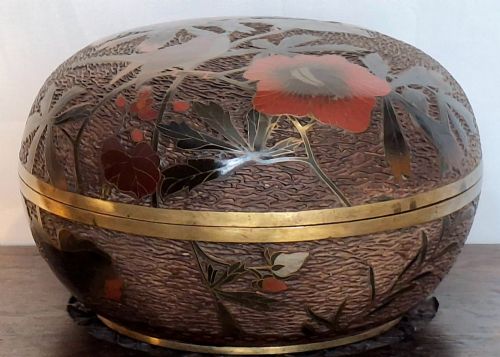
Decoration frequently incorporates gilt and gold leaf applied directly onto lacquered surfaces to form detailed pictorial motifs. Cloisonne enamel pieces utilise thin metal wires of copper and brass to outline cells, which are then filled with coloured pastes and fired.
Japanese Decorative Box Retail Price Guide 2026
Typical asking prices for japanese decorative box among the pieces listed under this phrase on Sellingantiques today, from the lower quarter to the upper quarter. They describe what is for sale here now, not the wider market.
The listings span the nineteenth and early twentieth centuries, featuring distinct materials such as lacquer, earthenware, and copper.
What varies in quality
The sophistication of the surface decoration determines the distinction between standard vessels and superior examples. Finer pieces display meticulous precision in gold leaf application and enamel work, whereas simpler items show broader, less complex ornamentation.
The intricacy of the underlying form also separates ordinary containers from exceptional pieces like table cabinets with multiple drawers and specialised inro construction. Material richness, such as the use of multiple metals and deep lacquer layers, elevates the overall standard.
Toshozan
The Japanese Decorative Box Glossary
- Edo Period
- The period in Japanese history lasting from 1603 to 1867, noted for the flourishing of urban arts and crafts. Pieces from this era often feature traditional lacquer and metalwork techniques.
- Meiji Period
- The era spanning from 1868 to 1912, characterised by the opening of Japan to Western trade and a surge in ornate decorative arts. Items from this time frequently demonstrate advanced cloisonne and Satsuma earthenware production.
- Inro
- A traditional Japanese case for holding small objects, suspended from a sash by a toggle. These small compartments typically comprise multiple interlocking sections.
- Cloisonne
- An enamel technique where metal wires are soldered to a base to create compartments for coloured glass pastes. The object is then fired and polished to a smooth finish.
- Kodansu
- A small Japanese table cabinet featuring doors and internal drawers for storage. These miniature pieces mirror the architecture of larger furniture on a domestic scale.
Japanese Decorative Box: Frequently Asked Questions
What were japanese decorative boxes used for?
These vessels originally served to hold personal items, medicines, or small keepsakes. Inro specifically carried seals and medicine suspended from traditional garments.
Over time, many of these containers became purely decorative objects prized for their fine lacquer and enamel surfaces.
How do I date a lacquer box?
Dating relies on stylistic markers associated with historical periods like the Edo and Meiji eras. Examining the depth of the lacquer and the complexity of the gilt motifs provides further clues.
Records often link specific construction techniques and material combinations to distinct decades within the nineteenth and early twentieth centuries.
How should I care for antique lacquer?
Keep these items away from direct sunlight and extreme fluctuations in humidity to prevent the wood and lacquer from cracking. Dust them gently with a soft, dry cloth without applying modern chemical polishes.
Stable indoor conditions help preserve the delicate gold leaf and enamel details found on the surface.
What is the difference between an inro and a keepsake box?
An inro consists of stacked, interlocking tiers designed to be worn suspended from a sash, featuring a cord and ojime bead. A keepsake box is typically a stationary container with a lid or small cabinet doors for tabletop use.
Both forms utilise traditional lacquer and metalwork, but their original functions dictated entirely different internal structures.