


Japanese Cloisonne Wall Plate
A Japanese cloisonne wall plate brings intricate metalwork and vibrant enamels into a room, offering a tangible link to late nineteenth-century artistry.
Japanese Cloisonne Wall Plate
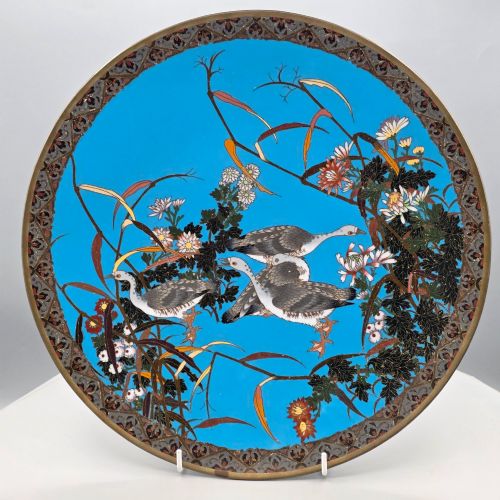
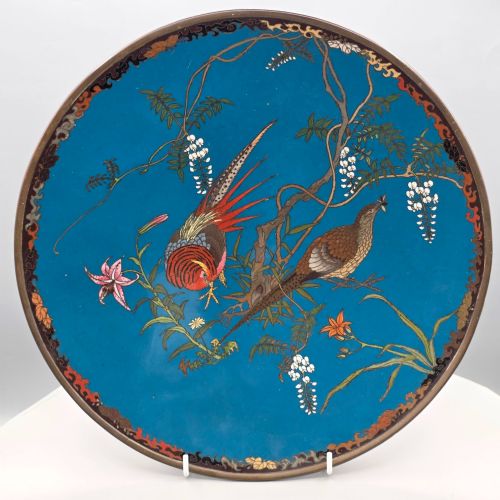
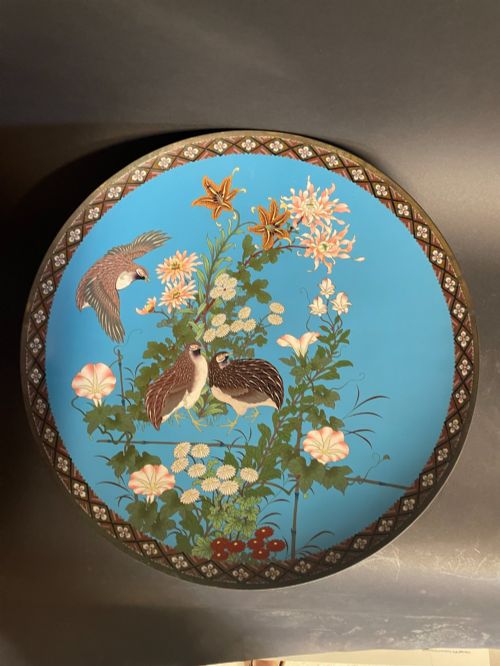
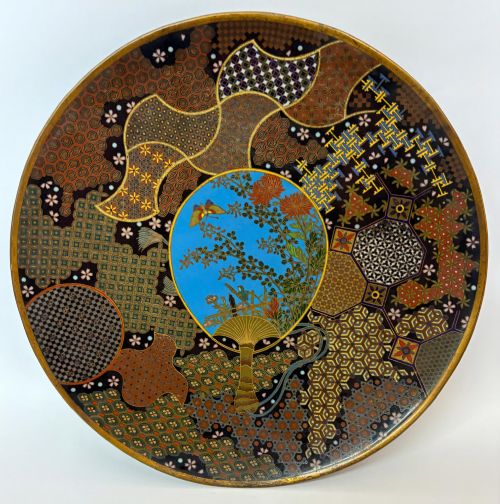
A japanese cloisonne wall plate typically takes the form of a decorative charger or large dish designed for display rather than dining. These objects originate predominantly from the Meiji period and the late Edo period, spanning the nineteenth century.
The compositions on these plates draw heavily from nature and mythology, showing birds, dragons, koi fish, and landscapes alongside auspicious symbols. Common formats range from medium plates to large chargers exceeding forty centimetres in diameter.
Surviving examples include specialised techniques such as Totai Shippo, where enamel and wire are applied over a porcelain body rather than traditional metal bases.
Materials and Construction
Artisans constructed the base using copper, brass, bronze, or porcelain, shaping them into plates, trays, and chargers before applying surface decoration. Fine brass or copper wire was then soldered onto the body to create cellular compartments known as cloisons.
These individual cells were filled with coloured enamel pastes made from ground glass and mineral pigments, then fired in a kiln. Multiple firings were necessary to build depth and fuse the enamel to the wire framework before grinding and polishing the surface to a smooth finish.
Several dragon and koi plates capture creatures frozen in mid-leap, bringing dynamic energy straight to the dining room wall.
Evaluating Quality and Detail
Quality rests upon the fineness and precision of the wirework, where thinner lines and more complex geometric or pictorial partitioning demand greater technical mastery. The complexity of the subject matter, from simple botanical studies to intricate multi-figure scenes involving samurai or dragons, also separates standard production from exceptional works.
The management of the enamel paste during firing dictates the visual clarity of the final surface, with superior pieces displaying even coloration, minimal pitting, and seamless integration between metal wires and vitrified glass.
The Japanese Cloisonne Wall Plate Glossary
- Cloisonne
- Enamelwork in which coloured pastes are applied within compartments formed by soldered wires on a metal base.
- Charger
- A large decorative plate intended primarily for display on a wall or sideboard rather than practical table service.
- Totai Shippo
- A specific Japanese technique where cloisonne enamel is applied over a porcelain body instead of standard metal.
- Meiji Period
- The era of Japanese history lasting from 1868 to 1912, noted for a massive output of high-precision decorative arts.
- Ho-o Bird
- A mythical Chinese and Japanese phoenix frequently depicted in traditional metalwork and textile designs.
Japanese Cloisonne Wall Plate: Frequently Asked Questions
How do I hang a heavy charger safely?
Displaying large plates requires specialised wall brackets or coated spring hangers that distribute the weight evenly across the rim without putting pressure on the enamel surface. Ensure the fixing is secured directly into wall studs or uses appropriate masonry anchors.
Avoid using adhesive disc hangers attached to the reverse, as the combined weight of copper and enamel can cause the bond to fail over time.
Were these plates made for export?
The vast majority of nineteenth-century decorative chargers were created specifically for Western export markets following the opening of Japanese trade ports during the Meiji period. European and American collectors developed an intense appetite for elaborate metalwork and intricate enamel pieces.
This international demand drove workshops in regions such as Nagoya to produce increasingly ambitious scales and complex pictorial themes.
How should I clean my plate?
Maintenance requires only gentle dusting with a soft, dry microfibre cloth to prevent the accumulation of particles between the wire partitions. Liquid cleaners, abrasives, and chemical polishes must be avoided entirely, as they can scratch the glass surface or corrode the exposed metal wires.
Keeping the object away from direct sunlight and damp environments helps preserve the stability of the enamel over decades.
What does a signature on the reverse mean?
Signed pieces carry the mark of a specific workshop or master artisan, indicating a higher tier of production within the Meiji period export trade. These signatures often appear as engraved or applied seals on the unglazed base or reverse metal surface.
Unsigned pieces remain common and do not automatically indicate lesser quality, as many fine workshops produced unmarked works for general export houses.