




Japanese Ceramic Lighting
Japanese ceramic lighting brings centuries of Asian kiln craft into contemporary interiors through converted vases and lamps.
Japanese Ceramic Lighting
Japanese ceramic lighting consists primarily of table lamps fashioned from antique and vintage vases, bringing historical forms into domestic use. When exploring Japanese ceramic lighting, buyers encounter pieces that span from the late seventeenth century through the early twentieth century.
The selection centres heavily on table lamps created from porcelain and earthenware bodies. Many of these items originate as traditional vessels from the Edo and Meiji periods before later conversion into functional lighting.
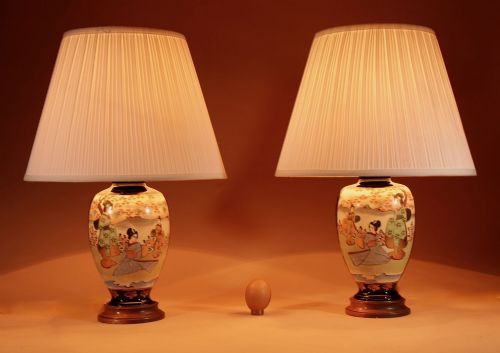
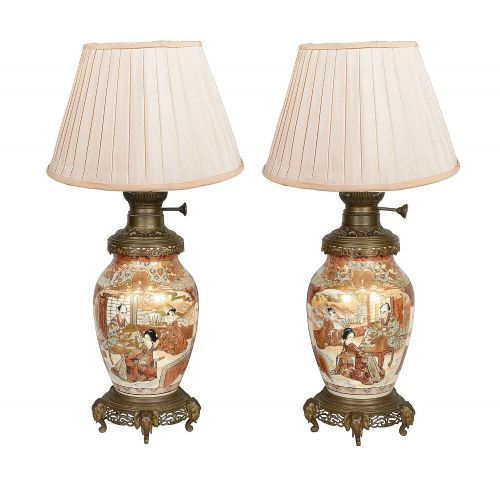
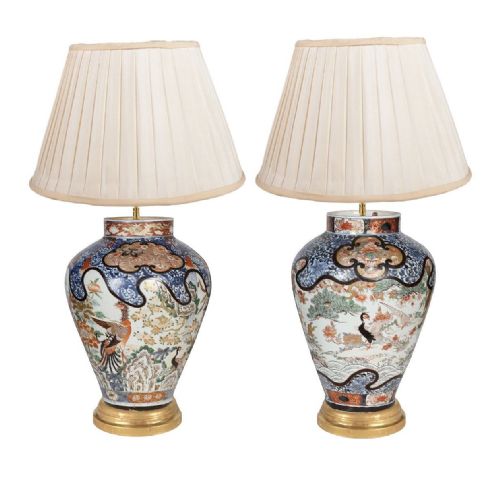
Vessels from production centres such as Satsuma, Kutani, and Arita dominate the offerings. These pieces frequently appear in matched pairs or individual formats suitable for interior placement.
Materials and Construction
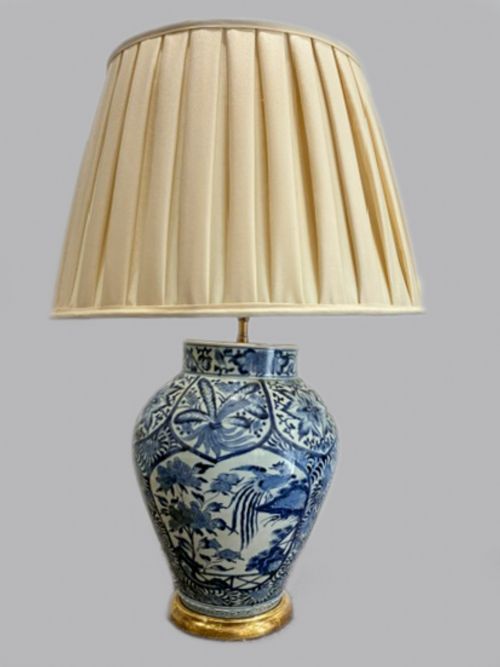
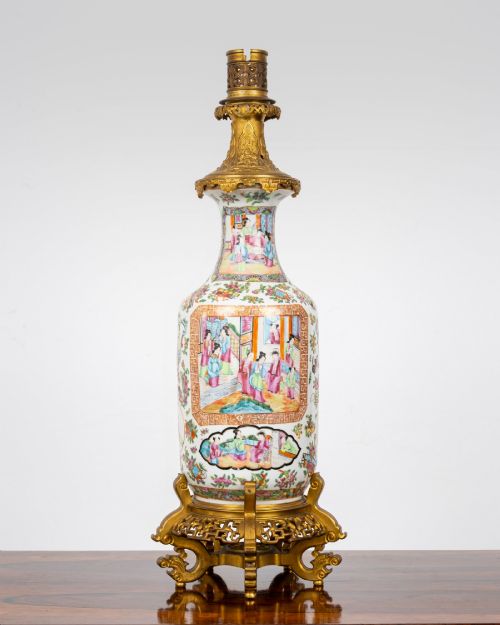
Potters shaped these bodies from local clays, applying complex glazes, underglaze blue pigments, and enamel decorations before high-temperature kiln firing. Artisans then fitted many of these ceramic bodies with metal mounts in brass or gilt bronze.
Later conversions integrated electrical hardware alongside traditional fabric and silk shades. The original ceramic vessels retain their hand-painted surfaces, while the mounting systems secure the lamps for modern utility.
Some vases spent centuries holding flowers before quietly retiring as wiring posts.
Judging Quality and Execution
Quality rests upon the crispness of the hand-painted enamel and underglaze decoration on the ceramic body. Finer examples display meticulous brushwork, balanced composition, and harmonious integration with their metal mounts.
The integrity of the original porcelain or earthenware vessel determines the standing of the piece. Superior specimens retain their original glaze lustre and structural stability despite centuries of age and subsequent conversion.
The Japanese Ceramic Lighting Glossary
- Satsuma
- A type of Japanese earthenware featuring a fine crackle glaze decorated with polychrome enamels and gilt. It originates from Satsuma Province and became widely exported during the Meiji period.
- Imari
- A style of Japanese porcelain decorated in underglaze blue, iron red, and gold, produced in Arita from the Edo period onwards. These wares are named after the port from which they were shipped to European markets.
- Kutani
- Japanese coloured porcelain characterised by bold designs in vibrant enamels, often incorporating greens, blues, yellows, and purples. The tradition dates back centuries and appears frequently on table lamps.
- Cloisonné
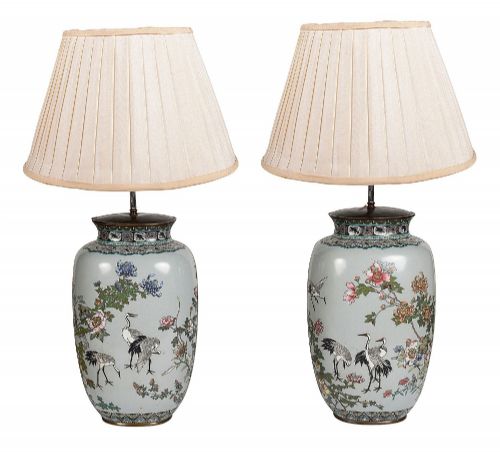
- A metalwork technique where enamel is applied within compartments formed by soldered wire strips on a vase base. Such pieces are frequently adapted into decorative lamps.
- Edo Period
- The period in Japanese history spanning from 1603 to 1868, characterised by economic growth and strict isolationist policies. Vases surviving from this era show traditional handcraft methods.
- Meiji Period
- The era spanning from 1868 to 1912, marked by the modernization of Japan and extensive export of decorative arts to the West. Many ceramic lamps originate from this prolific manufacturing window.
Japanese Ceramic Lighting: Frequently Asked Questions
Are these lamps converted antique vases?
Yes, the listings comprise historical Japanese vases and vessels that have been adapted to function as table lamps.
This conversion process pairs antique ceramic bodies with modern electrical fittings and stands.
How do I date a ceramic lamp?
Dating relies on the stylistic markers of the ceramic body, such as Edo or Meiji period characteristics, painting techniques, and glaze types.
Makers' marks and the specific decorative palette also help pinpoint the era of manufacture.
Do these lamps come in pairs?
Many examples are offered as matched pairs, though individual lamps also appear within the selection.
Pairs typically share identical decorative motifs, dimensions, and manufacturing origins.