
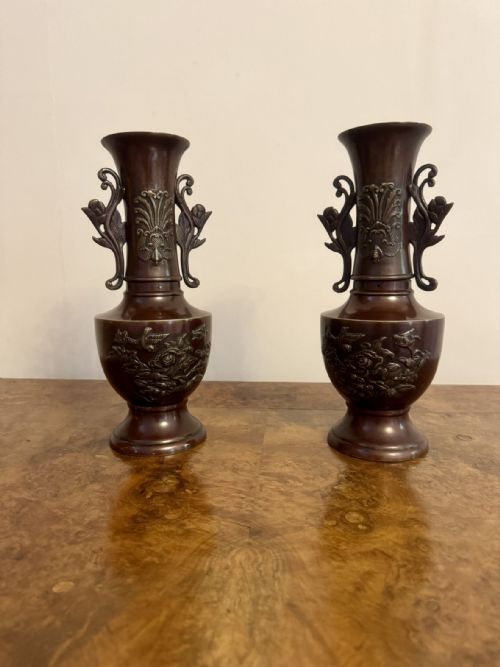


Japanese Bird Motif Vessel
These Japanese bird motif vessel pieces bring together centuries of metalwork and ceramic skill, making them a striking addition to any cabinet or mantel.
Japanese Bird Motif Vessel
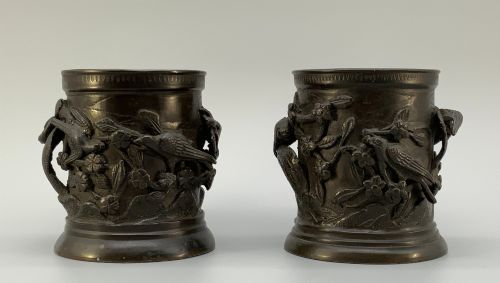
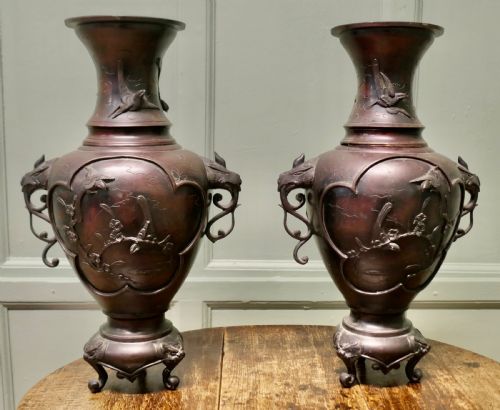
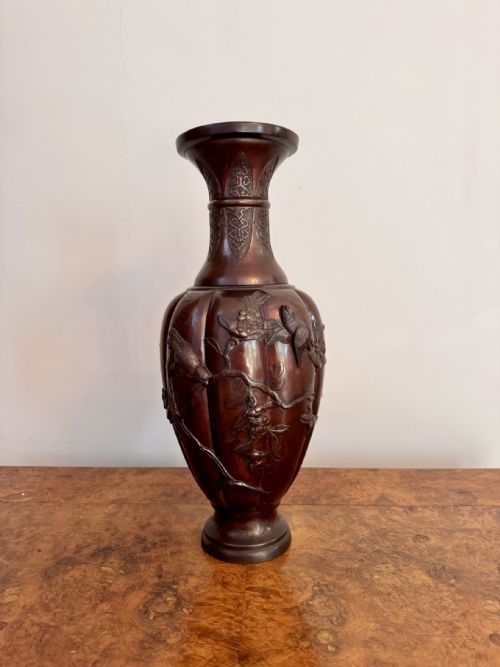
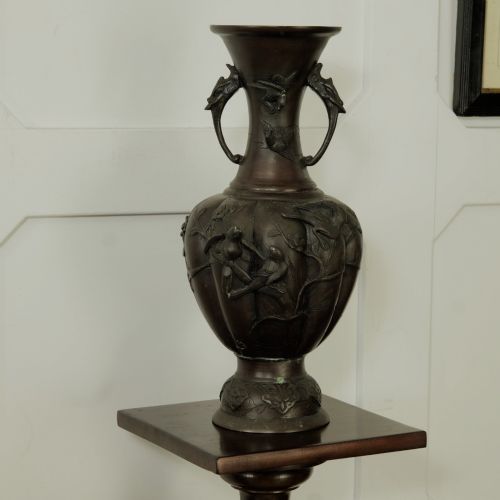
When you search for a japanese bird motif vessel, you encounter a selection of bronze vases, planters, and bowls originating from Japan during the Meiji and Edo periods. The selection on this page leans heavily toward 19th-century bronze vases featuring birds and blossom decoration, often found in pairs.
Makers and workshops of the era also produced notable examples in porcelain, stoneware, and cloisonne enamel. These decorative bowls, stem vases, and jardiniere forms show the distinct artistic output of late 19th-century Japanese craftsmen.
How they were made
Bronze forms dominate the listings, frequently utilising patination techniques alongside applied gold leaf to create depth in the plumage and floral backgrounds. Makers cast these heavy vessels using traditional methods before chiselling fine details into the metal surface.
Ceramic examples combine porcelain and stoneware bodies with delicate lacquer over-paint or detailed cloisonne enamel work. Workshops in regions like Kaga utilised precise firing and glazing processes to achieve durable, decorative surfaces.
Listings span the 19th and early 20th centuries, covering the Meiji and Edo periods through bronze, porcelain, and stoneware.
What varies in quality
The distinction between standard production and top-tier work rests on the crispness of the casting and the depth of the chased decoration. Superior bronze vessels display sharply defined feathers and blossoms that retain their original patination without excessive wear.
Enamel and lacquer pieces differ in the precision of their borders and the integration of the decorative motif with the vessel body. Finer studio pieces demonstrate an exceptional control of materials by recognised workshops.
Makuzu Kozan II·Kinrin Workshop
The Japanese Bird Motif Vessel Glossary
- Meiji Period
- The era in Japanese history spanning from 1868 to 1912, characterised by a opening of trade with the West and a flourishing of decorative arts. Much of the metalwork and porcelain on this page originates from this time.
- Patinated Bronze
- Metal treated with chemical solutions to produce a specific surface colour and finish. This process protects the bronze while enhancing the visual contrast of bird and floral motifs.
- Cloisonne Enamel
- A technique where thin metal wires are soldered to a base to form compartments, which are then filled with coloured enamel paste and fired. This creates vibrant, detailed imagery across bowls and vases.
- Jardiniere
- A large decorative pot or planter designed to hold growing plants. Examples in bronze from the Edo and Victorian periods serve as substantial interior ornaments.
- Studio Pottery
- Ceramics produced by individual artists or small workshops working independently from large factories. These pieces often experiment with distinct glazes and forms.
Japanese Bird Motif Vessel: Frequently Asked Questions
How do I identify a Meiji period bronze?
Meiji period bronzes are distinguished by their heavy weight, deep patination, and intricate hand-chased bird and blossom motifs. Makers during this era refined casting techniques to achieve remarkable detail in the plumage.
Examination of the base often reveals casting marks or signatures associated with Japanese workshops of the late 19th century. The naturalistic depiction of birds reflects the aesthetic priorities of the period.
Where were these vessels displayed?
In 19th-century British and European interiors, large bronze vases and jardiniere planters stood prominently in reception rooms and hallways. Smaller stem vases and bowls found a place on mantelpieces and display tables.
The popularity of Japanese art during the Victorian era meant these decorative objects were integrated into both formal and eclectic domestic settings.
Are cloisonne bowls fragile?
Cloisonne enamel bowls require careful handling because the glass paste fired within the wire cells can chip or crack under sharp impacts. However, the underlying metal body provides a sturdy foundation for daily display.
Dusting with a soft, dry cloth is sufficient for maintenance, avoiding abrasive cleaners that might dull the enamel or disturb the wired compartments.
What is the difference between Edo and Meiji pieces?
Edo period items originate from the era preceding 1868, a time of relative isolation when Japanese craftsmanship developed distinct domestic styles. Meiji pieces reflect the subsequent opening of international trade and the adaptation of traditional techniques for Western collectors.
Both periods utilise bronze and ceramic materials, but Meiji works frequently exhibit a more elaborate approach to surface decoration.