



Japanese Jewellery
Japanese antique jewellery brings together intricate metalwork and lacquered boxes from the nineteenth and early twentieth centuries that collectors prize for their exquisite craftsmanship.
Japanese Jewellery
When buyers search for japanese antique jewellery, they encounter a fascinating mix of personal adornments and miniature storage pieces created during the Meiji and Taisho periods alongside Victorian interpretations.
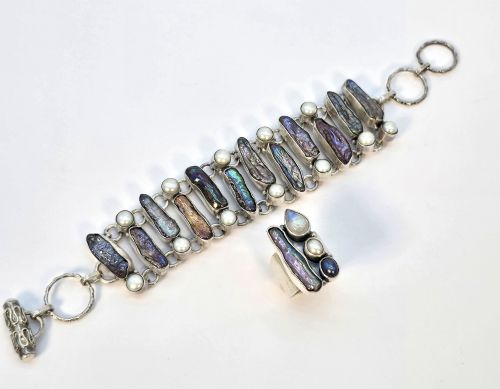
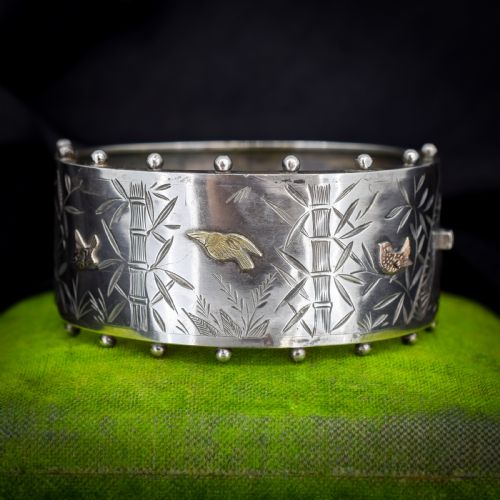
The most common personal items on this page are silver and gold bangles, earrings, and hair ornament sets featuring distinct aesthetic influences from both British Victorian and traditional Japanese craftsmanship.
Materials and construction
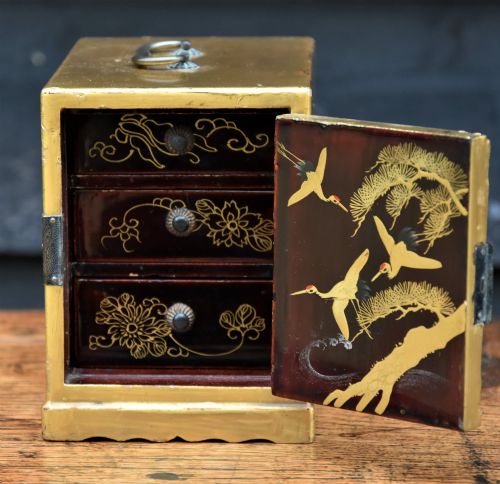
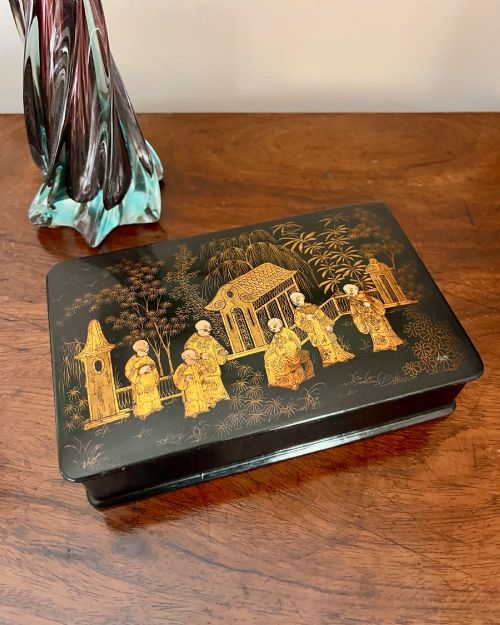
The physical evidence on this page shows makers working extensively with wood, lacquer, and gold leaf to construct intricate cabinets and boxes, often enhanced by marquetry and inlaid elm or hardwood.
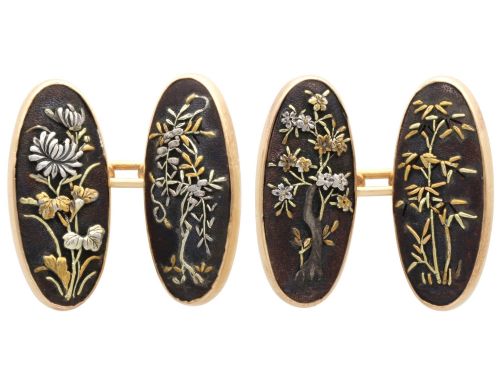
Metal components rely on silver, sterling silver, gold, brass, and bronze, with specialised techniques such as cloisonné shippo adding colourful floral enamelling to small caskets.
Wearable pieces combine silver and gold elements with detailed bird, bamboo, and animal motifs, demonstrating the crossover between Victorian aesthetic movement styles and traditional Eastern design.
Japanese Jewellery Retail Price Guide 2026
Typical asking prices for japanese jewellery among the pieces listed under this phrase on Sellingantiques today, from the lower quarter to the upper quarter. They describe what is for sale here now, not the wider market.
Several miniature cabinets include hidden compartments designed specifically to outsmart curious visitors.
Distinctions in craftsmanship
Quality separates simple production pieces from superior works through the depth of the lacquer finish and the precision of inlaid wood, marquetry, and metal decorations.
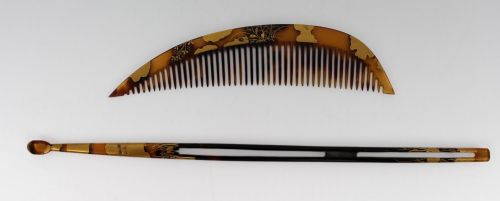
Fine examples display meticulous detail in bronze animal fittings, intricate cloisonné enamel work, and well-preserved structural joinery across both table cabinets and delicate hair ornaments.
The Japanese Jewellery Glossary
- Kodansu
- A small Japanese tabletop cabinet with multiple drawers and compartments, traditionally used for storing personal treasures and jewellery.
- Kushi & Kogai
- Traditional Japanese hair ornaments, typically comprising a decorative comb and matching skewer worn in the hair.
- Shippo
- The Japanese term for cloisonné enamel, describing metalwork decorated with coloured glass pastes fired within wire partitions.
- Meiji Period
- The era in Japanese history spanning from 1868 to 1912, known for opening trade with the West and influencing global design.
- Aesthetic Movement
- A nineteenth-century artistic movement valuing art for art's sake, visible in the cross-cultural designs of Victorian silver and Japanese motifs.
Japanese Jewellery: Frequently Asked Questions
What is a Japanese kodansu?
A kodansu is a small tabletop cabinet featuring multiple internal drawers and hinged doors.
Craftsmen traditionally built these miniature chests from wood and finished them with detailed lacquer, metal fittings, or marquetry to store personal valuables and documents.
How do I wear antique hair ornaments?
Traditional Japanese hair pieces such as kushi combs and kogai skewers secure elaborate hairstyles.
Collectors today often display these delicate lacquer and metal items as art objects rather than wearing them daily.
What is cloisonne shippo?
Shippo is the traditional Japanese art of cloisonne enamelling on metal bases.
Artisans create intricate floral patterns by soldering thin metal wires to a surface and filling the resulting cells with coloured enamel before firing.
How do I care for antique lacquer?
Antique lacquer surfaces require gentle handling to prevent scratching and drying out.
Keep these items away from direct sunlight and extreme humidity fluctuations to preserve the integrity of the wood and finish.