



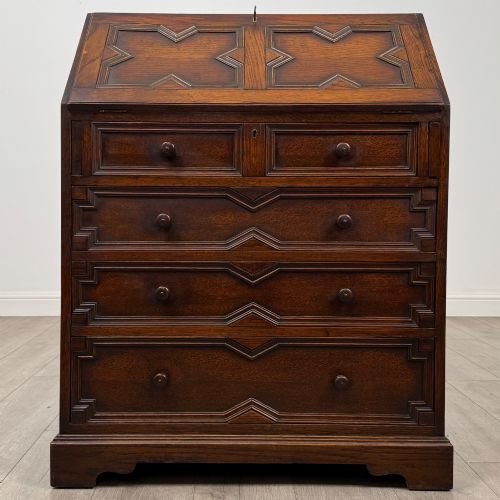

Jacobean Writing Bureau
A jacobean writing bureau brings heavy timber, fitted interiors and centuries of desk craft directly into a modern room.
Jacobean Writing Bureau
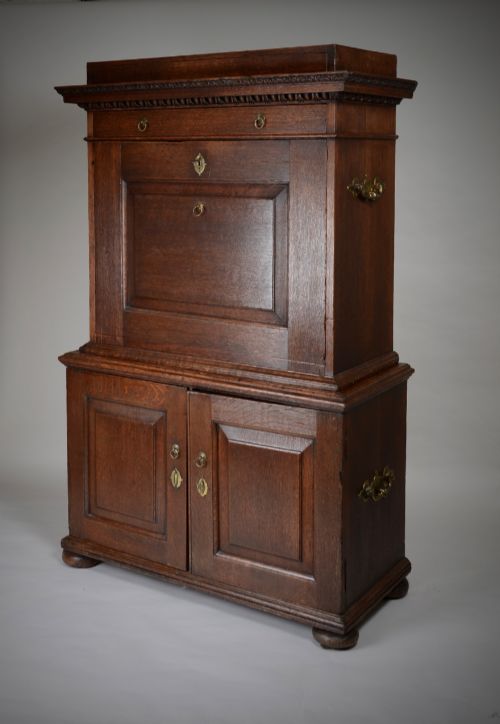
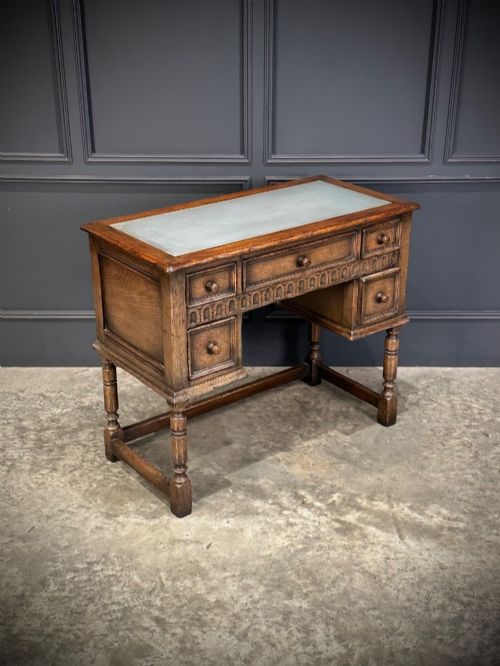
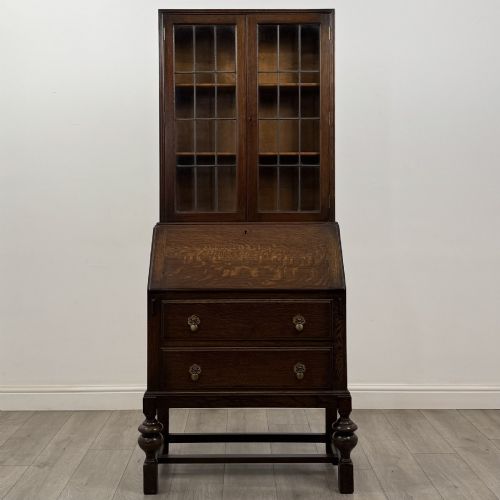
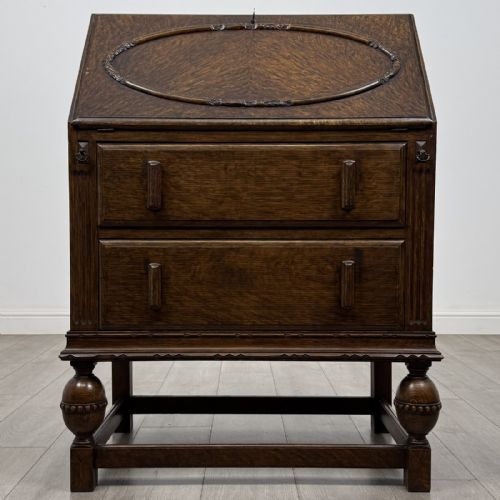
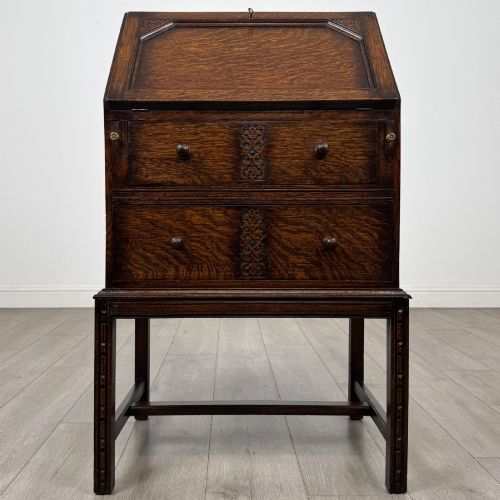
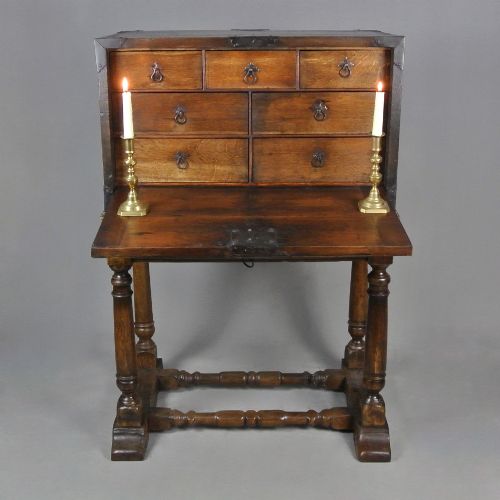
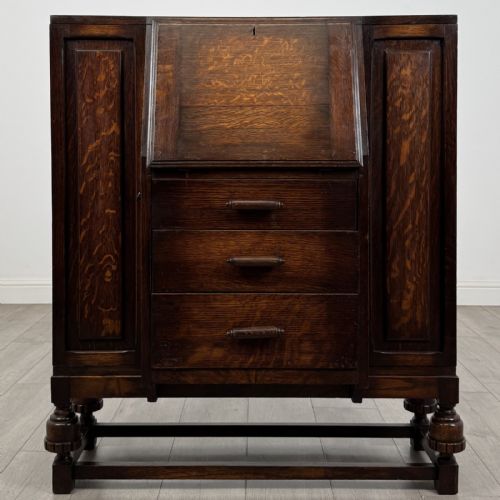
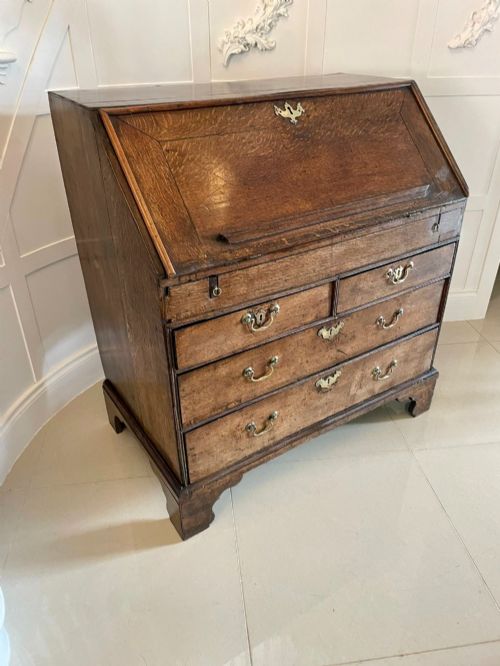
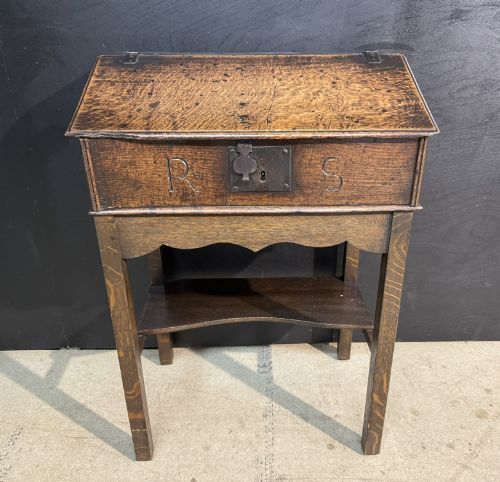
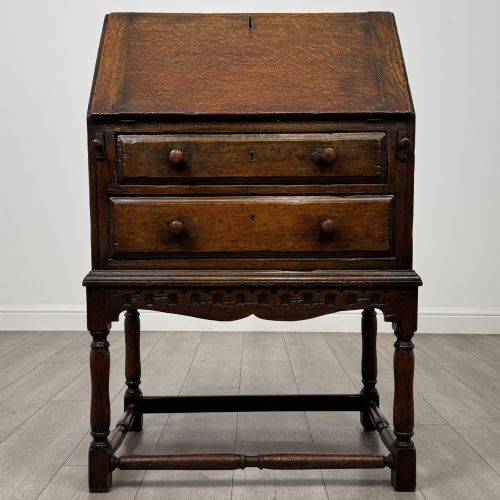
A jacobean writing bureau is a solid timber desk designed for correspondence and storage, combining a sloping fall-front lid with internal pigeonholes and drawers. When you search for a jacobean writing bureau, you encounter both authentic 17th-century pieces and later revival interpretations from the Edwardian era and the 1920s. These desks range from compact writing boxes on stands and small provincial slant-front desks to large bureau bookcases with glazed upper sections.
Materials and construction
Oak forms the primary structural material across nearly every listed piece, utilised for its durability and heavy grain. Workshops employed solid oak alongside oak veneer and wood inlay for decorative surfaces on later revival models.
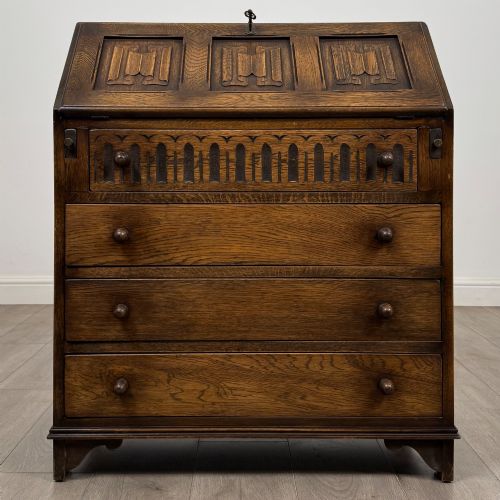
Hardware such as brass hinges, escutcheons, and iron locks secured the fitted interiors and drop-front writing surfaces. Structural decoration relied on hand carving, linenfold panels, and applied mouldings rather than applied veneers.
Jacobean Writing Bureau Retail Price Guide 2026
Typical asking prices for jacobean writing bureau among the pieces listed under this phrase on Sellingantiques today, from the lower quarter to the upper quarter. They describe what is for sale here now, not the wider market.
Current listings feature oak construction across periods ranging from the 17th century through the Victorian era and 1920s revivals.
Distinguishing quality
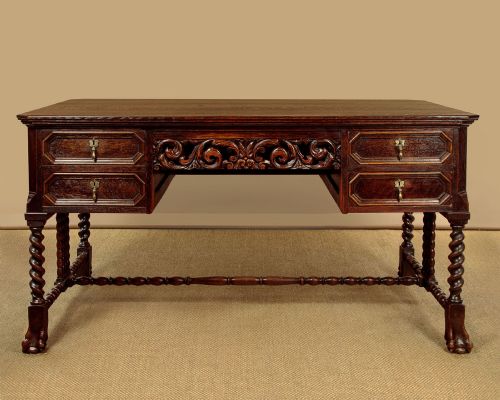
The depth and crispness of the hand carving separate standard production revival desks from superior examples. Master carvers delivered intricate relief work on the fall-front panels and drawer fronts, whereas lower-tier pieces relied on shallow machine routing or plain surfaces.
Internal arrangement determines utility and craftsmanship within the desk lid. Superior pieces house complex fitted interiors featuring secret compartments, small drawers, and letter slots, whilst lesser desks offer simple open pigeonholes.
The Jacobean Writing Bureau Glossary
- Bureau
- A desk featuring a sloping hinged lid that drops down to form a writing surface, concealing a fitted interior of drawers and pigeonholes. This form evolved from the earlier writing box.
- Bureau bookcase
- A dual-purpose furniture piece combining a lower writing desk bureau with an upper glazed cabinet for books and display. These tall units frequently feature panelled doors and substantial cornices.
- Linenfold
- A style of carved wooden panelling designed to resemble vertical folds of stiff fabric. This motif appears frequently on revival desk panels.
- Barley twist
- A turned wooden furniture leg resembling a spiral or twisted rope. This decorative turning technique is common on early 20th-century revival stands and desk supports.
- Writing slope
- A portable box with an angled lid designed for holding writing materials and paper. Early examples date to the 17th century and rest upon tables or stands.
Jacobean Writing Bureau: Frequently Asked Questions
What is a jacobean writing bureau?
A jacobean writing bureau is an enclosed wooden desk with a hinged sloping writing flap. Behind this drop-front lid lies a fitted interior of small drawers and pigeonholes.
Original 17th-century examples are joined from heavy native timber, while later Edwardian and 1920s revival pieces adopt the dark finish and carved aesthetic of the earlier period.
How do I date an oak bureau?
Dating relies on examining construction joints, timber preparation, and hardware style. 17th-century pieces display hand-riven boards, pegged mortise and tenon joints, and vernacular ironwork.
Revival desks from the 1920s show machine-sawn timber, standardised hardware screws, and decorative carving styles typical of early 20th-century furniture factories.
Where were these desks placed?
These desks served as private writing stations in the parlour, study, or bedroom. Their enclosed compartments kept correspondence and account books secure from dust and prying eyes.
Larger bureau bookcases combined workspace with a library function, holding reference volumes on upper shelves while writing took place below.
What maintenance do oak bureaux need?
Solid oak furniture responds well to occasional feeding with traditional beeswax to nourish the timber grain. Avoid placing antique desks near direct heat sources or strong sunlight to prevent wood shrinkage.
Regular dusting with a soft, dry cloth preserves the patina on carved panels and brass drawer handles without damaging the finish.