
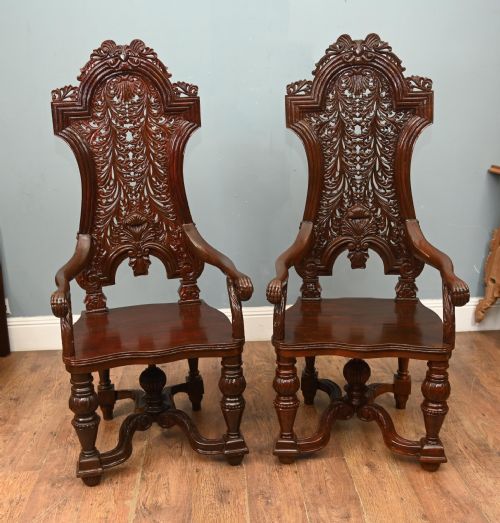


Jacobean Style Throne Chair
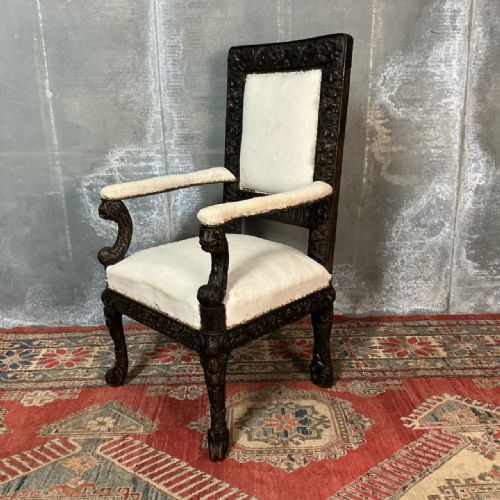
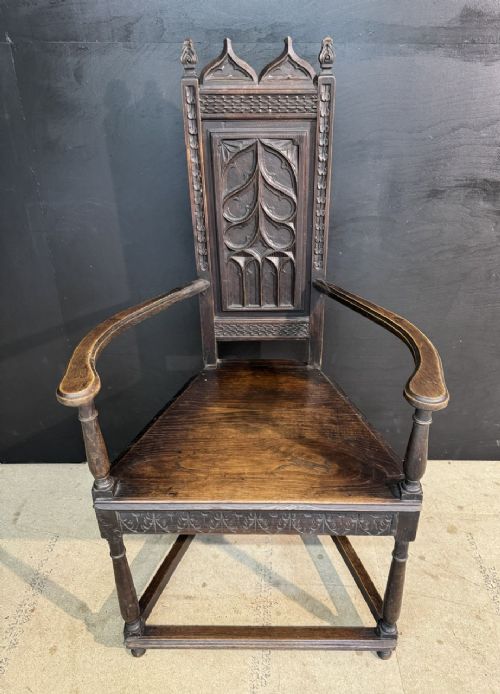
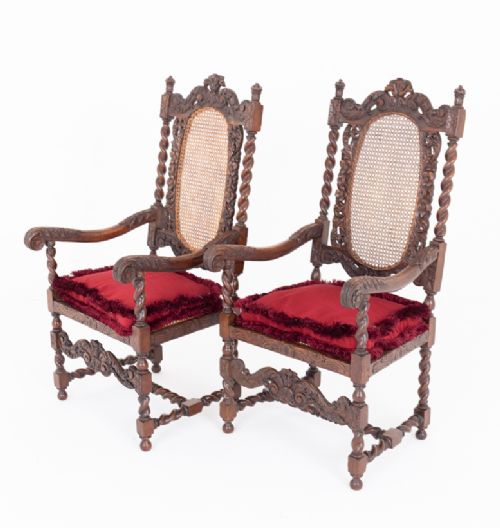
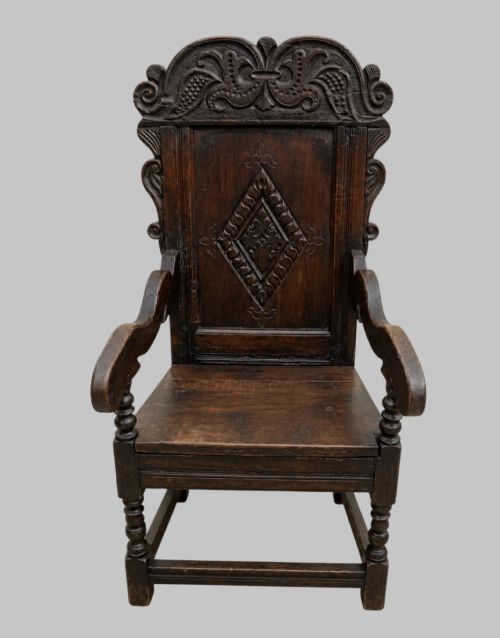
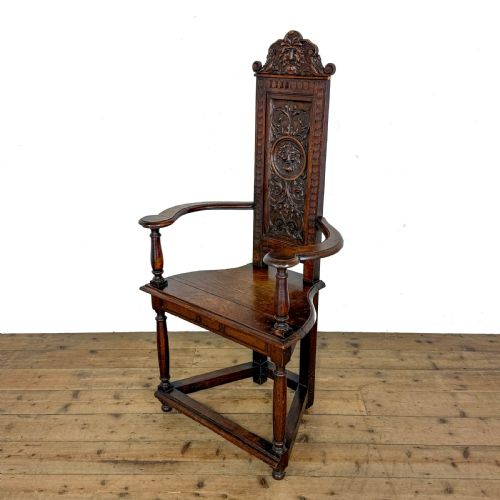
A jacobean style throne chair brings heavy carved oak, panelled backs and substantial armrests into a room.
Jacobean Style Throne Chair
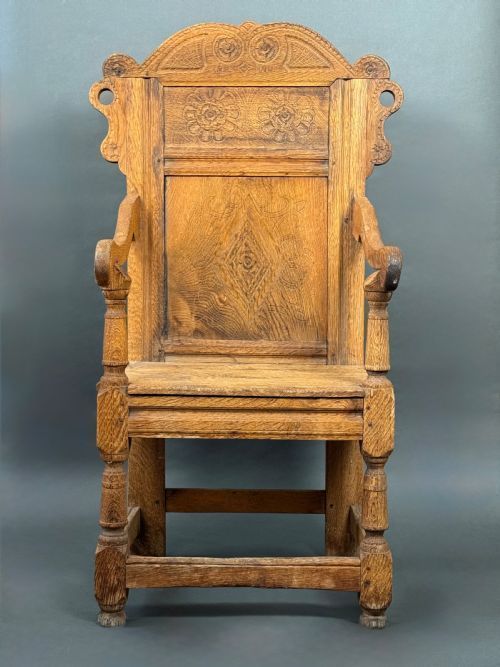
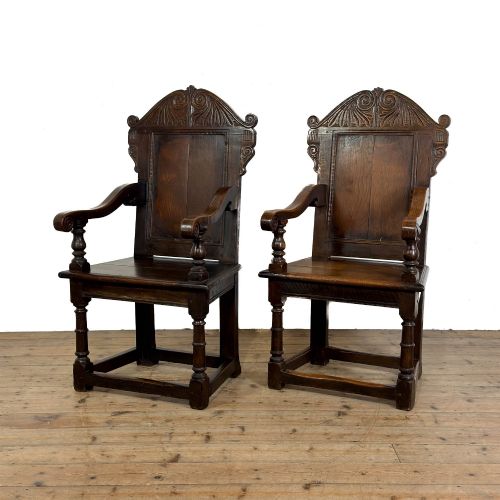
When you search for a jacobean style throne chair, you are looking at substantial wooden seating rooted in seventeenth-century forms. These pieces often arrive as wainscot chairs, panelled armchairs, or heavy hall chairs designed to command attention in a room.
You are most likely to meet nineteenth-century and early twentieth-century revival pieces on this page, alongside genuine seventeenth and eighteenth-century examples. The selection includes single armchairs, pairs, and smaller elbow chairs carved from oak.
The forms range from strict rectilinear wainscot designs with solid wooden backs to elaborate Victorian and Edwardian throne chairs featuring deep relief carvings and turned supports.
How they were made
Oak forms the structural core of these chairs, shaped through traditional joinery like mortise and tenon frames. Craftspeople built the upright panels and armrests to bear heavy weight while providing a rigid surface for carving.
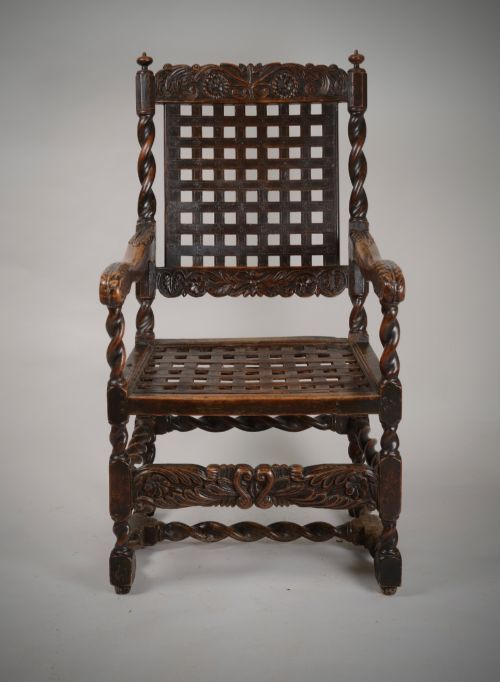
Carving defines the ornamentation, utilising gouges and chisels to apply strapwork, foliate motifs, and geometric patterns directly onto the timber. Turning lathes produced barley twist legs and structural stretchers that braced the heavy frames together.
Upholstery materials such as leather, velvet, fabric, and cane appear across the seats and backrests on later or adapted examples. Brass tacks frequently secure these textile elements to the wooden framework.
Some chairs include child-sized wainscot variations, proving that miniature authority figures required proper panelled seating too.
What varies in quality
The crispness and depth of the timber carving separate standard revival pieces from superior examples. Sharp, detailed chisel work indicates a maker who understood seventeenth-century decorative vocabulary rather than applying shallow machine cuts.
The weight and selection of the oak timber dictate the structural integrity and historical fidelity of the chair. Dense, quarter-sawn oak with prominent medullary rays provides both stability and a better surface for ageing.
The integration of the joints and the proportion of the high back to the seat determine the overall presence of the chair. Balanced scaling prevents the heavy framework from appearing clumsy or overly top-heavy.
The Jacobean Style Throne Chair Glossary
- Wainscot chair
- A heavy wooden armchair with a panelled back, solid wooden seat, and turned legs, originating in the sixteenth and seventeenth centuries.
- Barley twist
- A type of turning shaped like a spiral rope, frequently found on the legs and stretchers of seventeenth-century and revival furniture.
- Carolean revival
- A style of nineteenth-century furniture design that imitates the ornate, scroll-heavy aesthetic of the reign of Charles the Second.
- Strapwork
- An ornamental motif consisting of flat, interlaced bands that resemble leather straps, commonly carved into wooden panels.
- Medullary rays
- Natural ribbon-like flecks visible in quarter-sawn oak that indicate high-grade timber selection.
Jacobean Style Throne Chair: Frequently Asked Questions
What is a wainscot chair?
A wainscot chair is a heavy wooden armchair featuring a high panelled back and a solid timber seat. These pieces originated when oak panelling was common in domestic interiors.
They offer a rigid, upright seat and often display carved details along the crest rail and arms.
How do I date a carved oak chair?
Dating relies on examining the construction methods, tool marks, and timber shrinkage visible on the frame. Seventeenth-century examples display hand-cut joints and distinct patina from centuries of use.
Revival pieces from the nineteenth and twentieth centuries often use machine-sawn components and standardised fixings despite adopting older styles.
Were these chairs used for dining?
These heavy chairs were typically reserved for the head of the household or important guests rather than regular dining use. Their substantial size and high backs made them symbols of authority.
They stood in halls, parlours, or studies where their architectural presence commanded the space.
How do I care for antique oak furniture?
Antique oak requires stable humidity levels to prevent the timber from splitting or warping over time. Avoid placing these chairs near direct heat sources or strong sunlight.
Apply a microcrystalline wax periodically to nourish the dry wood and protect the surface finish.