




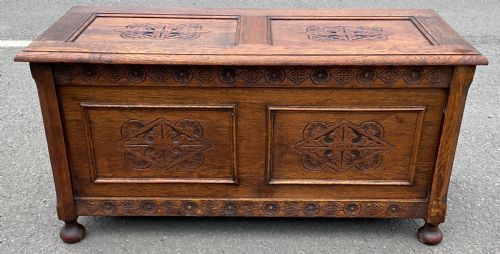
Jacobean Style Oak Coffer
A jacobean style oak coffer brings centuries of sturdy utility and carved character into a modern room.
Jacobean Style Oak Coffer
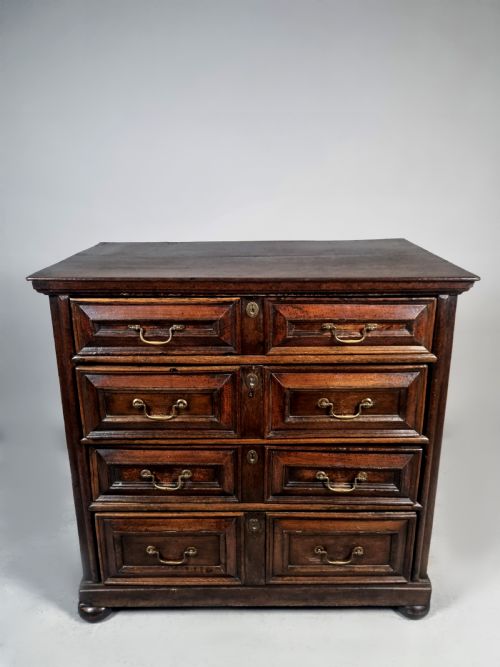
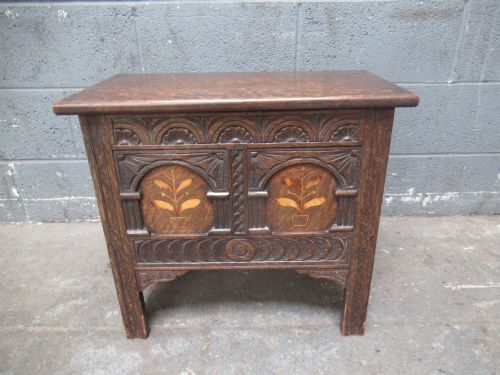
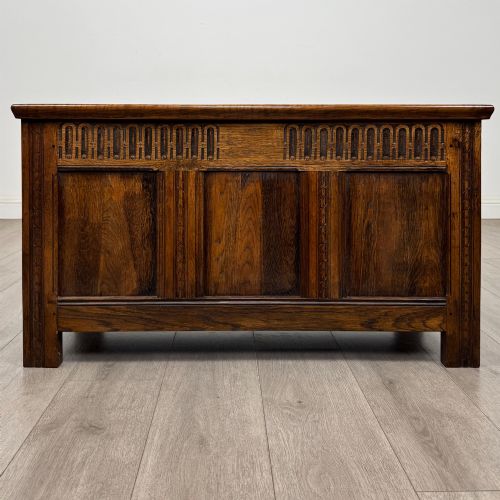
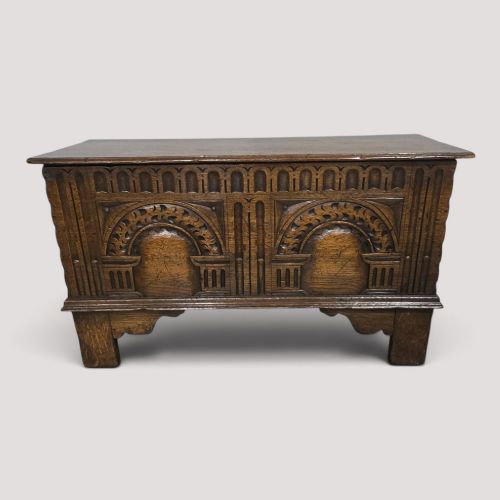
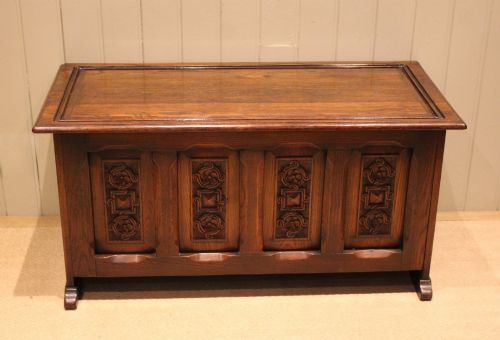
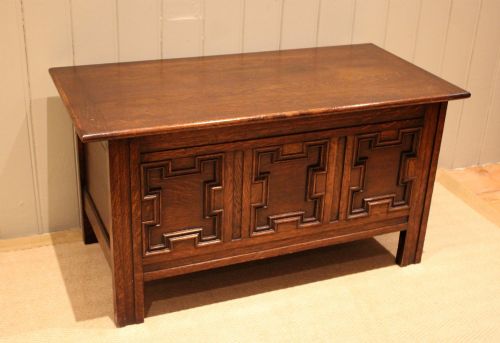
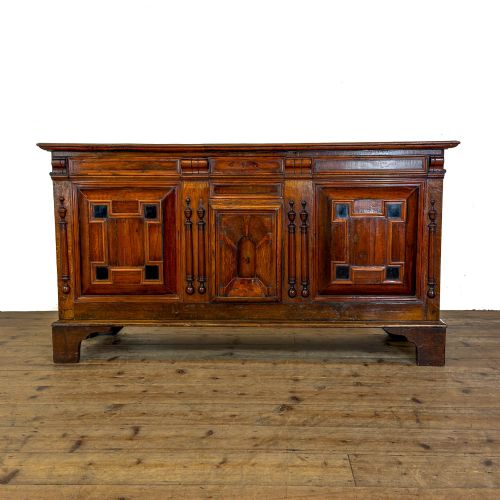
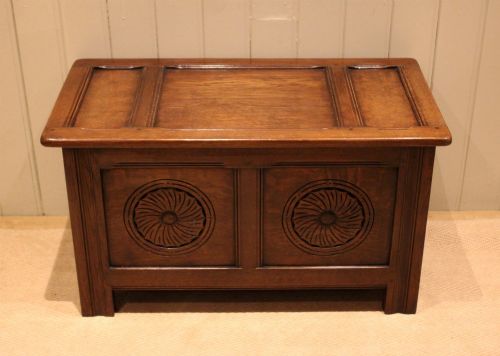
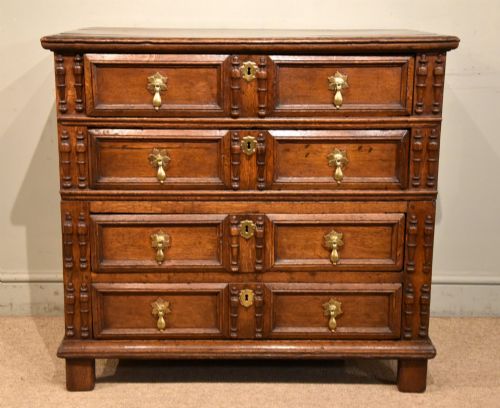
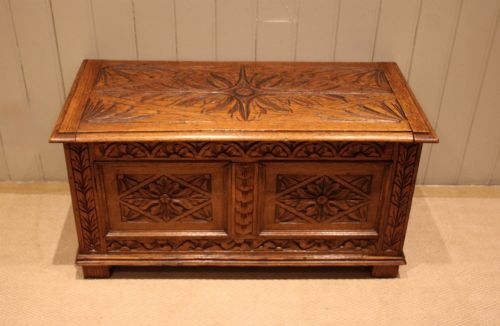
A jacobean style oak coffer is a heavy storage chest built from solid timber, often featuring intricate geometric or floral carving across the front panels. When searching this phrase, you encounter pieces originating from the seventeenth century through to revival periods in the nineteenth and twentieth centuries.
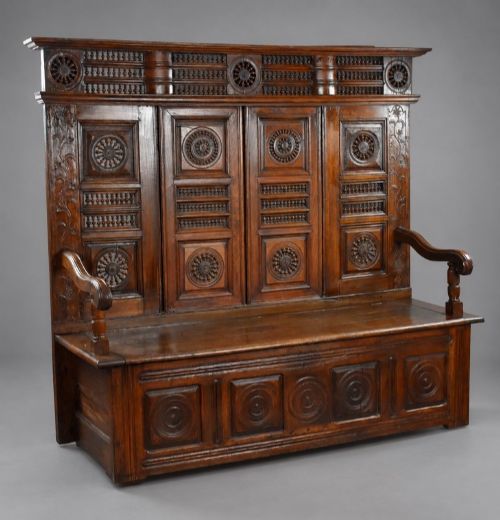
The version most commonly met on this page is the revival piece from nineteen hundred to nineteen thirty, though genuine seventeenth century examples and eighteenth century descendants also appear. These functional items range from large blanket boxes and mule chests to smaller table top boxes and hall benches.
Form follows utility in these items, which served historically to store valuables, linens, or documents in domestic and ecclesiastical settings. Many examples show adaptations over time, combining older panels with later frames or incorporating bench seating into the traditional chest design.
Materials and construction methods
Solid oak provides the primary structural framework for these pieces, occasionally supplemented by fruitwood, hardwood, and ebonised wood details. Carpenters utilised traditional joinery techniques, framing flat panels within grooved stiles and rails to accommodate the natural expansion and contraction of the timber.
Surface ornamentation relies on hand carving, mouldings, and geometric block fronts that reflect seventeenth century aesthetics. Iron and brass hardware, including hinges, lock plates, and carrying handles, secure the lids and reinforce the heavy wooden corners.
Jacobean Style Oak Coffer Retail Price Guide 2026
Typical asking prices for jacobean style oak coffer among the pieces listed under this phrase on Sellingantiques today, from the lower quarter to the upper quarter. They describe what is for sale here now, not the wider market.
Current listings span from the seventeenth century through the Victorian era and into the nineteen thirties, featuring oak, fruitwood, and iron hardware.
Judging quality and craftsmanship
Quality in these chests rests upon the depth and crispness of the carved decoration and the integrity of the underlying timber framing. Superior pieces display confident, hand-chiselled detailing rather than shallow, mechanical stamping.
The balance of proportions and the preservation of original boards without excessive modern replacement timber separate finer examples from heavily restored or later decorative imitations. Heavier gauge solid oak and well-fitted internal till compartments further distinguish the upper tier of pieces.
The Jacobean Style Oak Coffer Glossary
- Coffer
- A large wooden chest traditionally used for storing valuables, clothes, or documents. Most feature a hinged lid and a sturdy rectangular body.
- Mule chest
- A storage chest equipped with one or more drawers built into the base beneath the main compartment. This form emerged as a practical evolution from the standard coffer.
- Stile and rail
- A frame and panel construction method where vertical stiles and horizontal rails hold a floating centre panel in place. This technique prevents the wood from splitting as humidity changes.
- Green Man
- A sculptural architectural ornament depicting a human face disgorging or surrounded by vines, leaves, or foliage. It appears frequently in carved woodwork from revival periods.
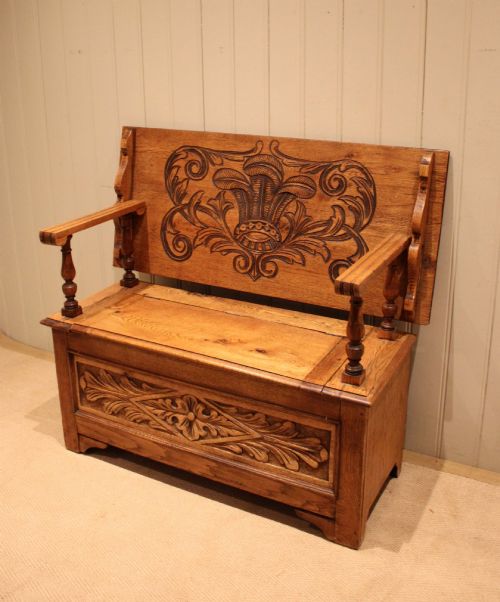
- Monks bench
- A versatile multi-functional item featuring a hinged back that tilts forward to transform a high-backed seat into a table top. Surviving examples often date from the late nineteenth and early twentieth centuries.
Jacobean Style Oak Coffer: Frequently Asked Questions
What is a jacobean style oak coffer?
A jacobean style oak coffer is a heavy wooden storage chest decorated with geometric mouldings, strapwork, and carved panels inspired by seventeenth-century English design.
These versatile items function today as coffee tables, blanket boxes, or hallway storage while retaining the robust character of their historical precedents.
How do I date an oak coffer?
Dating relies on examining the joinery, tool marks, timber shrinkage, and the style of the carving. Hand-riven boards and pegged mortise and tenon joints point towards earlier periods.
Revival pieces from the nineteenth and twentieth centuries often feature machine-sawn timber and standardised hardware alongside historic revival motifs.
Were these chests used as seating?
Many coffers served dual purposes as benches or beds during times when domestic space was limited and furniture needed to be multi-functional.
Some variants specifically evolved into box settles and monks benches with integrated high backs and armrests for comfortable seating.
How do I care for antique oak furniture?
Keep oak furniture away from direct heat sources and dramatic humidity fluctuations to prevent the solid timber from warping or splitting over time.
Apply a traditional beeswax polish occasionally to nourish the wood and maintain a soft, protective sheen without sealing the surface.