

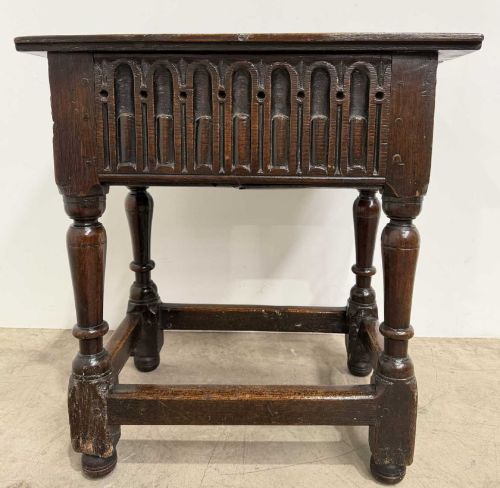
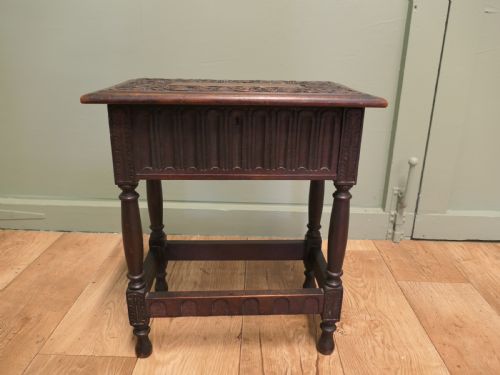
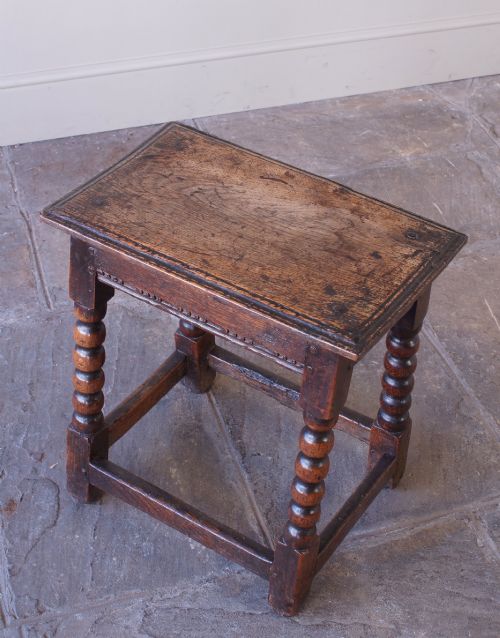
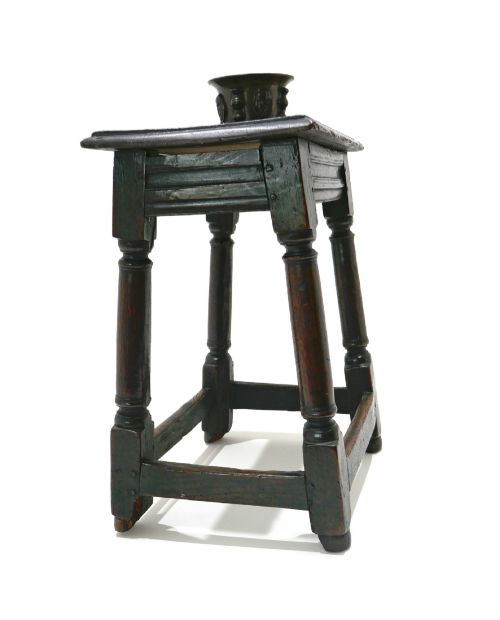


Jacobean Stool
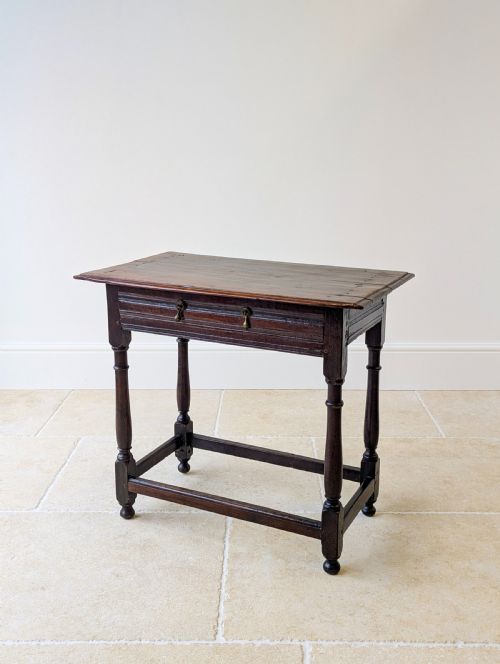
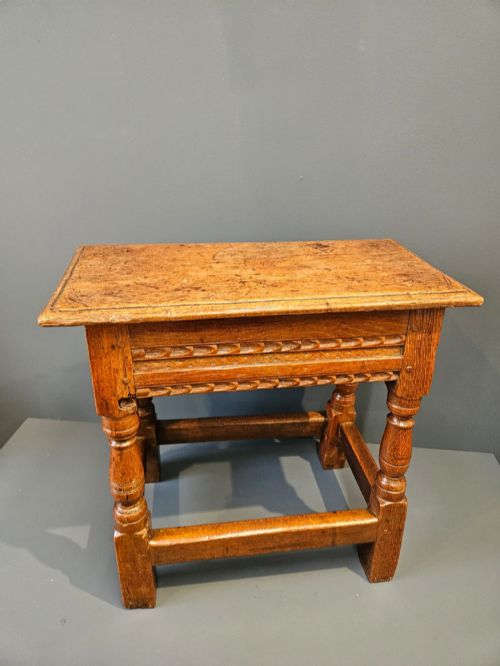
A jacobean stool brings heavy oak timber and rigid geometry into a room, serving as a sturdy seat or low surface.
Jacobean Stool
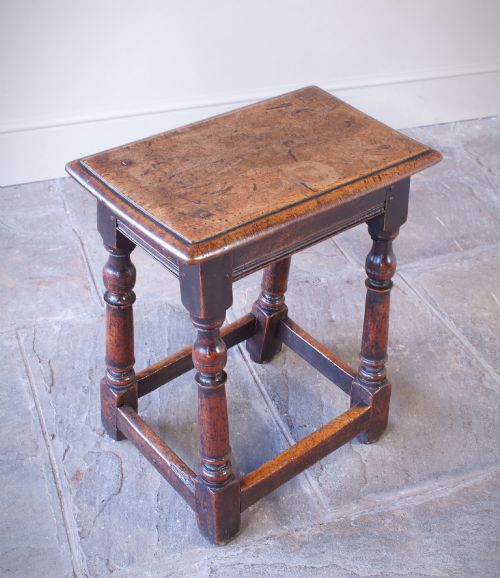
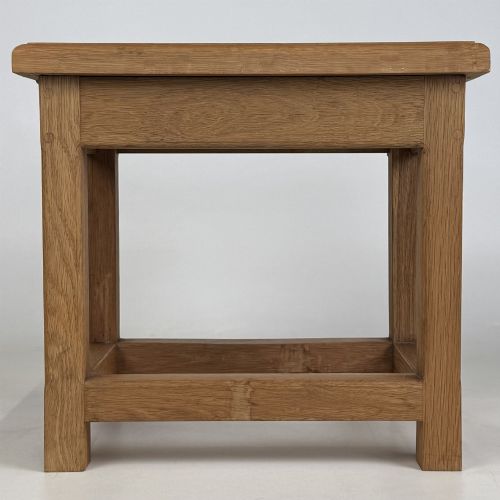
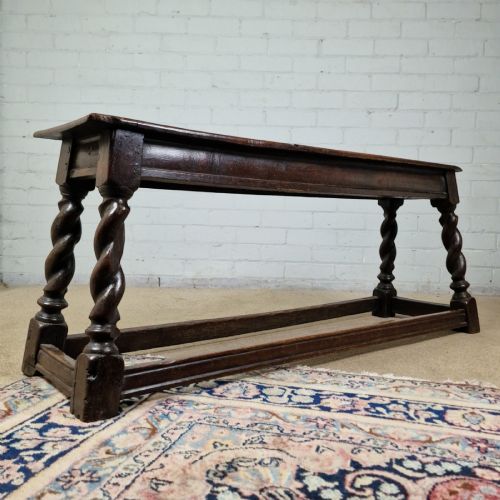
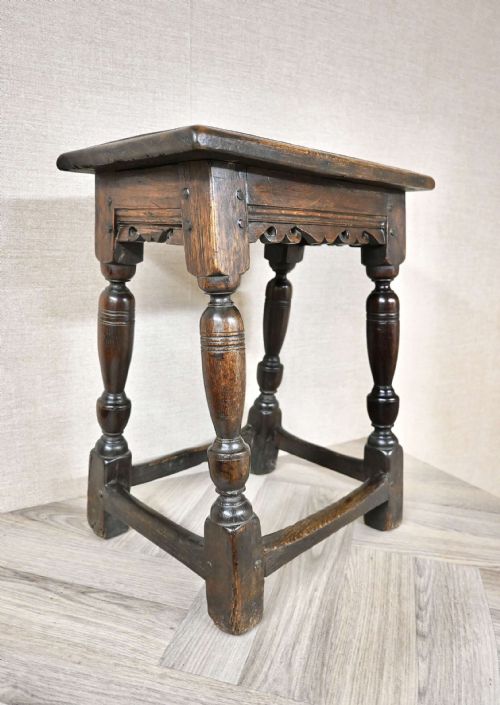
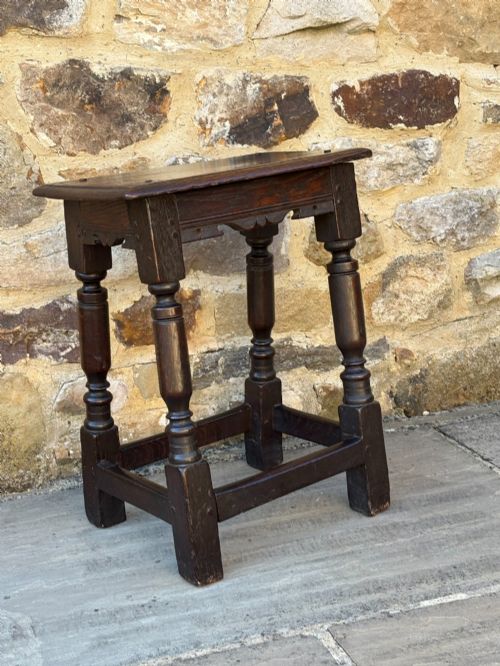
A jacobean stool typically presents as a joint stool with four splayed legs and stretcher rails, built for domestic service in the seventeenth century. Many examples on this page date from that original period, whilst others emerge from later revival movements in the nineteenth and early twentieth centuries.
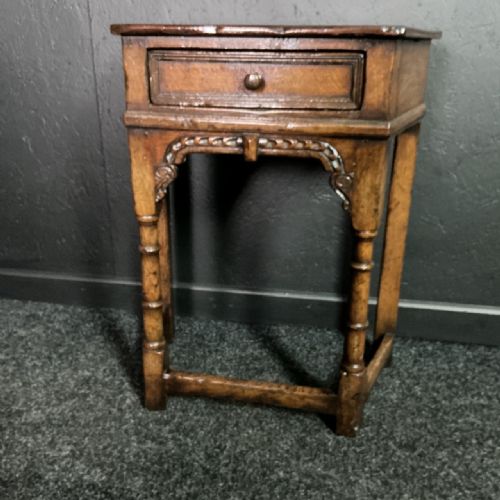
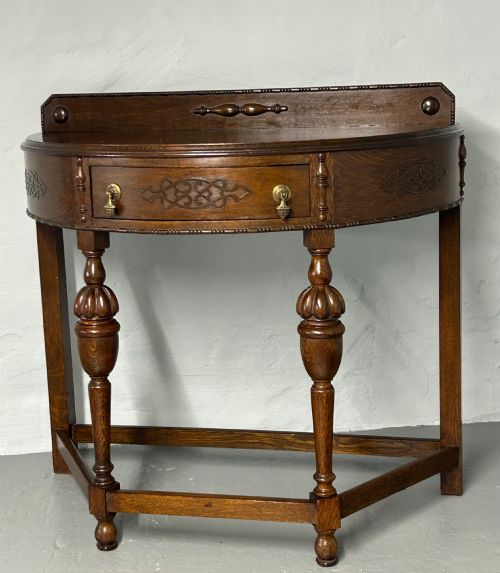
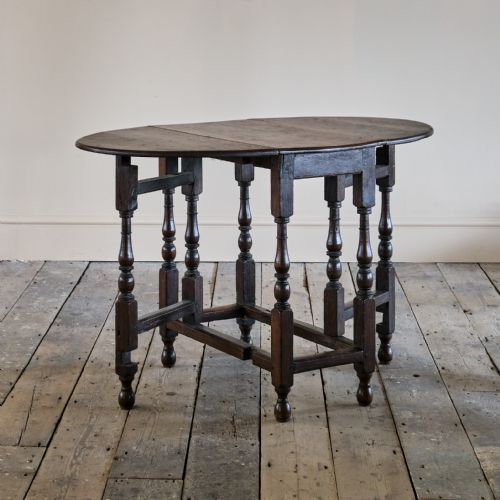
Beyond the standard joint stool, the selection includes box stools, close stools, and low footstools framed in oak and walnut. Some pieces take on secondary functions as occasional tables or small side tables.
Regional variations appear, such as joined back stools from South Yorkshire alongside simpler English forms. The physical footprint remains small and rectangular, designed to tuck beneath tables or stand against panels.
Materials and construction
Makers relied primarily on solid oak, shaped with hand tools and held together by wooden pegs rather than metal nails. Walnut also appears among seventeenth-century pieces, bringing a finer grain to the timber structure.
Secondary materials enter through restoration or later adaptation, including cane, brass, iron, and tapestry upholstery. Joints depend on mortise and tenon construction, secured by the pegged tenons visible beneath the seat rails.
Jacobean Stool Retail Price Guide 2026
Typical asking prices for jacobean stool among the pieces listed under this phrase on Sellingantiques today, from the lower quarter to the upper quarter. They describe what is for sale here now, not the wider market.
Materials documented across the inventory include solid oak, walnut, cane, brass, iron, and tapestry upholstery.
Judging the construction
Quality rests on the proportion of original timber and the integrity of the pegged joints. Early seventeenth-century pieces demonstrate tighter joinery and heavier wear patterns than nineteenth-century revival interpretations.
Carved details on the rails and legs range from crisp geometric patterns to softer, later embellishments. The presence of original surface patination distinguishes pieces that have retained their early finish from those stripped or heavily restored.
The Jacobean Stool Glossary
- Joint stool
- A sturdy wooden seat constructed using pegged mortise and tenon joints rather than turned and glued legs. This method provided exceptional strength for heavy household use.
- Close stool
- An enclosed box stool containing a chamber pot or internal mechanism for sanitary use. These pieces often feature a hinged lid and solid side panels.
- Stretcher
- The horizontal wooden rail connecting the lower legs of a stool to add structural rigidity. They also served as footrests to keep feet off cold floors.
- Jacobean revival
- A nineteenth- and twentieth-century stylistic movement that copied the heavy oak forms and carved ornament of the early seventeenth century. These later pieces often utilise machine-cut elements alongside hand finishing.
Jacobean Stool: Frequently Asked Questions
How do I spot a seventeenth-century original?
Original pieces show tool marks from adzes and hand saws, alongside dark patination accumulated over centuries of handling. The timber exhibits shrinkage and dry grain texture unique to old growth oak.
Revival pieces from the nineteenth and twentieth centuries often display mechanical saw marks and uniform colour. The peg construction may be decorative rather than structural.
What was a close stool used for?
A close stool served as a portable indoor toilet during the seventeenth century before modern plumbing existed. The enclosed box held a chamber pot accessed by lifting the top lid.
Over time, many lost their internal fittings and converted into general household seating or small side tables.
Can I use these stools daily?
Solid oak joint stools remain exceptionally robust and handle regular seating without issue. Their rigid stretcher frames distribute weight evenly across the pegged joints.
Upholstered or cane variations require more care to protect fragile materials from heavy wear. Placing felt pads beneath the feet protects modern flooring.
Why are some called joint stools?
The term derives from 'joined' stool, referencing the precision woodwork required to fit the frame together. Cabinetmakers used pegged mortise and tenon joints instead of turning timber on a lathe.
This construction method created sturdy platforms capable of supporting heavy loads in early homes.